



Iran and China have drafted a broad economic and security partnership that will make possible billions of dollars of Chinese investments in energy and other economic areas, Farnaz Fassihi and Steven Lee Myers reported July 11 in the {New York Times}. Such a deal was first proposed in 2016, when President Xi met his counterpart, Hassan Rouhani.
Schiller Institute Southwest Asia Director Hussein Askary, who spoke last week at a major China-Mideast/North Africa forum in Beijing, commented that such a China-Iraq oil-for-technology agreement could become a game-changer in the region if the very similar agreements previously offered to Iraq and on the table with Lebanon right now, also take shape.
An 18-page agreement, of which the {Times} says it has a copy, details what will be a “vastly expanded” Chinese participation in banking, telecommunications, ports, railroads, and dozens of other projects, in exchange for which China would receive a regular, heavily-discounted supply of Iranian oil over the next 25 years. China imports about 75% of its oil, and is the world’s largest oil importer.
Military cooperation will increase between China and Iran, including training, exercises, weapons development and intelligence sharing in the pending agreement labeled “final version” and dated June 2020. China has not disclosed any terms of the agreement, and it has not yet been submitted to Iran’s Parliament, according to the {NYT}.
The Chinese investments in Iran are said by the {NYT} to total $400 billion over 25 years. The expansion of military assistance, training and intelligence-sharing will be viewed with alarm in Washington, the {NYT} writes, pointing out that U.S. ships already tangle regularly with Iranian forces in the crowded Persian Gulf. China also offered to build the infrastructure for a 5G telecommunications network, and to offer Iran the new Chinese Global Positioning System, {Beidou}. The authors write that China’s broad investment program in Iran “appears to signal Beijing’s growing impatience with the Trump administration after its abandonment of the nuclear agreement; China had repeatedly called on the administration to preserve the deal, which it signed, and has denounced the U.S. use of unilateral sanctions.
The proposed partnership between China and Iran has sparked a “fierce debate” from nationalist factions within Iran, the paper says. Foreign Minister Zarif, who traveled to Beijing in October 2019 to negotiate it, faced hostile questioning from the Parliament when he returned to Iran last week.


This class is the fourth of a series entitled, “The Fundamentals of LaRouche’s Economics.” The series is focused on provoking youth between 18-25 years old to rediscover Lyndon LaRouche’s unique insight into the science of physical economy. The subject of this class asks if humanity depends on new, revolutionary discoveries for its continued success, how can we ensure that such discoveries continue to happen? You can’t force a discovery! You can’t tell someone to just be an Einstein. In this class, we’ll look at the importance of poetry and beautiful culture for a successful economic process, and break down the false division between science and art.

April 17- On a goodwill mission to Japan, State Councillor and Foreign Minister Wang Yi met with Prime Minster Shinzo Abe on April 16. The two agreed to work together to further improve ties and expand cooperation. Wang said that China attaches importance to the messages Abe sent several times last year on improving relations, and he hoped that this visit would prove to be an important step in establishing normal bilateral relations between the two countries. Wang Yi also said that China attaches importance to the positive remarks made by Abe on the Belt and Road Initiative, and Japan joining the Belt and Road construction will open up new space for bilateral economic cooperation, and China is willing to discuss with Japan the proper and concrete ways for it to participate in the initiative.
On April 17, Wang Yi also met with Toshihiro Nikai, the chairman of the ruling Liberal Democratic Party (LPD), as well as other leading LPD politicians. Wang said that he hoped that Nikai
would continue to play a positive role in bringing more people in Japan to support the development of relations between China and Japan. Wang also met with members of the Japanese Business
Federation, the Keidanren. He again said that China welcomes Japan to join the Belt and Road Initiative, which will open up new space for bilateral economic cooperation.
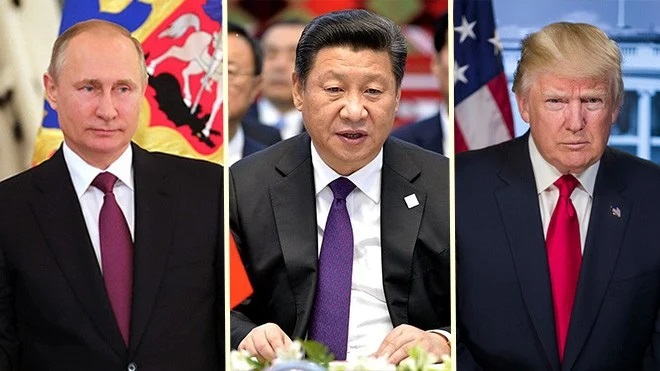
This is the edited translation of the July 11 lead article by Helga Zepp-LaRouche, written for the July 16, 2020 issue of the German weekly Neue Solidarität.
Mankind is currently confronted with an unprecedented challenge: Do we have the moral fitness to survive? The all-important question hinges on whether enough of the main actors on the world stage are able to raise their thinking to a higher level of reason in time, or whether they will cling to their respective ideologies and patterns of action. In the latter case, the extreme tension arising from the combination of the escalation of the corona virus pandemic, the decline of the physical economy, the systemic collapse of the financial system, and growing geopolitical confrontation among major powers, threatens to lead to a breaking point, which could degenerate into social chaos and a new world war.
What is needed now is not a multitude of small steps and measures to deal with all the different crises, but a veritable Grand Design, the realization of a vision for mankind’s future with a comprehensive solution, one taking into consideration the interests of all mankind. This window of opportunity is relatively short term. In January of this year, Russian President Vladimir Putin proposed a summit of the heads of state of the five permanent members of the UN Security Council. The United States, China, France, and the United Kingdom have already agreed to have such a summit. Putin emphasized that the purpose of this summit, 75 years after the end of World War II, must be to establish a peace order—to ensure that such a catastrophe will never again happen.
The dramatic crisis of the pandemic and the ensuing plunge of the real economy, combined with the danger of a systemic financial collapse worldwide, present a unique opportunity to lay the basis for a new world economic order based on a New Bretton Woods system. A Bretton Woods system in accordance with the original intention of Franklin D. Roosevelt’s Bretton Woods system, can overcome underdevelopment in the developing countries, and provide the foundation for peace by improving the living standards of all people on this planet.
In a July 8 webinar interview with the Center for the National Interest, Russian Ambassador to Washington Anatoly Antonov underscored the essential role of such a summit as an alternative to scenarios with unpredictable consequences:
“We have conveyed our proposals on the agenda to our partners. They include key issues affecting global politics, security, and economy….
“The world needs to establish a democratic system of relations that would envisage the principle of indivisible security, equal opportunities for development and search for the balance of interests of participants of international communication.”
Russian Foreign Minister Sergey Lavrov, in a July 10 address to the Primakov Readings forum, stressed that one of the items on the agenda for the P5 summit must be the inadmissibility of nuclear war:
“We … are particularly concerned about the Americans’ refusal to reaffirm the fundamental principle that there can be no winners in a nuclear war, and, consequently, it must never be unleashed. Of course, we will promote this subject—the inadmissibility of a nuclear war, the impossibility to win it—in the context of the upcoming summit of the five as well.”
Ambassador Antonov also quoted the speech by Putin at the June 24 parade to celebrate Victory Day:
“We understand how important it is to strengthen friendship and trust between nations and are open to dialogue and cooperation on most pressing issues on the international agenda. Among them is the creation of a common reliable security system, something the complex and rapidly changing modern world needs. Only together can we protect the world from new dangerous threats.”
A Global New Deal
The unexpected announcement by U.K. Prime Minister Boris Johnson of his intention to implement an investment program in the tradition of President Franklin Roosevelt, that is, a New Deal (even if the cited sum of £5 billion is only a small first step in the right direction) provides a very useful common thread among the other four heads of state, all of whom have referenced Roosevelt in positive terms in the past.
What is needed today is precisely Roosevelt’s program in full: Glass-Steagall bank separation, an industrial development plan on a global scale this time—a New Deal for the entire world—and a credit system, a New Bretton Woods. One of the first steps should be international cooperation to develop a worldwide health system, i.e., a modern health system in every single country up to at least the standard that China demonstrated in Wuhan in fighting the outbreak of the pandemic.
This summit, which must take place in September at the latest, will in all likelihood be the last chance to establish a basis of trust for a strategic orientation of international relations among nuclear powers that can set the course for overcoming the global economic crisis. If this opportunity is missed, not only does the toxic tone that has been struck between the United States and China in particular, threaten to escalate into an irreparable conflict, but the looming danger of a second wave of the pandemic followed by renewed economic shutdowns could completely shatter social peace in many of the affected countries.
The Leibniz Institute for Economic Research (IWH) in Halle has warned that the effects of the first lockdown in Germany will lead to a wave of bankruptcies, which in turn will create difficulties for numerous savings banks, and for banks with receivables in the hundreds of billions. Such a new banking crisis would then be followed by an even deeper recession, the institute warns. And Germany is still in a comparatively strong position.
The discussion in the trans-Atlantic neo-liberal establishment is shaped by the assumption that, under these circumstances, a sharp decline in international stock markets of at least 20-30% and the increase in death rates from a second wave of the pandemic will be blamed on President Donald Trump. And it will guarantee that establishment’s intention to ensure his defeat in the November elections. Given the relentless campaign which the forces of the British Empire have carried out for three and a half years in their coup attempt—from the “Russiagate” fraud to the impeachment proceedings, and the current statue-smashing frenzy—the City of London and Wall Street would be more likely than not to let such a sharp decline in the stock markets happen.
Although in the early stages of the outbreak of the corona virus pandemic, President Trump had praised the Chinese government’s vigorous actions in the city of Wuhan and Hubei province, and stressed his friendship with President Xi Jinping, he shifted positions tentatively as of April 18 and then definitively as of April 30, to blame China for the spread of the virus worldwide. This assertion was first made by the former heads of MI6 Sir John Sawers and Sir Richard Dearlove, and the London-based Henry Jackson Society which, in a blatant provocation, challenged China to pay $9 trillion in reparations! It has been rejected as unfounded even by American medical experts. A WHO delegation is currently in Wuhan to investigate the origins of the virus and the chronology of the pandemic.
The British Empire on the Ropes
The same British Empire forces behind the coup against President Trump consider his intention to establish good relations with Russia, as well as his initially positive relationship with President Xi, to be a deadly threat to their geopolitical interests—having increasingly endeavored to curb the rise of China for years now. That is the motive behind the Pentagon’s 2018 National Defense Strategy paper, which defines China and Russia as the top strategic rivals in the “Great Power Competition.” Defense Secretary Mark Esper underlined this political orientation in a July 7 “Message to the Force,” saying that China should be made the “pacing threat” in “all of our schools, programs, and training.”
The British Empire’s policy—marked by the British East India Company and its colonial policies, the Opium Wars against China, Prince Philip’s World Wildlife Fund and Mark Carney’s Green New Deal today—has been based on Malthusian population reduction. From this standpoint, China’s New Silk Road policy—which for the first time offers developing countries the chance to overcome underdevelopment—makes it a “strategic competitor.” And, of course, there is competition between these systems.
Looking at the world from above, it is clear that cooperation between the two largest economies in the world, the United States and China, is indispensable if mankind is to overcome this pandemic and other impending pandemics, as well as hunger, poverty and underdevelopment in the so-called Third World. From the standpoint of the British Empire, i.e., of the oligarchical financial interests that rely on maximizing profit for their caste, and population control for all others, since the time of the British East India Company’s Parson Malthus, the poisoning of the U.S.-Chinese relationship is a top priority.
Russian Foreign Minister Lavrov has just warned that the United States’ withdrawal from the disarmament treaties has significantly increased the risk of a global nuclear confrontation. And he has said that he hopes this escalation will not reach the point of no return. Chinese Foreign Minister Wang Yi, for his part, has expressed his concern that U.S.-China relations have hit their lowest point since the establishment of relations between the two nations.
The summit of the five permanent members of the UN Security Council proposed by President Putin is likely, for all the reasons mentioned here, to be the last chance to put a completely different program on the agenda, in order to prevent the development of the escalating effects of the pandemic, hunger, economic collapse, and a financial crash from running their course. If that course is not shifted, the war danger resulting from the rapidly ensuing chaos may become unstoppable.
All people of good will, and all countries worldwide, should consider it to be in their own interest to support the success of this summit to the utmost.

In her weekly webcast, Helga Zepp LaRouche highlighted the significance of the engagement of young people from around the world in the Schiller Institute’s Day of Action on June 17. As she elaborated the deepening of the confluence of crises — the continuing toll from the Coronavirus, the spread of hunger and famine, and food insecurity, the economic collapse; and the growing war danger — she reiterated her belief that governments can be moved to respond to the crises, especially by the efforts of impassioned youth committed to taking responsibility to move their governments. Programs, such as the Health Silk Road plan developed by the Schiller Institute, and the LaRouchePAC program for 1.5 billion new productive jobs worldwide, must be taken now.
In reviewing the world’s strategic “hot spots”, such as North Korea, Syria and Libya, she blasted the immorality of imposing killer sanctions during the time of a pandemic. Instead of using sanctions to heighten the crisis, resolving these hot spots require the cooperation of leading nations. She spoke of the significance of the China-Africa summit, taking on disease and hunger, as an example of what is possible with cooperation.
She also pointed to Putin’s comments on the Maidan-style coup, which he forecast in early 2017 would be deployed to stop Trump, to demonstrate that Putin and Xi are aware of the coup, and differentiate between Trump and the coup plotters. In this context, she said she remains optimistic about the prospects for the kind of international cooperation which we are fighting for, to resolve the hot spots peacefully, and lead to a New Paradigm of economic cooperation.
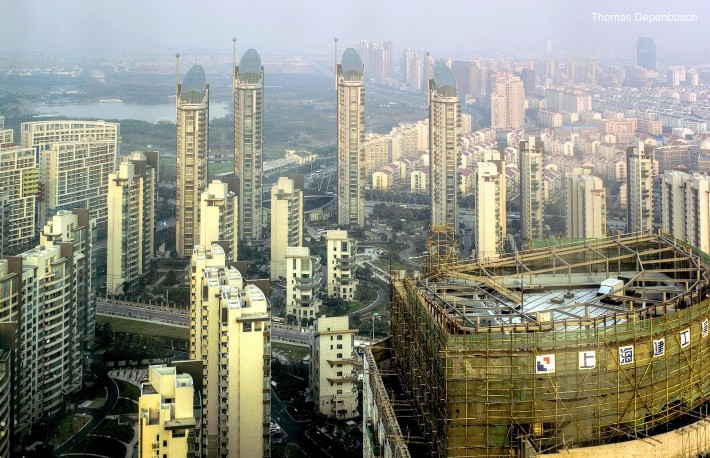
The total number of Chinese still living in poverty was 30 million at the end of 2017, according to official statements made on Jan. 5 by the Director of the State Council Leading Group Office of Poverty Alleviation and Development, Liu Yongfu. Xinhua reported that Liu explained that this means there was a two-thirds reduction of the number of poor over the last five years, since in 2012 there were 98.99 million poor. Since the official number repeatedly used by Chinese officials for 2016 was 43 million poor, this means that 13 million or so were lifted out of poverty in 2017 alone.
Liu added that “to lift the remaining 30 percent of poor people out of poverty will be the toughest”–a point that President Xi Jinping has repeatedly made. Liu stated that the work will now shift to targeted and precise measures: “We will work to foster local industries, create new jobs, relocate residents in poor areas and strengthen aid to the aged, the disabled and people seriously ill.”
Receiving special attention will be some 30,000 villages where more than 20% of the population is poor. “We will step up support, partly by sending more central and provincial cadres to those villages who will work there for normally two years,” said Xia Gengsheng, another official of the State Council Leading Group Office of Poverty Alleviation and Development.
Vice Premier Wang Yang said at another meeting last week that 2018 will be a key year for the battle against poverty.
The eyes of the entire world are on China in this historic battle against poverty, not just over the stunning specific results already achieved, but as a proof of principle of an underlying optimism: yes, it {can} be done. If in China, why not everywhere?
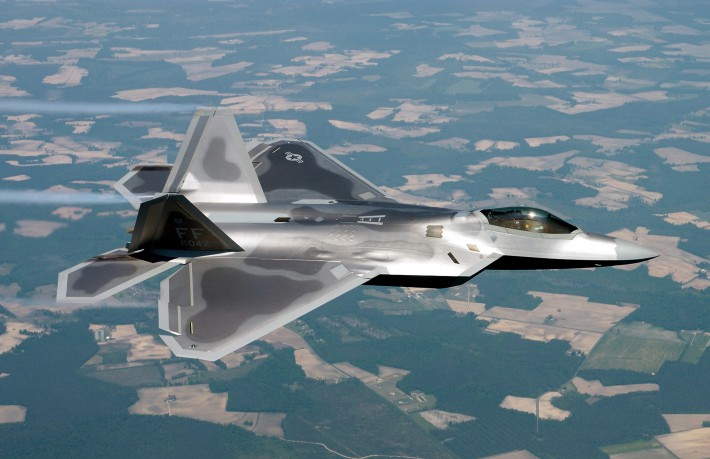
As this announcement goes out, midday on the U.S. East Coast on April 10, there is a “red alert” over the possibility of general war breaking out in the days ahead, due to a series of provocations coming from the highest levels of the British Empire. As the attempt to blame Russia for the alleged poisoning of British double agent Skripal and his daughter collapsed, when experts from the U.K.’s chemical weapons lab at Porton Down could not confirm that the substance used against the Skripals came from Russia, the London-based “White Helmets” were trotted out, claiming — without evidence — that Syrian government forces used chemical weapons in East Ghouta, This triggered calls in the UN Security Council for action against Syria, but also against Iran and Russia, coming from the Brits, the French, and neo-cons in the U.S.
The third provocation was the raid on the office of President Trump’s personal attorney, Michael Cohen, based on a referral from Special Counsel Robert Mueller, related to charges against Trump coming from porn star Stormy Daniels. Though Mueller’s investigation of Cohen has nothing to do with allegations that Trump colluded with Putin to win the 2016 election, the origin of all three provocations are the same — all are part of the campaign by City of London imperial forces, and their Wall Street neo-con allies, to prevent Trump from succeeding in his campaign promises to end regime-change wars, and to form a positive collaborative relationship with Russia’s President Putin.
A release from the LaRouche Political Action Committee called the raid of Cohen’s office an “outright attempt to blackmail this President [Trump] into the war he was elected to stop.” Helga Zepp LaRouche said of this situation, that we “are sitting on a powder keg.” Join her this Thursday with your host Harley Schlanger, as she presents the inside story behind the desperate British war drive, and the necessary steps to shut it down.
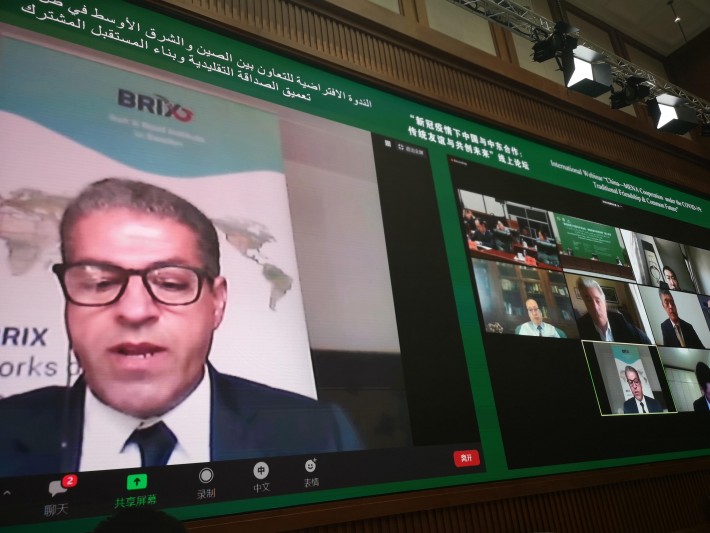
Schiller Institute Southwest Asia Coordinator Hussein Askary addressed a high-level China-Arab webinar organized by the Chinese Academy of Social Sciences (CASS) on Friday, July 10. The event’s title was “International Webinar: China-MENA Cooperation Under the COVID-19: Traditional Friendship & Common Future” (MENA: Middle East and North Africa). The speakers included the top leadership of CASS and keynote speakers were Prince Turki bin Faisal bin Abdul-Aziz (Chairman of King Faisal Research Institute, former Saudi Ambassador to London and Washington, and former Director of Saudi Intelligence), and former Prime Minister of Egypt Essam Sharaf. Several former Arab Ambassadors to Egypt and Chinese ambassadors and envoys to the MENA region also spoke in the webinar, followed by academicians from both China and the Arab countries. The webinar came just a week after the China-Arab Ninth Ministerial Meeting Chaired by Chinese State Councilor and Foreign Minister Wang Yi. Most of the Arab academicians were from the United Arab Emirates Al-Sharjah University.All the speakers agreed on the importance of China-Arab cooperation to both combat the COVID-19 pandemic and achieve economic development, peace and stability in the region. Even cooperation between the U.S. and China in the Middle East was called for by some speakers, including Askary and an American professor at the National Defense College in the U.A.E.
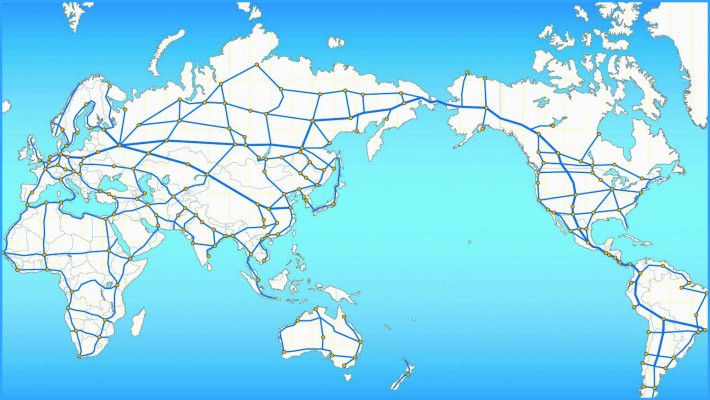
Askary opened his speech by referring to the vision developed over the past three decades by “the great American economist” Lyndon LaRouche, Helga Zepp-LaRouche and associates in the Schiller Institute, which have now evolved into the World Land-Bridge. Askary showed the map of the World Land-Bridge, stating that it is necessary to bring the Americas and the United States into this vision. He praised the announcement of the Belt and Road Initiative by President Xi Jinping as “a turning point in world history.” Askary then, referred to the massive potential for development through peaceful economic development in West Asia and Africa. Since, the theme was Chinese-Arab cooperation against and post COVID-19 pandemic, Askary brought up the “correlation” between infrastructure development and creating a global health care system drawing from speeches by Xi and WHO Director General Dr. Tedros Adhanom Ghebreyesus, a report by the Asian Infrastructure Investment Bank (AIIB) and concluding with the recent study conducted by the Schiller Institute on creating a global healthcare system. Askary ended his remarks by showing the participants copies of the Schiller Institute reports on the New Silk Road in both Arabic and English, offering to send copies as gifts.
Part One: Keynote by Helga Zepp-LaRouche
Join us live on April 7 at 12pm EST. American President Donald Trump, Chinese President Xi Jinping, and Russian President Vladimir Putin could together, in the next months, make the most important set of decisions to affect humanity since the Renaissance of the fifteenth century. The possible settlement of the Korea issue is only one example. The right decisions made by these three nations and their allies in the next weeks, could begin, in the near term, to eliminate poverty, colonialism and war from the planet. The solutions for eliminating this triple evil lie both in our stars, and in ourselves.
British Imperial forces have temporarily lost control of the failing transatlantic geopolitical process. Now, they are attempting to re-take the advantage. As with British Intelligence agent Christopher Steele’s Russia-Gate hoax, now, the “Russia poisoned Sergei Skripal and his daughter” hoax is intended to drive a wedge between President Trump and Vladimir Putin. If this effort succeeds, all the work done by Devin Nunes’ House Intelligence Committee, and others, to reveal the corrupt role of members of the FBI, Department of Justice, State Department and others in the British-run coup against the American Presidency in 2016, will be for nothing.
Perpetual war, as advocated by the Bush 41, Bush 43, and Obama Administrations, can be replaced with a new economic platform and a new cultural paradigm.
On Saturday, April 7, Schiller institute founder Helga Zepp-LaRouche will keynote this conference to rally Americans to that optimistic perspective. Adopting the economic measures and outlook known as the LaRouche Four Laws while embracing the still-offered Chinese proposal, would provide the basis to deliver a rapid upshift in American productive employment, living standards, and the education of youth in the United States.

Dec. 30 -Leading officials in China’s science sector have announced in the past days that now, after the 19th Party Congress, the country will focus even more on research and development in pioneer areas of science and technology. This will make the vitality of innovations in China even stronger than what was done in the previous five-year plan.
“Following more than 30 years of accumulation, China’s science and technology sectors have been transformed from quantity to quality, Prof. Huo Guoqing of the University of the Chinese Academy of Sciences is quoted by Xinhua. “Now is the time for breakthroughs.” Also Minister of Science and Technology Wan Gang stressed that his country is developing “a new understanding of innovation as the prime driver of development.”
China is proud of having achieved leading status internationally in five landmark innovations since 2015: the dark matter project carried out by the “Wukong” satellite; the quantum research satellite; the space laboratory Tiangong-2; the radio telescope FAST; the deep ocean submarine Jiaolong.