



Join us LIVE on Saturday at 2pm EST.
Today’s guests include Harley Schlanger and Claudio Celani.

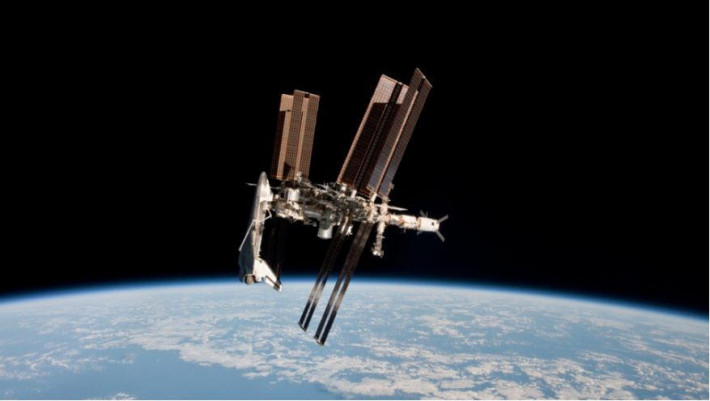
Jubilation in Paraguay Over Launching of First Satellite
March 4, 2021 (EIRNS)–With great pride and excitement, Paraguay launched its first satellite, GuaraniSat-1, on Feb. 20, from NASA’s launch facility on Wallops Island, Virginia–an event considered to be of great historic significance for the country. Two days after launch, the Northrop Grumman Cygnus supply ship carrying the nanosatellite docked at the International Space Station (ISS) from which Guaranisat-1 will be placed in orbit in the next month or two. This CUBESAT satellite which measures only 10x10x10 cm, was developed by the Paraguayan Space Agency (AEP) as part of multi-nation program known as BIRDS-4, developed by Japan’s Kyushu Technological Institute and backed by Japan’s space agency, JAXA. Once in orbit, GuaraniSat-1 will be involved in monitoring the prevalence of Chagas disease in the country’s Chaco region, but Paraguayan engineer Adolfo Jara told EFE news agency that the satellite will actually have to perform nine missions in the space of a year and a half.
Amidst much jubilation and congratulations, an AEP twitter feed showing two small children happily reporting on the launch and waving the Paraguayan flag, captured the nation’s sentiment. The head of the AEP’s Planning Division, Jorge Kurita, told EFE that the AEP’s participation in this program has had a “domino effect” in “the creation of research teams in the space sector, applied to solving problems on Earth.” AEP’s director of Aerospace Development, Alejandro Roman, added that for a country like Paraguay, subject to annual floods and forest fires, the GuaraniSat-1 observation satellite can help in “planning responses. This is an example of how science and space technology can help improve a government’s and a nation’s management” capabilities, “The AEP isn’t just dedicated to the launching of a satellite,” he added. “It’s a means to advance in technological development.”

While British Foreign Minister Raab threatens China over its unwillingness to submit to the City of London’s Rules-Based Order, the largest financial institutions are granted exemptions from the new minimum global corporate tax praised by Biden. If a company is a corporation based in the City of London, Wall Street or Silicon Valley, it is exempt from the new taxes. The blowhards demanding subservience to the new global order are deploying regime change operations and military threats against nations which don’t accept the arbitrary rules the Davos billionaires have created for everyone, but themselves! The imperial order is dying, help us put it out of its misery, by creating a new, just order based on principles of international law.
— harleysch@gmail.com

We present this video to introduce you to the Schiller Institute’s ongoing series of conferences designed to make sure you understand and know how to defeat what is called the “rules based international order” perpetrated by those would be masters of the planet who have deliberately robbed us of tens of millions of lives through disease, famine, war, and other products of the under-development they insist on.
While there are still questions about where the Biden administration is heading in strategic policy, there are some very real reasons for concern. There is the threat of mass starvation in Yemen, and the growing danger of food shortages in Syria, due to sanctions; last week’s U.S. military strike on a base in northeast Syria; new sanctions against Russia over the fake human rights issue of Navalny; and the intent to expand NATO into the “Indo-Pacific region”, as part of a plan to “encircle and contain” China.
In discussing these concerns, Mrs. LaRouche emphasized that these crises could be addressed through cooperation. Instead of starving children in Yemen and Syria, a program of immediate food relief could be done, with a longer-term plan for reconstruction. As for the response from China to the threats from the West, “Global Times” called these measures “evil”, describing the attacks on China as part of an obvious overall plan to prevent development in all poorer nations.
Instead of tactics leading to heightened confrontation, the U.S. should begin to address the collapse of its platforms of infrastructure. A modest plan from the American Society of Civil Engineers calls for $2.5 trillion in investment over the next ten years. In reality, a much greater amount is needed — why not fund major infrastructure projects in the U.S., she asked, rather than pouring hundreds of billions into the pockets of the Military Industrial Complex, for wars and destruction around the world?

Helga Zepp-LaRouche gave the following interview today to the “World Today” broadcast of ChinaPlus, the English website of China Radio International.
ChinaPlus: Chinese President Xi Jinping is calling on China and European countries to expand consensus and cooperation to jointly cope with global challenges. He made the remarks at a virtual summit with French President Emmanuel Macron and German Chancellor Angela Merkel. The Chinese leader says what the world needs is mutual respect and a sincere cooperation among nations.
Xi Jinping: At present, the global pandemic situation remains severe, with frequent resurges. The prospects for economic recovery are uncertain and there is still a long way to go. The world more than ever needs mutual respect and close collaboration, rather than suspicion and technism or zero-sum game.
ChinaPlus: During the meeting, the German and French leaders expressed their support for the conclusion of the EU-China investment agreement, and adding that they hoped the 23rd EU-China summit would take place as soon as possible.
For more on this, we are joined by Helga Zepp-LaRouche, founder of the Schiller Institute, a global political and economic think tank headquartered in Germany. Thanks for joining us, Helga.
Helga Zepp-LaRouche: Yes, hello; good day.
ChinaPlus: So, what’s your main takeaway from this virtual summit, and what’s your assessment of the overall tone of the meeting?
Zepp-LaRouche: I think, from everything one can say, is that it was very constructive, and also much needed, because there were some recent difficulties after the European Parliament blocked the EU-China investment agreement. So, I think that they discussed the possibility of reviving it is very positive. Mrs. Merkel said that she wants to have this revived as soon as possible. And President Macron said that he supports the conclusion of the China-EU investment agreement. So, I think it was very useful and productive.
ChinaPlus: The summit is coming at an increasingly tense moment for EU and China ties, given that the EU’s recent sanctions against China and its interference in the country’s internal affairs. So, will this call lead to a shift in the EU’s approach to relations with China? And possibly, easing confrontations between the two sides?
Zepp-LaRouche: Yes, I think it will. And I think it’s also important that this comes only four days after the very hysterical statement coming from the Lithuanian Foreign Minister Landsbergis, who had on Friday last week called for an end of the French-German dominance of the EU. He wanted to have a unified EU policy on China, which in his terms means against China. He even said that he wants to set up offices in Taiwan. So, I think this was a clear rebuttal of this position of Landsbergis. So I think that that was very useful.
ChinaPlus: What’s your assessment of the current EU policy on China in general? Do you think that the tough stance recently taken by the EU side against China needs to change? As we know, China became the world’s largest EU trading partner last year, overtaking the U.S. European business leaders have expressed their hope that the EU will strengthen cooperation with China, rather than shut it out and decouple.
Zepp-LaRouche: Yes, I think such a change is really very urgent, because, as it was mentioned by President Xi Jinping, the world is still confronted with a very serious pandemic. We have a world famine of biblical dimension, as the head of the World Food Program, Beasley, is calling it. We have a hyperinflation danger in the Western countries. As you can see with the situation in Afghanistan, there needs to be an urgent cooperation for economic development in the entire region of Southwest Asia, because otherwise, there is a danger of a new explosion of terrorism, and also the drug problem is very big.
So, I think there are so many common aims of mankind in a world which is very fragile, and therefore, I think that these three important countries—China, France, and Germany—make steps to really mend fences and work together more closely, can only be welcomed in the interest of humanity as a whole.
ChinaPlus: We see many European politicians have emphasized the differences between China and the EU, but President Xi is calling on China and the EU to adhere to the norms of mutual respect, and to handle differences appropriately. So, were the differences between the two sides addressed during the talks? And how can the two sides resolve their differences?
Zepp-LaRouche: Yes, I think some of the differences were clearly addressed. For example, China is always emphasizing the need to stick to the UN Charter and international law, while some Western politicians always talk about a “rules-based order,” which, if you look at it more closely, has turned out to be a rather arbitrary definition of pursuing the interests of some groups. So, I think that was addressed—at least from the read-out, one can say that. And also, it was stressed by China that the intention of China is not to replace anybody else, but to focus on its own development.
But I think there was one aspect in the discussions which I thought was particularly promising: Namely, that they seem to have focussed on a joint mission, which helps countries and people to always overcome their bilateral or trilateral difficulties. In this case, the focus was on Africa, that China and Germany and France would work together. That Germany, for example, said they were considering to join the initiative on partnership for African development. I think President Xi not only pointed to the severe situation of Africa, because of the pandemic and economic hardships resulting out of that, but he also said that Africa has the greatest development potential. He has stressed that in the past, in summits with African leaders, and I think this is absolutely true. The African continent has a very young average population, which means that if you provide them with jobs and economic opportunities, they can become really an economic engine in the next generations. That positive look on Africa is generally lacking in Europe, and I think therefore the populations of Germany and France and other European countries can only profit from the optimistic perspective that China has towards Africa. I think this can only have a positive effect.
ChinaPlus: Another key factor crucial for China-EU relations nowadays is the U.S. factor. We’ve noticed increasingly frequent interactions between the U.S. and the EU, with Washington trying to rally its European allies against China. Do you think the call emanating from the summit is sending a signal from France and Germany that they are refusing to align themselves with the U.S. bipolar confrontation?
Zepp-LaRouche: I would think so, because as you know, there was just the G7 summit, where Biden had travelled to England, and this was an effort to unite the allies in this stance against Russia and China. But Chancellor Merkel had always stressed in the recent period that she does not like to be pulled in one or the other direction, and forced to choose sides, and that she supports a multilateral world order. So, I think this is definitely a positive signal. One would hope that the Europeans really understand that it’s in their self-interest to have such a balanced view, to say the least.
ChinaPlus: But some observers believe the U.S. has more power over the EU than that of Germany and France combined, so the change of attitudes from Germany and France won’t make much of a difference in the EU’s China policy. How do you look at this?
Zepp-LaRouche: The EU right now is very disunited You had the Dutch leader, Rutte, who wants to kick out Orban from Hungary, and Hungary out of the EU. Then, Slovenia just took over the EU Presidency for the next six months, and he clearly is supporting Hungary, and backs the Hungarian view that they don’t like cultural interventions, interference with their value set, whereby Western European countries try to impose their liberal views, while the East European countries are more traditional. I think if they keep doing these kinds of things—and von der Leyen then attacked Slovenia, and then you have the disunited Baltic states and Poland. I think the EU right now is not in a strong position at all. I think the thing which will, I’m pretty sure, dominate in the future will be the self-interest of these countries. For Germany, for France, and also the other European countries, the economic interest in a world which is in a turmoil, the relation with China is clearly a factor of stability. This is what the German industry wants for the most part.
I think also the United States may change.
The United States has pursued policies in the last 20 years which were not really in the interests of the United States itself, as you can see by what happened in Afghanistan, where a war was fought for 20 years, and absolutely nothing came out, other than misery, death, and a lot of cost. So, maybe the United States can also start to change, and see that cooperation is more in their interest than confrontation.
I know this is not the dominant policy right now, but things are changing very, very rapidly. I would really hope that the new paradigm of international relations gets into the minds of political leaders, because confrontation can only lead to a disaster.
Anyway, I think we are in a flux. We are in an historic moment of dramatic change, and a lot depends on good initiatives which people have to influence the situation for the better.
ChinaPlus: OK, thank you very much, Helga. That was Helga Zepp-LaRouche, founder of the Schiller Institute, a global political and economic think tank headquartered in Germany.
As news reports feature the threat of a Taliban takeover of Afghanistan following the withdrawal of U.S. forces, some voices in the U.S. Congress are questioning why we are leaving! The real question should be, “Why were we there for 20 years? Why did we waste more than $1 trillion and several thousand American lives on a war the Pentagon knew was unwinnable?” The followup question to that should be, “Why are we still using British geopolitical strategies to conduct our foreign and military policies? When will we learn our lesson — as Lyndon LaRouche always insisted — that the British Empire is our republic’s only true enemy?”

In a groundbreaking experiment, Chinese scientists led by Huang Sanwen, a researcher with the Agricultural Genomics Institute at Shenzhen (AGIS) (a city just north of Hong Kong), under the Chinese Academy of Agricultural Sciences (CAAS), used a genome design to transform potato breeding, and developed “pure and fertile potato lines” with genome-editing technologies
Their study, titled “Genome Design of Hybrid Potato,” was published online in one of the world’s leading academic journals, {Cell}, on June 24.
Unlike other crops that are propagated from seed, the potato is a tuber crop which is propagated by cloning. This results in long breeding cycles, low reproduction efficiency, and makes the potato plant more susceptible to disease and insect attacks.
CGTN reported that “Huang and his team initiated the “Upotato Plan” in 2015, aiming to replace vegetative reproduction with hybrid seeds via genome design and improve potato breeding speed and reproduction efficiency.
“‘We must first solve the problem of self-incompatibility, which is that potatoes do not produce seeds after self-pollination. Through material selection and gene editing, we have successfully tackled the problem and produced seeds,’ said Huang.
“‘Meanwhile, we have also discovered how to improve plant health and output. By genome design, we eliminated harmful mutations, aggregated good genes and finally cultivated the potato variety called ‘Upotato NO. 1.’ After testing, it has shown excellent performance…
“We now only need 2 grams of potato seeds for a one-mu land, compared to 200 kilograms of seed potatoes before, which greatly reduces the planting costs.” (There are about 15 mu to one hectare.)
Their work has been recognized by their international peers, with one scientist from the European Academy of Sciences commenting, “This work is very important because it’s relevant to feeding the planet.”

David Beasley, World Food Program Executive Director jumped into the competition between billionaires Jeff Bezos, Elon Musk and Richard Branson, on which of them would be the first to go into space, by tweeting them on June 26, that they should “team up” to save 41 million of people on Earth facing starvation. He followed it up with a number of tweets that day, including specific messages to Bezos and Musk personally: .
“Jeff Bezos’ net worth increase during Covid was $65 billion. Jeff, just 10% of your net worth INCREASE would save 41 million people about to die from hunger. We need you, NOW! Can we talk? @famine” and
“Elon Musk’s net worth increase during Covid was $137 billion. Elon, just 5% of your net worth INCREASE would save 41 million people about to die from hunger. We need you, NOW! Let’s talk. #famine” and
“During the covid pandemic, the world’s 2,275 billionaires’ net worth increase was over $5.2 BILLION PER DAY. Is it too much to ask for just ONE day’s worth of wealth increase to save 41 million people about to starve to death?!!! #famine”

UK Proposes Climate Change Have UNSC Veto
March 1 (EIRNS) — In typical “snow is black” fashion, the United Kingdom is attempting to declare the “fake news” Climate Change hoax as the biggest threat to global security, today. To argue their case, London resurrected the 90 year-old serial Malthusian Sir David Attenborough, who addressed the UN Security Council on Feb. 23. Although the virtual meeting was opened with a keynote by UN Secretary General Antonio Guterres, it was clearly organized by the UK — which held the rotating chair of the UNSC during February — and was intended as a primer for the COP 26 Climate talks, now (re)scheduled to take place in Glasgow in November, 2021.
Chaired by Boris Johnson, who presented the issue as “a matter of when, not if,” the central feature was an 8 minute video by Attenborough, who — speaking as a member of the “public” — likened the crisis to that of World War Two (“the Great War that took place during my youth”). Unlike WWII, however, {this} crisis is one “which should unite us,” said the voice from the crypt, since the threat is not rising global fascism, but “rising global temperatures!” Growing threats of wars, collapsing food supplies (from both land and sea), all was the product of our species’ failure to address Climate Change. “No matter what we do, it’s too late … and the poorest among us are(now certain to suffer,” Sir David told the united global security representatives. Climate Change is, he said, “{the biggest threat to security that modern humans have ever faced}” and only by recognizing this can we unite to avoid the worst. [emphasis added]
Also addressing the ministers was young Sudanese “activist” Nisreen Elsaim, who has been chosen as chair of the UN Youth Advisory Group on Climate Change. A very well-briefed Elsaim gave “on the ground” affirmation to the destruction that the elders had warned of.