Top Left Link Buttons

General

Category Archives

An Outline for Saving Our Students, Educators, and Their Families

July 27, 2020

by Stanley Ezrol

We want to hear from you!
Please send your thoughts, suggestions and indicate how you can help us initiate a discussion to implement our plan to save the schools.
Please write to: stanleyezrol@larouchepub.com

There is much heated discussion about how the United States school system can function under conditions of pandemic infection.  The pandemic is the result of undermining the world’s national health systems over the last 50 to 75 years, combined with the failure to institute the post-World War II global recovery that President Franklin Roosevelt had designed as the immediate task of the post-War world. 

Nothing we can do within the education system can fix this.  What is necessary is a total overhaul of the planet’s economic systems.  The LaRouche Political Action Committee (LPAC) has issued, The LaRouche Plan to Reopen the U.S. Economy: The World Needs 1.5 Billion New, Productive JobsRussia’s President Vladimir Putin has secured the agreement of the heads of state of the other four permanent members (P5) of the United Nations Security Council to participate in a summit in the near future to discuss the perilous situation we all confront as the four horsemen of the Apocalypse are growing in strength.  Those five nations, acting in concert, can lead in reversing our current disaster.  Helga-Zepp LaRouche has issued a call that this summit be held immediately, and no later than early September, to avoid total chaos and disaster.

COVID-19 attacks our school systems based on infection from the general population.  In the absence of efficient medical control of the virus, intensive testing, contact tracing, physical prevention of infection through social distancing, protective masks and other means, sanitary measures including hand-washing, and ventilation to dilute infected interior air with fresh air using anti-viral filters, including ultraviolet treatment are among the methods that must be in use in all “hot-spot” areas, as well as in our schools.  It has been demonstrated that in nations where these measures were strictly implemented and supported by cultural norms including shared responsibility for the future, the pandemic has been effectively shut down.

The costs involved are well beyond anything now contemplated in our budgets.  To re-open our schools and the rest of our economy safely and effectively, we have to abandon the failed attempts to shore up our bankrupt financial institutions with funding counted in trillions of dollars, and restore a commitment to the General Welfare, as emphasized by the Declaration of Independence (under the title, “Common Good”), and Constitution. Contrary to claims made in the name of liberty, the U.S. Constitution and subsidiary laws do not legalize the spread of deadly viruses.  It is criminal to tolerate that kind of deadly attack against the people of the world, and we must not respect this vicious idea.

The purpose of this report is to focus collaborative discussion among students, educators, parents, healthcare providers and researchers, and others, not about what we think is possible under current constraints, but what is both possible and necessary if we mobilize the most advanced ideas we can to ensure that education is safe for students, their families, and the teaching and other staff.  While focusing on the education system, we must also fight for the necessary improvements in our overall approach to containing the pandemic and expanding the productivity of our economy.

Most districts have been considering some mix of distance (virtual) learning and in-person classroom education. Virtual learning prevents transmission through the school system.  Unfortunately, many families depend on all adults in the household working during the day, who cannot leave their children at home alone without risking difficulties of many different kinds. Children of impoverished families, immigrants with poor mastery of English, grade school students, and others, often cannot benefit from online instruction for various reasons including inability to afford high speed internet connections and the required computer equipment.  Some districts have taken steps to equip these students, with varying degrees of success.

As the pandemic is growing out of control in the United States, most districts are turning to virtual learning despite stern injunctions from the President and Secretary of Education.  Many have not yet made their decisions.  As of mid-July, at least 18 states were considered “red zones,” including some of the most populous—California, Florida and Texas. Of all the 13,500+ school districts in the nation, many districts in these red zone states are in the forefront of planning to start the school year with entirely remote learning, whether they want to or not. The largest of these states—California–has some 1,000 districts. The first and second biggest school districts in the state—Los Angeles (2nd largest in the nation) and San Diego, have already announced  they will start the school year with all on-line learning, because of the immediate safety issues. (Together L.A. and San Diego have over 800,000 students). 

On July 21, four large counties in the Washington, D.C. area (Arlington, Loudoun, and Fairfax in Virginia, and Montgomery in Maryland), that had decided to offer an in-person learning option and received parents’ choices for either virtual or in-person learning, announced, after lengthy school board debate, that they were withdrawing the in-person option.  The reasons given were that they could not confidently ensure the safety of students and staff, and that many teachers refused to teach in-person and requested leaves of absence, resigned, or retired.

As of July 20, the 1.1 million student, 1,800 school New York City district, the nation’s largest, has not announced reopening plans.  It has been considering offering parents various options combining online and in-person schooling.  New York’s governor, Andrew Cuomo, has threatened that, based on level of compliance with health safety guidelines in N.Y.C., he may delay or modify the reopening.

D.C. School District officials said on July 16 that they will not announce their decision on what to do about their schools until July 31, and it will be dependent on the D.C. Department of Health’s evaluation of the virus in the Washington Metropolitan area.

Unfortunately, although the virtual option, given the lack of preparation,  will probably reduce the spread of the virus, it will not provide free and appropriate public education (FAPE) to all of our students.

For that reason, the President is correct in seeking full school re-opening, but we cannot re-open the schools to turn them into death traps as the overly hasty reopening of businesses and recreation activities has created.  We are now launching a campaign to institute measures that will safely fulfill our responsibility to FAPE.

What Must We Do?

In the context of all-out mitigation enforcement nationally, the following measures should be under consideration depending on the specific requirements of each locale, district and school.  There is no one-size-fits-all solution.  Districts in areas of low infection may have to make fairly minor changes to their practices to safely re-open.  As you will see below, we have many school buildings that do not even meet minimum requirements for normal functioning, let alone coping with the pandemic we now confront.  Our system of funding schools locally has created enormous differences in readiness.  The “Matthew Effect” (the rich get richer and the poor get poorer) must finally be driven out of our system.

While recognizing flexibility of choice, it is still necessary that there be an appropriate level of screening for the disease everywhere to guarantee that potential outbreaks are  rapidly quashed.

1. Test, sanitize, and, where required, isolate students and staff

In 2019 there were 56.6 million elementary and secondary school pupils nationwide, and a roster of some 8 million educators and other school staff. There were 5.8 million private school students and 50.6 million public.  The public school population included 35.5 million students pre-K to 8, and 15.3 million in high school. These define the parameters of required testing to start school.

One estimate of the extra cost per pupil for the 2020-2021 school year, as reported by Randi Weingarten, president of the American Federation of Teachers (AFT) is $2,300, to cover the testing and monitoring (temperature checks, etc.), and also the extra cleaning and sanitizing requirements.  The cost of actual viral testing alone has been estimated at $1,000 per student.  The cost for all 50.6 million public students at $2,300 each, would be $116 billion. 

Personnel will not catch COVID-19 in school if the infected are, depending on the severity of their illness, placed in isolation from healthy students or in medical treatment facilities.  Everyone entering a school building should be effectively sanitized of the virus.  In counties with a low incidence of infection, inexpensive means like frequent (possibly several times per day) screening for fever and checking for symptoms including coughing and shortness of breath are used and can keep the spread of infection under control.

In areas of the United States with high infection rates, actual testing for the virus must be used to prevent large numbers of asymptomatic but infected people from infecting others.  The more frequently the testing is done and the more rapidly the results are returned and acted upon, the safer the environment.  Ideally, testing on the way into and out of school, and, possibly more frequently, including surveillance testing, would be the best thing to do.  A source who has studied the different tests currently in use reports that the Abbott laboratory test with a 15-minute turn around would be difficult to use in schools.  

Health officials in each locale should plan testing and re-testing routines based on the density of infection and other factors. Testing all personnel on average once every two weeks is in the range that would work.

Districts in high density infection areas might find that testing several days before school opening, followed by periodic testing with the same delay factor, might provide adequate screening.  If adequate testing is not possible, schools should not re-open.

A rough estimate of the annual (40 week) requirement would be to multiply the equipment, supplies, and labor effort required per test by 20.

Few public school districts have proposed this kind of testing for their students due to lack of resources.  On Monday, July 13, every West Point cadet was tested for COVID-19 on arrival.  Those who tested positive, and a dozen or so did, were tracked into beginning their training in isolation.  Similar regimens are followed at the other service academies and training programs.  If we can make that effort for the well-being of those who serve in the armed forces, we ought to be able to take the same quality approach to make sure our future cadets, industrial workers, engineers, scientists, astronauts, educators, artists, classical musicians, and geniuses of all varieties survive to realize their great potential gifts to the future.

In China, South Korea, and other locations, at least some schools require those entering to go through a routine series of steps including getting a fresh protective mask, disinfecting the soles of their shoes, disinfecting their clothing, and screening for the virus directly or for symptoms.  Full plastic face shields should be considered to provide better protection than a cloth mask alone.

The requirements for this are one disposable mask per day for each person, plus the cost of disinfectant.

Some jurisdictions have proposed that parents report on their children’s symptoms, even though they understand that this is unreliable due both to the parents’ difficulties and the large proportion of asymptomatic cases of infection.

At this point, it is difficult to estimate what level of infection has to be prepared for in school.  It might be the case that if what seems to be an expensive approach to bringing in the healthy students and isolating the infected is taken, we can be more relaxed about what goes on among the healthy majority of students.  Measures taken in isolation areas might have to be more rigorous than what we describe here, but, hopefully, that would affect a small minority of the students and educators.

2. Renovate school facilities

In the same spirit with which nations built new medical facilities to cope with COVID-19 patients, schools must be upgraded to keep students safe.  This should include:

Providing “intake” areas to go through the screening and sanitizing routine.

Include isolation and treatment areas to manage personnel suspected of infection who have arrived at school.

Increase instructional and other space to allow for the necessary social distancing.  As noted above, if infected personnel can be effectively restricted, the school areas may not require the rigor described here.  Isolation areas will require greater rigor.  The sooner we implement Chinese/South Korean-style mitigation among the people at large, the sooner we will be able to streamline what we do in schools.  That said, doubling the distance between students from approximately three feet to six feet, means, depending on the configuration of each classroom, multiplying the area used per student by approximately four.  For schools now at, near, or beyond expected capacity, as most are, that is a lot of temporary or permanent building that must be done.  Extra space might be provided by modern temporary structures such as hoop buildings where the climate allows.  Schools may be able to extend instructional space into areas like cafeterias or gymnasiums that might not be used for the duration of the pandemic.

Provide sanitary requirements including available running warm water and soap, proper hand sanitizer at every classroom entrance/exit, office, and at stations throughout the school.

Aids to help prohibit transmission, including items such as plexiglass desk separators against transmission by breathing or talking, as used in South Korea and China, should be considered.  Separators come in various sizes and cost approximately $25.00 per desk.  They certainly add some protection to cloth masks, but it is not clear how much.  In order to be an effective “sneeze guard,” they should be more than 20 inches tall on three sides.

Depending on the number of personnel, their arrival schedules, and how much time is allotted for intake (30 minutes is the length of time during which we can expect students to arrive prior to the bell.)  If we estimate 15 seconds between each person to maintain distancing, that means, 120 people can enter through each line in 30 minutes.  That would mean that 10 lines are required to service 1200 people.  That seems like a lot, but modestly large school cafeterias may have six to 10 food lines.  Each line would require 3 – 5 staff to process everyone through, which would mean 30 – 50 staff on intake processing.  This could be changed by allowing more time, for intake.  Experimentation with different approaches might help discover efficiencies.

Unfortunately, our nation’s 13,500 school systems, including approximately 100,000 installations, needs extensive upgrading even without considering the special work that has to be done for pandemic-proofing. The American Society of Civil Engineers (ASCE) most recent (2017) “report card,” gave our school systems a grade of D+.  They estimated underfunding of normal operations and maintenance at $38 billion per year.  Of permanent structures at these facilities, 24% were rated “fair” or “poor.”  If the 31% of installations including temporary structures to accommodate rapid expansion are considered, 45% of installations are rated “fair” or “poor.” Many of these “temporary” structures are rapidly deteriorating after a decade or more of service. Fifty-three percent of school facilities require modernization or renovation to be put into “good” condition.  Windows, plumbing, or air-conditioning, all systems important to COVID-proofing are rated “fair” or “poor” in 30% of public-school facilities.  Four out of ten schools do not even have long-term plans in place to do the necessary improvements.  ASCE estimates that schools spent $49 billion per year on their facilities between 2011 and 2013, but needed to spend an additional $58 billion per year for current maintenance plus $77 billion to cover deferred maintenance, and $10 billion to accommodate expected expansion.

If we make the fair assumption that that picture has not drastically changed since the 2017 report, that means that school facilities expenditures would exceed budgeted costs by $145 billion, without even providing for the special needs of the pandemic.  As of now, the Federal Government provides almost no funding for school facilities.  We do not have a break-down on how much of the routine maintenance and upgrading cost consists of items necessary in the pandemic situation, but as a rough figure, we can estimate the cost will be in the range of $145 billion, and that will not even bring all school facilities up to a “good” rating.

3. School Activities

Decisions must be made on how to do things and how to provide the facilities and staffing necessary to do them.

Cafeterias.  In U.S. schools these are often the rooms where closely packed students let loose for 30 minutes with shouting, shows of anger and affection, occasional food fights, and other things good for the virus and bad for the students.  Many districts have decided to close cafeterias and ask each student to bring their own food and eat it in their classroom.  This leaves open the problem of feeding students who are on school breakfast or lunch programs because their families cannot otherwise afford to feed them.  Variants include letting students pick up lunch in the cafeteria, but eat in a more controlled setting.  As the calculation for intake lines teaches us, social distancing slows down any line.  Normal school cafeteria lines leave about two inches between students, and that is totally unacceptable.  Students bringing lunch, or serving students from rolling carts or the equivalent are probably more efficient approaches.

Athletics.  Athletic activities including training and competitive sports are highly popular.  Unfortunately, these activities involve varying levels of physical contact, heavy breathing, shouting, potential injury, and physical conflict that can promote viral transmission.  Most gymnasiums are large enough and have high enough ceilings so that, with appropriate ventilation, the air quality can be reasonably safe as long as distancing is maintained.  Smaller exercise rooms may become very unhealthy places.

Schools must assess what activities can continue, where they can take place, and whether modifications of the rules to reduce physical contact or proximity can be made.

Music and other performance arts.  These provide special difficulties because singing and loud speech carry a heavier viral load than normal breathing and talking.  Large choruses, orchestras, and crowded stages are best avoided.  Spacing in properly sized indoor rooms can be relatively safe.  “Band in a tent” can be set up out-doors in good weather.  The open sides allow air circulation and reduces the viral load.

4. Care of School Facilities

Restrooms, hallways, classrooms, desks, computers and other equipment, floors, walls, trash cans, and other areas, furnishings, and equipment, must be sanitized frequently.  In late grade school and secondary school, students can be assigned to take care of these chores in the classroom, but this will involve a large increase in the non-educator staff, possibly a doubling.

5. Transportation

Our students depend on bus transportation to school.  School buses are often crowded and poorly ventilated.  Without reducing the number of students coming to school daily, school bus fleets will have to be expanded and, in part, replaced.  The buses should be well ventilated and roomy enough to accommodate spacing.

The requirements of building to the necessary level depend on the quality and quantity of the existing transit fleet.  Doubling the fleet to accommodate necessary distancing may be adequate.

Facilities for parent drop-off and pick-up of students must access an appropriate intake area.

6. Personnel

Routine levels of school staffing will not be sufficient to guarantee that mitigation measures agreed upon will be enforced.  This may require a doubling of school staff, including instructional assistants, counselors, and health care providers.

Whereas schools may now be staffed with approximately one LPN or equivalent per 1,000 students, more highly-trained personnel and medical assistants are required to deal with potential pandemic outbreaks, maintain isolation of the infected and those under observation for possible infection.  Two medical staff per 1,000 students would mean 100,000 medical staff nationally.

The overall average number of students to teachers nationally is approximately one teacher for every sixteen students.  This average, however, has to be considered carefully.  Typical academic classes may have 25 to 30 or more students and one teacher.  Special needs classes, elective classes, and some advanced classes may have as few as three or four  students.

Given the critical nature of following behavior guidelines to prevent the spread of a deadly virus, we need at least one educator for every ten students in class.  We do not have fine grain data that would make it possible to provide anything more than a rough estimate of personnel requirements.  Currently, there are approximately 3.1 million teachers and 1.7 instructional assistants serving the  50.6 million public school students in the nation.  This gives us an average of 1 instructional employee for every 10.5 students.  That is a ratio that should work, except that some teachers will be in much smaller classes than that.  As a rough estimate, we should assume that we will need 4.6 million teachers and 2.5 million instructional assistants.  This would mean  enlarging the pool of potential recruits significantly.

Another factor is that there are many teachers who, due to age or other health complications, are at a higher risk of COVID-19 infection than others.  Some number of these teachers will take extended leave or resign rather than risk infection in the classroom.  The National Center for Education Statistics (NCES) reports that as of 2012, 18.8% of teachers were over 55 years old.  This is a reasonable estimate of the number of teachers who, due to age, other health conditions, or other reasons to avoid teaching, might not return to the classroom.  That would add an additional 9.5 million teachers to be replaced.  We do not have similar data on age for instructional assistants, who are generally paid in the range of $15.00 per hour.  Both younger people on their way toward full teaching positions, or other career choices, and older people, possibly following a teaching or other career, tend to take these positions.  It would be reasonable to expect that a significant portion of these individuals would not want to risk direct contact with infected students at that pay level, especially if they had special health concerns.

Hallways, particularly if, as is generally done, secondary students change classrooms during the day, are generally monitored only to keep the traffic moving and avoid fights.  Students and staff will have to get used to avoiding friendly chats, and other previously innocent behavior. 

The maintenance staff must be able to take care of the added burden of keeping everything sanitized.

Traditionally, school buses are staffed only by a driver in normal situations.  To be able to maintain distancing, use of masks, and avoidance of shouting, and other virus spreaders, one or more bus aides should be added, depending on the number and behavioral profile of the students.  Since school bus driving is generally a low paid part-time hourly function, many drivers are semi-retired or hoping to move into a better position.  A video made by the Roanoke County Virginia school system pointed out that half of that County’s bus drivers are older than 65.  They have good reason to not return to their positions next year.

The predicament of low-paid non-teaching school staff in this situation might force a decision to provide a living wage for these often very dedicated and underappreciated workers in education. 

Conclusion

We can have safe school attendance, but only if we are making the whole world safe and prosperous.  Investment must be shifted from salvaging financial concerns that produce nothing for the economy into growing the economy quantitatively, and qualitatively, as the LaRouche plan explains.  The education system is long overdue to receive resources proportionate to the importance of its role in building our future, and many or our major financial institutions that have reaped the benefits of government finance are long overdue for bankruptcy.

We want to hear from you!
Please send your thoughts, suggestions and indicate how you can help work with us to initiate a discussion about our plan to save the schools.
Please write to: stanleyezrol@larouchepub.com


Operation Warp Speed Expands: New Vaccine and Treatment Included

Operation Warp Speed, rolled out by the Trump administration to fast-track the development and manufacture of promising vaccine candidates, has added another potential vaccine to its arsenal-in-development. Novavax, a Maryland-headquartered biotech firm, announced on July 7 that it has secured $1.6 billion from the federal government for work on its vaccine, known as NVX-CoV2373, including the delivery of 100 million doses beginning later this year.

Novavax joins Johnson & Johnson (March, $456 million), Moderna (April, $483 million), and AstraZeneca (May, up to $1.2 billion) in receiving support for research, manufacturing, and distribution.

Also on July 7, Regenon announced that it had secured a $450 million contract under Operation Warp Speed for the manufacture and supply of REGN-COV2, a cocktail of two monoclonal antibodies that could be used to help those who are infected as well as offering prophylaxis for health care workers and others at high risk. It is currently in Phase 2/3 trials for treatment of COVID-19 and Phase 3 trial for preventing infection in the first place. If it is successful, the U.S. government will provide the doses at no cost (domestically) and will handle their distribution.

Finally, supplies required for administering a vaccine are also receiving support, around $500 million total, so far: ApiJect entered into a contract to supply 100 million prefillable syringes, Corning is expanding its manufacturing to produce glassware, and SiO2 Materials Science is receiving government support to producing vials.


Webcast: Trump-Putin Summit Can Change History—Trans-Atlantic Fascist Force Wants To Stop It

This week’s strategic webcast with Schiller Institute Founder and President Helga Zepp-LaRouche will discuss the ongoing shift of the world’s strategic center from the collapsing Trans-Atlantic region, to Asia and Eurasia, including an update on the diplomatic front — e.g., the prospects for a Trump-Putin summit — and continuing advances in the Belt-and-Road Initiative.  This perspective stands in sharp contrast to the disintegration and squabbling among western governments, but it also raises the danger of new False Flag operations, Fake News coverage and financial disintegration, by the geopoliticians — both neo-cons and neo-libs — allied with the British Empire, who are engaged in a desperate effort to sabotage the emergence of a New Paradigm.  Her weekly briefings are essential for anyone who wishes to be informed enough to play a role in shaping a better future.


Four UN Agencies Issue Urgent Call to Action To Prevent Coronavirus-Related Childhood Malnutrition, Starvation and Death

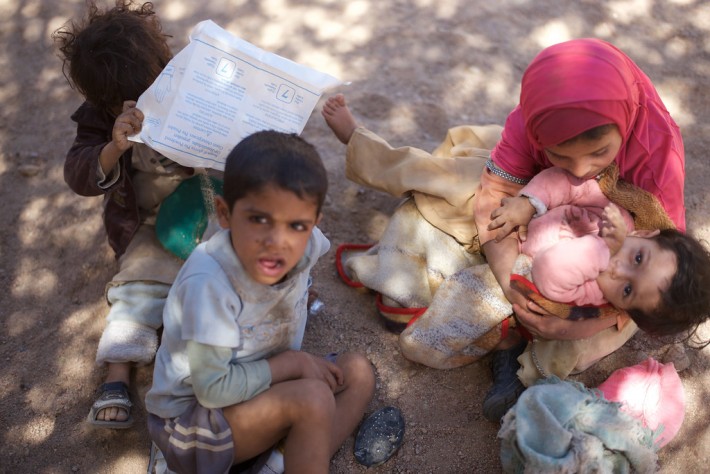
Yesterday, the World Health Organization (WHO), the World Food Program (WFP), the Food and Agriculture Organization (FAO) and UNICEF issued a call for action to prevent  childhood malnutrition and death, now worsening in many places, reported in the {Lancet} at length on July 27. What is clear from the call and the dire situation described in a related Associated Press article on the malnutrition, starvation and death among children in sub-Saharan Africa, Afghanistan, Yemen and elsewhere, is that these needs can only be met by implementation of the LaRouchePAC program to create 1.5 billion productive jobs, and building of global medical infrastructure.

“As leaders of four UN agencies,” the call read, “we are issuing a call for action to protect children’s right to nutrition in the face of the COVID-19 pandemic. This requires a swift response and investments from governments, donors, the private sector, and the UN. Five actions must be taken and tracked immediately…..[provision of food and help listed]….”

The four agencies estimated that at least $2-4 billion is needed immediately “to protect these children, prevent and treat malnutrition, and avoid human loss. This $2-4 billion estimate includes an essential package of four life-saving interventions: prevention of wasting in children at risk; treatment for children who are wasted; biannual vitamin A supplementation for children aged 6–59 months (90% coverage); and mass communication for the protection, promotion, and support of breastfeeding that focuses on caregivers or families of children aged 0–23 months.

“The estimated increase in child wasting is only the tip of the iceberg. The COVID-19 pandemic is also expected to increase other forms of child malnutrition, including stunting, micronutrient deficiencies, and overweight. The global community’s failure to act now will have devastating long-term consequences for children, human capital, and national economies.”


Dr. Fauci Appeals to Youth To Avoid Infecting Others, “We’re Knee-Deep” Into First Wave; New Complications Emerge in Children

In a conversation yesterday with Dr. Francis Collins, the Director of the National Institutes of Health, Dr. Tony Fauci, Director of the National Institute of Allergy and Infectious Diseases (NIAID), made a special appeal to young people to understand that if they become infected, although asymptomatic, they can infect others who may be more vulnerable . Taking necessary precautions can make the difference. Emphasizing that “we are still knee-deep in the first wave” of the coronavirus pandemic, which he described as “a surge, or a resurgence of infections superimposed on a baseline … that really never go down to where we wanted to go,” he reported that the average age of new patients has now dropped by about 15 years just over the past few months. While young people may not become seriously ill, he warned, COVID can still “put them out of action for weeks at a time.”

The fatality rate is significantly lower among Gen Y and millennials, Fauci pointed out, and many of those cases are asymptomatic. But, he cautioned, “just because you’re 21 and you may not have significant symptoms, that does not mean you can’t affect other people, and I think that’s something that we’re concerned about.” Fauci urged young people to remember that when they’re infected, there’s a likelihood that they could spread the disease to people who are at high risk of serious illness, and then, *“you’re part of the propagation of the pandemic,* so it’s your responsibility to yourself, as well as to society, to avoid infection.” (emphasis added)

An article published July 1 in JAMA Neurology indicates that young people and children can experience severe complications from novel coronavirus, manifesting secondary neurological problems, causing brain damage, which occur following a coronavirus infection. Called “COVID-19 pediatric multi-system inflammatory syndrome,” it is thought to be a debilitating immune response to COVID-19, similar, but worse than, the Kawasaki-like inflammatory condition that has previously been linked to young adults with coronavirus. JAMA Neurology points to increasing reports “of children developing systemic inflammatory response requiring intensive care,” South China Morning Post reported July 6. This suggests that “despite the typically mild acute infection, children may be at high risk of a secondary inflammatory syndrome.”

New Jersey physician Dr. Jen Caudle told CNN she has seen young patients suffer from strokes, shortness of breath, fatigue, or the inability to smell and taste long after recovering from acute effects of coronavirus.


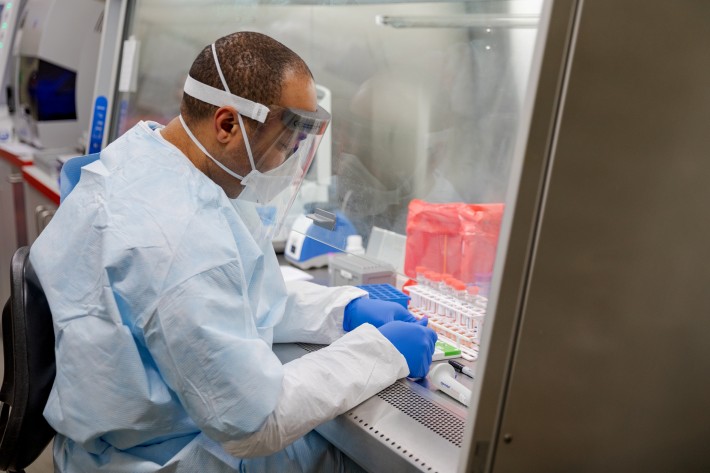
Some Labs Testing for COVID-19 Experience Falling Four to Ten Days Behind Before They Deliver the Results

As the number of confirmed infections in the U.S. has surpassed 4 million, some labs testing for COVID-19 are handling a heavy load of cases, which they are taking longer to process, resulting in long processing delays from four to 14 days to deliver test results.

Jay Solomon, CEO of Aviva in Sarasota, a senior community with a nursing home and assisted living facility, said to AP on July 22 that results were taking up to 10 days to come back. ”It’s almost like, what are we accomplishing in that time? If that person is not quarantined in that 7-10 days, are they spreading without realizing it?”

The AP story, “US Labs Buckle Amid Testing Surge,” reported that health experts say that test results that come back after two or three days are deficient because by then, “the window for tracing the person’s contacts to prevent additional infections has essentially closed.”

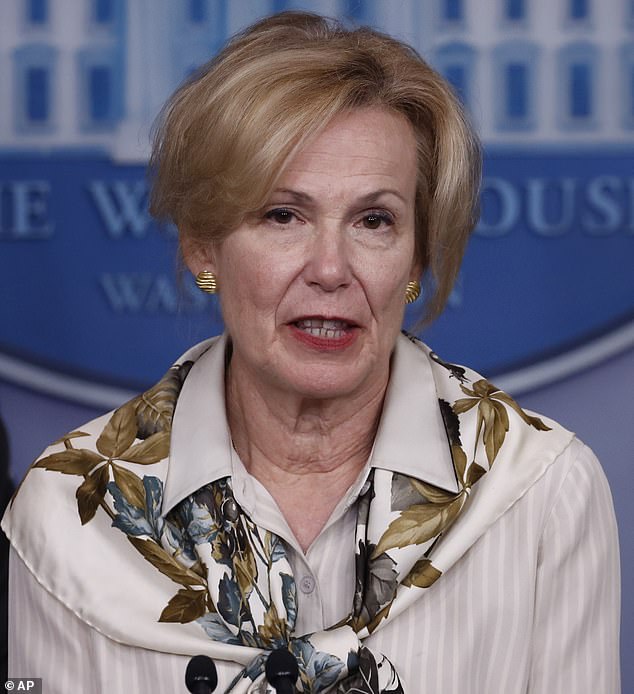
Dr. Deborah Birx of the White house coronavirus task force said on Fox TV that “the turnaround times, particularly across the South, are too long.”

Dr. Leana Wen, a public health professor at George Washington University said it’s reasonable to tell people awaiting test results to isolate for 24 hours. “Imagine, you tell a parent with young children to self-isolate for 10 days or more without knowing they actually have COVID? I mean, that’s ridiculous.”

Quest Diagnostics, one of the nation’s largest testing chains, said it can’t keep up with demand and most patients will face waits of a week or longer for results. Quest’s pooled testing process will be rolling out in Virginia and Massachusetts next week. This technology (discussed in the Monday briefing) can allow more samples to be tested.


Testing capacity must be expanded. Defense Production Act, anyone?


“Stop genocide: Peace and development for Yemen!”

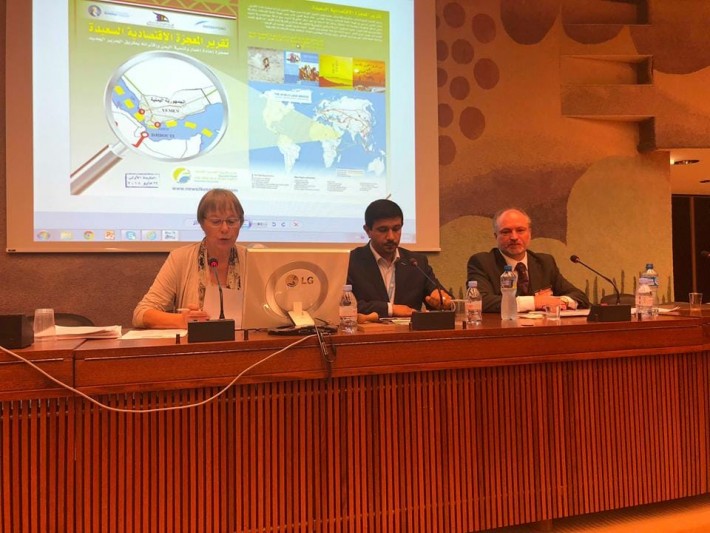
June 20, 2018 – Elke Fimmen of the Schiller Institute in Germany gave a presentation on Day 2 of the UN-Human Rights Council Session, 38th Session (18th of June – 6th of July, 2018) in Geneva. The seminar “Human Rights in Yemen” which took place on June 19, was sponsored and organized by the Organization for Defending Victims of Violence (ODVV) and INSAN Germany. The meeting was introduced and moderated by Dr. Hassan Fartousi, researcher in international law at the University of Geneva.

At the one-hour-event, Fimmen was introduced as delegate from the German LaRouche Movement. The meeting was also addressed by Mathias Tretschog, activist of the Berlin Peace Initiative Stop the War in Yemen, who spoke on the complicity of the West in tolerating this genocide. Al Jazeera filmed the entire event, and short interviews were conducted with the two speakers by the Bahrein TV station Alluluwa.

As the brutal Emirate’s and Saudi Coalition assault on the vital harbour city Houdeida is escalating since last week, while peace talks by UN Special Envoy Martin Griffith are continuing (including a meeting next week with EU foreign ministers), Elke Fimmen focussed on how to use the new global strategic momentum established with the Singapur spirit to stop the war and establish the „new paradigm of peace and development“, as Helga Zepp-LaRouche has called for in her new statement.

The now possible Trump-Putin summit will be crucial to change the strategic equation, also in the Middle East, and to open a road towards establishing peace. Fimmen pointed out that there is growing resistance against US-support for the Saudi-war in the US Congress, which should be strenghtened to the maximum. As Helga Zepp-LaRouche said in her latest webcast, the US government could end this war immediately, by withdrawing their support for the barbaric Saudi -coalition aggression against Yemen.

Fimmen detailed the key points for a lasting peace settlement, as had been identified by the Bad Soden Yemen Declaration of last November’s Schiller-Institute conference:

– An immediate ceasefire;

– the lifting of the blockade of the ports and airports, allowing in immediate humanitarian aid and the import of food and other goods;

– a return to the national dialogue and reconciliation process , to find a political solution. The political process should be conducted under the UN umbrella, but it should take place ONLY between Yemeni national factions without interference of regional or global powers. Russia, China and the United States should serve as guarantors of the implementation of the final outcome of the dialogue.

– Finally, Yemen must be assisted in a rapid and large-scale reconstruction process, focused on infrastructure projects to regain the livelihood of the nation and the integration of Yemen into the Belt and Road Initiative (New Silk Road).

In the concluding part of her speech, she stressed the need to focus on Yemen’s right to development, by presenting the main programmatic points of the new Schiller Institute report „Operation Felix: Yemen’s Reconstruction and Connection to the New Silk Road“, including some key graphics of the report and a picture of the Sana’a event two weeks ago. With the cover of the Yemen reconstruction plan on display during her speech, this focus on building a beautiful future out of the present abyss of horror had a very important uplifting and remoralizing effect on the audience.

Text of speech

First I want to thank the sponsors and organizers for inviting me to address this event today.

My topic is “Stop Genocide: Peace and development for Yemen!”

The President and founder of the Schiller-Institute, Mrs. Helga Zepp-LaRouche last Thursday very forcefully called for an immediate end of the bombing of the port of Houdeida by the Saudi Coalition and above all, for the urgent change of policy by the United States.

In her weekly international webcast,14th of June, 2018, she said: “ Already before this bombing against Hodeidah started, Yemen was characterized by the United Nations as the worst humanitarian catastrophe on the planet, and the Russian Foreign Ministry just commented on the fact that the bombing against this port has started, saying that this will make a political solution that much harder.

But there is one country right now, which really could stop it, and that is the United States.  If the United States would just make sure Saudi Arabia does not have the means to continue this, it would!  And I find it promising that even two members of the Israeli Knesset, the parliament, basically commented on the Singapore [Korea] summit by saying that this could be a model to solve the Middle East crisis, including the conflict between Saudi Arabia and Iran.

Now, that is the way to go. I think military solutions just don’t function.  … I said at the beginning of the year that geopolitics must be overcome, because geopolitics is the basis of war.  In the last century, it was the basis of two world wars, and I think we have to come to a situation where, given the fact that nuclear weapons exist, which could lead to the annihilation of civilization, I think we have to move to a world where war is absolutely outlawed as a means of conflict resolution.”

The principles of a solution

UN emergency relief coordinator Mark Lowcock warned on June 1st, that the number of starving Yemenites, if the Hodeida harbour is blocked, would increase from 8.4 million to 18.4 million (two thirds of the entire population). Now, the full blocking of Hodeida is a reality, as the Saudi-coalition attack launched last week, has forced the relief workers to flee and halt all import activities. Open warfare is threatening the lives of the whole civilian population of Hodeida.

This barbaric military assault by the Saudi and Emirates coalition on the port of Houdeida, Yemen’s most important lifeline for food and humanitarian goods for the whole country, must be stopped immediately by the world community! Otherwise, what was already a horrible humanitarian crisis in Yemen up to now, could quickly become an unspeakable genocide threatening the whole population of Yemen.

While the efforts of UN Special Envoy Martin Griffith for his peace plan are continuing, in the present midst of turbulence, military and political, the main principles of a workable solution are clear:

An immediate ceasefire;

the lifting of the blockade of the ports and airports, allowing in immediate humanitarian aid and the import of food and other goods;

a return to the national dialogue and reconciliation process , to find a political solution. The political process should be conducted under the UN umbrella, but it should take place ONLY between Yemeni national factions without interference of regional or global powers. Russia, China and the United States should serve as guarantors of the implementation of the final outcome of the dialogue.

Finally, Yemen must be assisted in a rapid and large-scale reconstruction process, focused on infrastructure projects to regain the livelihood of the nation and the integration of Yemen into the Belt and Road Initiative (New Silk Road). *

The Empire fears peace

The geopolitician´s fear of peace was clear from the launching of the agression in March 2015, when the war was started to block the peace agreement by all parties, “National Peace and Power Sharing Agreement”, which had been agreed upon on September 22, 2014.

The geopolitical fear of peace was also seen in the recent targetted murder of the President of Yemen, His Excellency Saleh al-Sammad, who was the responsible person for the peace negotiations and now the absolutely brutal attack launched by the Emirates, the Saudis and the coalition, in order to block the peace proposal by UN special envoy Griffith, wrapping it into the propaganda line that “victory will be quick”, and then “humanitarian aid” would finally reach Yemen.

The old paradigm of geopolitics and confrontation between East and West is what has caused the war against Yemen, but this imperial policy is failing globally, as the Saudi-coalition assault becomes ever more brutal and its supporters become ever more exposed. In the last weeks, voices against the Saudi war and its support by the US, Britain, France and others were raised louder and louder in the whole world, including in Great Britain and the United States themselves. There are more than 30 US congressmen , also senators from both the Democratic and Republican parties, fighting to stop US support for the Saudi war against Yemen, putting a lot of pressure on the US government. Among the other atrocities, the Saudi attack on the hospital of Doctors without Borders, fighting the deadly cholera epidemic, created a big shock.

As one response, US Secretary of State Pompeo issued a statement on June 11, warning the UAE to hold back their assault on Hodeida, stressing that he expected all parties to work with Griffith’s office, to include supporting a political process to resolve the conflict. On June 6, a spokesman for the National Security Council of the White House had said that the US would “not support actions that destroy key infrastructure or that are likely to exacerbate the dire humanitarian situation …”. Of course, at this point, these are just words, and we know that the US and GB blocked the Swedish Ceasefire initiative at the UN last Friday.

It should be noted however, that the barbaric attack against Hodeida was launched at the very same moment, when the historic Korea summit took place between President Trump and North Korean leader Kim Jong Un, obviously targetted by the war party to sabotage this new momentum, which has been built up with the help of China, Japan and Russia.

From a strategic standpoint therefore, it is extremely important now to make maximum use of this historical momentum, especially as President Trump is preparing for a meeting with President Putin, with both of them stressing that they want to cooperate to solve crisis such as in the Middle East.

If a massive international organizing campaign is directed now towards President Trump and Congress to finally stop the slaughtering of innocent people of Yemen on the altar of geopolitics, and instead move forward on the road of peace, the backbone of the historical Saudi-British axis can be broken, which is fuelling this war.

What a scandal, that the United Kingdom is promoting geopolitics and is an active war participant in the war on Yemen, while in the same time being the so called penholder for the Yemen conflict in the UN Security Council. This imperial manipulation must stop and the world must be allowed to create new relations among souvereign nations, based on peaceful development!**

Yemen and the new global paradigm of cooperation

While the emergency task to establish a ceasefire and to get humanitarian support flowing again on a large scale, as well as the start of political talks between the Yemeni factions, the right to development of Yemen as a modern and prosperous nation must absolutely be included in the battle for the future.

The most powerful progressive, anti-Empire dynamic in the world right now, is the BRICS and Silk Road spirit of “win-win”-cooperation, which has made a lot of progress, including in the settling of the Korea problem. This creates a tremendeous opportunity for the whole Mideast, South West Asia and Africa, where young people will only have a joyful future, when they can build cities, infrastructure, railroads, universities and determine their own fate instead of being subjected to oligarchical domination!

This is why the Schiller Institute has just issued its new report “Operation Felix: Yemen’s Reconstruction and Connection to the New Silk Road”, which was presented in a seminar on June 6th at the headquarters of the Yemeni General Investment Authority (GIA) in the capital of Yemen, Sana’a. The report is based on the scientific method of “Physical Economics” as defined by American economist Lyndon LaRouche.

The study by Hussein Askary shows that the destruction of Yemen’s economy started already in the 1990s when Yemen came under the yoke of the IMF and World Bank. The catastrophic consequences of that policy are described in detail in the study, which shows that the IMF/WB prevented Yemen from developing for over 30 years, making Yemen the poorest country in the region, with dependency on imports of food reaching 80% in 2014, even before the war started.

The report then goes through the destruction of the rest of Yemen’s weak economy, the bombing of the infrastructure and every other productive sector, creating the worst humanitarian crisis in the world today.

The reconstruction plan proposed in the report starts with an emergency mobilization to rehabilitate the destroyed infrastructure and providing relief to the population especially in the rural areas, through mobilization of an army of young workers, modeled on the Franklin Roosevelt-era Civilian Conservation Corps. However, the report states clearly that the intention of the authors is not to rebuild Yemen back to what it was before the war, i.e. “the poorest country in the region”, but to build a completely new economic growth platform based on cooperation with the BRICS and China, and other friendly powers. To start the true reconstruction plan, a “Yemeni National Reconstruction and Development Bank” is proposed by the author, modelled on the Hamiltonian national credit system.

The proposed infrastructure projects include large-scale transport, power, water, shipping, manufactures and commercial agriculture projects. The key component of the plan is the “Yemeni Development Corridor”, with the first railway ever to be built from Sa’ada in the north to Aden in the south, branching east and west along the way to the main ports on the Red Sea and key potential industrial, mining and agricultural areas in the eastern plateau. An additional coastal line is required to connect all the major port-cities and to neighboring countries.

The final part of the report is dedicated to the connectivity of Yemen to both the Maritime Silk Road through Yemen’s ports on both the Indian Ocean and the Red Sea, and to the Silk Road Economic Belt on land to connect eastward to Oman, Iran and further to Central Asia and China. Westward, Yemen would be connected through a bridge/tunnel across the Bab El-Mandab Strait to Djibouti, Ethiopia and the rest of Africa, making it an ideal bridge between Asia and Africa.

The author of the report, Hussein Askary recommended, that the Sana’a government present this report to the UN and other international powers to be included in any coming peace negotiations, as a key item to be agreed upon by all parties, before any political discussions are undertaken.

The report in Arabic language is available to download for free from the website of New Silk Road Party of Yemen, chaired by Fouad Al-Ghaffari:

http://www.newsilkroadparty.com/ It will soon be presented to an international audience in English and in German.

Conclusion

I want to conclude by saying that it is the future which determines the present. The human spirit can triumph over evil. The world needs Yemen – so let’s create a miracle now! Thank you.

*A resolution “To End the War and Humanitarian Crisis in Yemen” with these demands was adopted by the participants of the Schiller Institute conference in Bad Soden, Germany, November 2017 and circulated internationally.

** History Is Now Being Written in Asia! The EU Summit Must Follow the Example of Singapore!


Lake Chad Conference: Water Transfer Is Not an Option, It Is a Necessity

March 1  — The official outcome of the Feb. 26-28 International Conference on Lake Chad  in Abuja, Nigeria is an unequivocal statement of support for the Transaqua project, calling for the transfer of water from the Congo River basin to Lake Chad. It clearly states:

*There is no solution to the shrinking of Lake Chad that does not involve recharging the lake by transfer of water from outside the basin.

*That Inter-basin water transfer is not an option, but a necessity.

*The Transaqua Project, which would take water from the right tributary of River Congo, conveying the water 2,400 kilometers through a channel to Chari River, is the preferred feasible option.

Furthermore it was officially announced by Italian Ambassador to Nigeria Stefano Pontesilli, during the High-LevelSession of Presidents of the Lake Chad Basin Commission, that Italy will contribute EU1.5 million for the feasibility study of the Transaqua project, declaring that Italy was ready to partner with the proposed “Transaqua Project” to see the success of the water transfer. The feasibility study is planned to be carried out by the Italian engineering firm Bonifica and construction company PowerChina.


Several U.S. States in Line to Become New Hotspots, Unless Strict Guidelines Adhered To, Dr. Deborah Birx Warns

After touring several states in the U.S. south and southwest, Dr. Deborah Birx, coordinator of the White House Coronavirus Task Force, is warning that at least five more states are in line to become COVID-19 hotspots, unless a concerted effort is made to ensure that citizens follow established guidelines for mask-wearing and social distancing, and states move to close bars, indoor dining and public gatherings.

Over the past week, Dr. Birx visited the five states she strongly recommends “reverse course” now—Kentucky, Tennessee, Indiana, Ohio and Virginia– Bestlifeonline.com reported. She reported that the task force is making this assessment based on current infection rates and daily case numbers per 100,000 people ”We can see what is happening in the South moving North,” she said in a press conference in Frankfort, Kentucky. Tennessee, for example, is considered to now be “critical,” according to the Covid Act Now group of medical professionals, epidemiologists, and researches. The Harvard Global Health Institute puts Tennessee in the highest-risk category. Dr. Birx was especially forceful in her press conference with Tennessee Governor Bill Lee, telling reporters and healthcare officials, “Stop going to bars, indeed close the bars and limit your indoor dining and if you wash your hands and social distance, you can have as big an impact as sheltering in place.” During that press conference, Gov. Lee said he would not implement any of those measures or “shut down” any part of the economy..

On July 22, Birx also named 11 cities– Baltimore, Cleveland, Columbus, Indianapolis, Las Vegas, Miami, Minneapolis, Nashville, New Orleans, Pittsburgh and St. Louis–which she said should take “aggressive” steps immediately to avoid becoming  hot spots. “Until you can see that explosion, it’s hard for people to understand how deeply you have to clamp down,” Birx said. “That’s why we called out the next set of cities where we see early-warning signs, because if you make changes now, you won’t become a Phoenix.”

In addition, Dr. Ashish Jha, director of the Harvard Global Health Institute has named six other states—Wisconsin, North Dakota, Nebraska, Wyoming and Montana–which are not yet hotspots, but are “heading there.” These states don’t tend to be in the news, he said, but they have “limited hospital capacity…and can ill afford to stretch their ICUs.” Both Montana and Wyoming have high infection rates that are “worrisome,” Dr. Jah said. Covid Act Now warns that there is not a single U.S. state that is currently “on track to contain COVID.”


VIDEO: Why a U.S., China, Russia and India Summit is Urgently Needed Now

Helga Zepp-LaRouche leads an international dialogue concerning the urgent need to bring the leaders of the “Four Powers” (U.S., Russia, China and India) together for a summit to address the pandemic, the global financial crisis and the danger of war. Excerpts are taken from The Schiller Institute international conference of June 27th, 2020, entitled, “Will Humanity Prosper or Perish? The Future Demands a Four Power Summit Now.”


Page 128 of 147First...127128129...Last