Top Left Link Buttons

Jason Ross

Author Archives

China: High-Tech Manufacturing Is Growing at 13.4% Per Year

Nov. 14 – Xinhua reported Nov. 13 on third quarter 2017 results for the Chinese economy, as presented by Zhang Liqun, researcher with the State Council’s Development Research Center.

The year-on-year overall growth rate in China for the first three quarters of 2017 was 6.9%, which was higher than expected. Most interesting is that “the high-tech and equipment manufacturing sectors posted stellar growth in the first three quarters, with output up 13.4% and 11.6% respectively,” Xinhua reported. Investment in high-tech manufacturing rose even more dramatically, by 18.4%, up from 11.7% for the same period in 2016. Job creation is correspondingly strong: China created almost 11 million jobs in the first three quarters of 2017—300,000 more than the same period last year. Official unemployment in Chinese cities stands at 3.95%, the lowest level since 2008.

The Xinhua article also quoted the chief economist at the Bank of China, Cao Yuanzheng, who said that it is of vital importance to contain financial risks, including “countering debt, shadow banking and asset bubbles.” Even Moody’s had to admit, in a recent research note, that “a stronger policy focus on financial sector regulation should continue to restrain the growth of shadow banking activities, help mitigate asset risks for the banks, and address some key imbalances in the financial system.” On poverty reduction, which is the central concern of President Xi Jinping and the entire national leadership, Vice Premier Wang Yang presided over a meeting of the State Council’s group on poverty reduction on Nov. 13. Wang emphasized that they had to be focused on “enhancing a sense of mission and crisis awareness, and targeting problems to fulfill the Party’s promise to the Chinese people and the international community,” Xinhua wrote. (The fact that Wang presented this policy as a commitment to the international community is especially notable.) Wang added that to meet these goals it was necessary to train local authorities, “stressing the importance of carrying out research and investigation, and averting formalism.”

Zepp-LaRouche Addressed Diplomatic Seminar in Yemen

Nov. 8, 2017

Helga Zepp-LaRouche, President of the Schiller Institute, addressed (through video message) a seminar in the war-defying capital of Yemen on November 7. The seminar, titled “From Sana’a to Beijing: The First Diplomatic Seminar,” was addressed and sponsored by Foreign Minister of Yemen Hisham Sharaf and hosted by The Institute of Diplomacy in Sana’a. The theme of the seminar was China’s Policy Paper on the Arab World, and how Yemen would join the Belt and Road Initiative.

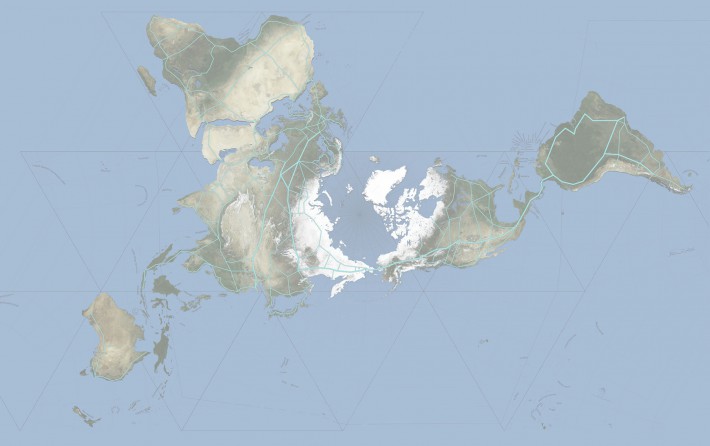
Fouad Al-Ghaffari, Chairman of the Yemeni Advisory Office for Coordination with the BRICS, spoke at the seminar, too, introducing Mrs. LaRouche as the “New Silk Road Lady.” The banner of the event featured a major map of the World Land-Bridge as designed by EIR. Foreign Minister Sharaf reviewed the friendly and productive historical relations with China, including many infrastructure projects that China contributed to modern Yemen in the past decades before the outbreak of the Saudi war on Yemen in 2015. He expressed Yemen’s full readiness to join the Belt and Road Initiative and to protect the Maritime Silk Road at the Bab El-Mandab Strait and the Red Sea. He urged China to play a constructive role in the political solution for the war in Yemen. He also urged China not to take steps that could lead to the further splitting of the country between south and north. Sharaf was referring to the allegations of a recent contract signed between Chinese telecom giant Huawei and the government-in-exile, to build a mobile telephone system in areas in southern Yemen controlled by U.A.E.- and Saudi-backed armed groups.

The Chinese government does not recognize the government in Sana’a, of which Foreign Minister Sharaf is a member, and instead recognizes the government of deposed President Abed-Rabbo Mansour Hadi, who is in exile in Saudi Arabia, who has little or no control of matters in Yemen. China claims that it is following UN Security Council Resolutions. However, the legitimacy of Hadi is questioned inside Yemen, as his term had already expired in September 2014, when the combination of Houthi rebels and forces of former President Ali Abdullah Saleh took power in the capital and put Hadi under house arrest. Hadi is also not popular among the people, because he sanctioned the Saudi campaign of bombardment against his own people, as negotiations where underway to find a political solution between the new and former governments of Yemen. The Chinese Foreign Ministry issued the China Arab World Policy Paper in January 2016, a few days ahead of the visit by President Xi Jinping to three key nations of the Southwest Asia: Egypt, Saudi Arabia and Iran. President Xi expressed during his visit the same points raised by the policy paper, which is the importance of settling the conflicts of the region through a spirit of cooperation and dialogue, and that China is ready to extend the policy of the New Silk Road to the region and help rebuild the economies devastated by wars and conflicts in recent years, and offering cooperation in infrastructure, nuclear power, and agriculture to all the nations of the region.

Yemeni official news agency Saba and other newspapers covered the event. Mrs. Zepp-LaRouche’s video statement can be viewed here:


Schiller Institute Calls on Trump and World leaders to Halt Sanctions Against Nations and Governments Globally

Economic sanctions mean a death sentence for millions of people, as needed medical supplies, electricity, clean water, food, infrastructure, tools and other life saving essentials are prohibited, as is the economic access required for development.  Whether in Russia, Syria, Iran, Venezuela, Gaza, Cuba, or elsewhere, innocent people suffer and die unnecessarily, while the strategic impact of sanctions on the targeted country is the opposite of what is supposedly intended.

Now, with the worldwide financial blowout, the rapid spread of COVID-19, and the locust plague devastating some nations’ food supplies, the time has come for urgent policy changes. Full cooperation is required among all nations, and a global solidarity must replace old-style British Empire geopolitics and genocidal policies.

Schiller Institute founder Helga Zepp-LaRouche on March 18 called for closing down the financial markets for several days, to have time to enact urgently needed reforms, beginning with a (global) Glass–Steagall banking reorganization, a prerequisite for carrying out a bankruptcy reorganization of the present financial system, and ending the “geopolitical” system. Respect for sovereignty must be reestablished, and ending sanctions is a necessary step towards such a new system of international affairs.

A summit meeting of President Donald Trump, President Xi Jinping, President Vladimir Putin and Prime Minister Narendra Modi — and possibly others — can start the process of replacing this degenerate system with a New Paradigm, based on the policies developed by the late American statesman and physical economist Lyndon H. LaRouche, Jr., which he called his “Four Laws.”

Peace through economic development, the “American System” policy, must once again become the U.S. government’s approach to the world.


Egypt Positioned for Working with New Silk Road

Nov. 7, 2017 -“Egypt supports the Belt and Road Initiative that connects China with the world’s continents through massive networks of land and sea routes,” Ibrahim Mahlab, the Egyptian President’s assistant for strategic and national projects, told a forum in Cairo. Describing the China-Egypt ties as “strong, unique and sustainable,” Mahlab, a former prime minister, expected the initiative to “restructure the traditional models of world trade.”

Egyptian and Chinese officials, businessmen, representatives of financial and economic institutions, as well as a delegation from the Communist Party of China, attended the Nov. 6 forum, on “Belt and Road–Together for a Better Future.” The participants at the forum, co-organized by Sharaf Foundation for Sustainable Development and the Chinese Embassy in Cairo, discussed ways to boost China-Egypt economic, trade and cultural relations, and the available investment opportunities.

“Being a central point between Africa and Asia, Egypt is also a focal axis of Arab and African trade,” Mahlab said, highlighting the significance of Egypt’s strategic location for the Belt and Road Initiative. He noted that Egypt has carried out massive infrastructure projects over the past three years that have greatly upgraded the country’s energy supplies and road networks which could help future investors in the country.


Webcast—Our Stark Reality: Either Act in Solidarity, or Face Hell on Earth

In her weekly webcast today, Helga Zepp LaRouche laid out the stark choice facing humanity: Either we can act together, in cooperation and solidarity, or the future will be one of chaos, war and even more destructive pandemic disease. It is wrong to say that there was no advance warning that we would face such an existential crisis. Lyndon LaRouche was prescient in his forecasts going back to 1971, when he warned that the decision to end the Bretton Woods system, if not reversed, would plunge mankind into a Dark Age.

At present, we are seeing that warning fulfilled, in the horrors of overcrowded and under-equipped hospitals in Italy, Spain, and New York City. But we are also seeing the hope that the disease can be slowed, even halted, coming from China. The Chinese are now offering necessary medical supplies to 82 nations, as well as their expertise in countering the coronavirus. Only “insane people, or criminals” continue to push the lies which justify the anti-China rhetoric.

Zepp LaRouche also elaborated her call for a “pause” in financial trading, to allow for the implementation of Glass Steagall, and a move toward a Hamiltonian national credit system, instead of a hyperinflationary bailout of the worthless assets being traded in the casino economy. The explosion of the two crises—the pandemic and the collapse of the financial system—offer us the opportunity to come out of the crises with a new image of man, as we build the New Paradigm, in cooperation with sovereign nation states.


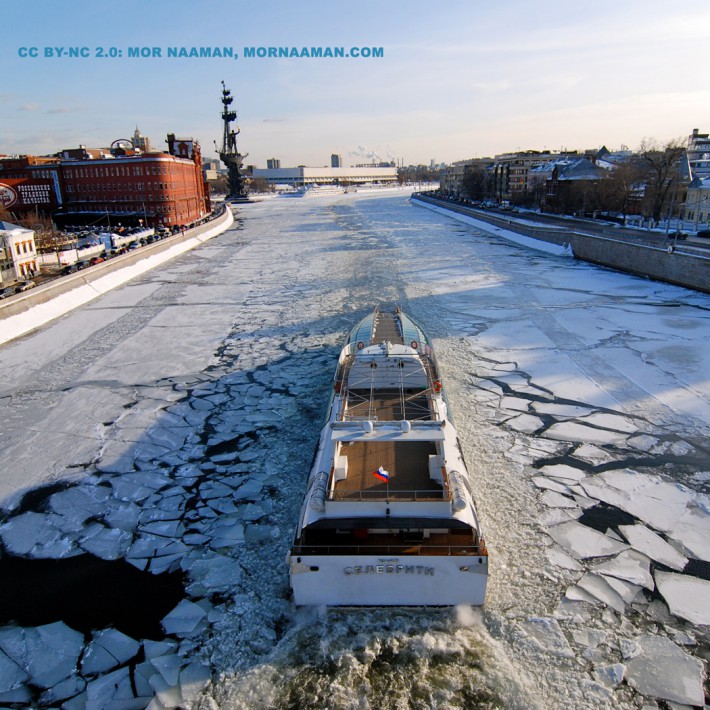
China and Russia: “Silk Road on Ice”

Nov. 8, 2017 -Russian Prime Minister Dmitri Medvedev was in Beijing for regularly-scheduled meetings with his Chinese counterpart, Li Keqiang, and he also met with President Xi Jinping. Xi told Medvedev that China and Russia should create a “Silk Road on the Ice,” and fully “integrate the Belt and Road Initiative with the Eurasian Economic Union.” According to a Xinhua wire, “Xi called on both sides to increase the content of

technological innovation in their cooperation and integrate the Belt and Road Initiative with the Eurasian Economic Union. China and Russia should cooperate in the development and utilization of the Arctic navigation channels to create a `Silk Road on the Ice,’ Xi said.”

Xinhua’s report adds: “Xi said China is ready to work with Russia to expand cooperation in various fields, maintain close coordination in international affairs and promote the building of a community of shared future… Xi pointed out China and Russia should give full play to the prime ministers’ regular meetings and enhance cooperation on energy, equipment manufacturing, agriculture and aerospace.”

Medvedev, for his part, transmitted Russian President Vladimir Putin’s greetings to Xi, and his congratulations on the recently concluded CPC Congress and Xi’s re-election as the general secretary of the CPC Central Committee. The Congress, Medvedev said, “carries great significance to both China and the world.”

Medvedev also met with China’s Prime Minister Li Keqiang, who noted that “Medvedev is the first foreign leader to visit China after the 19th National Congress of the CPC,” Xinhua reported. “This has shown the closeness and high level of China-Russia ties,” Li stated. He also stated that, as affirmed in the 19th CPC Congress, China will “share development opportunities with countries around the world,” Xinhua reported.


Webcast: Shut Down the Neo-Liberal Casino Economy, It Is Hopelessly Bankrupt

Schiller Institute chairman Helga Zepp LaRouche issued an urgent call on March 18, which she reiterated in her weekly webcast on the 19th, for closing down the financial system for several days, to have time to enact urgently needed reforms, beginning with Glass Steagall banking separation, to carry out a bankruptcy reorganization of the present financial system. The neoliberal system is bankrupt, she said, due to the shift, which began fifty years ago, from the fixed-exchange rate post-war Bretton Woods system, to a deregulated, speculative casino economy.

The financial crash, which is occurring simultaneously with the spread of the Coronvirus pandemic, will not be solved by more bailouts, which will only prolong the destruction of the physical economy. Further, it will undermine efforts underway to reverse the collapse of the health care system worldwide, which was taken down in the name of for-profit health care, and austerity. What is needed now is full cooperation among leading nations, a global solidarity to replace geopolitics. While there have been some positive steps in this direction, the economic measures thus far remain within the box imposed by neoliberalism, while some officials, such as U.S. Secretary of State Pompeo, continue to engage in geopolitical provocations, as in his attacks on China.

To succeed against the global pandemic, she said, we should listen to the medical team from Wuhan, which waged a heroic fight against the disease. What is needed is love, not finger-pointing. The crisis has provided us with the opportunity to shed all the axioms of geopolitics and neoliberalism, and to act instead in solidarity with our fellow human beings.

Sign the petition


New China-Europe `Silk Road’ Line Inaugurated in Azerbaijan

Oct. 30 — There was great enthusiasm in Baku, Azerbaijan today as the head of state of that country, Ilham Aliyev, was joined by Turkish President Recep Tayyip Erdogan and Georgian Prime Minister Giorgi Kvirikashvili in a ceremony to inaugurate the new 826 km. Baku-Tbilisi-Kars (BTK) railway, which was set to take off on its maiden trip to Europe. According to {The Daily Sabah}, the BTK is a “key link in the modern Silk Road Railway” that will carry goods between Beijing and London. Initially, it is expected to carry almost one million passengers and 6.5 million tons of freight annually, but aims to transport up to 50 million tons a year when it reaches its full potential.

Also present at the ceremony was the U.S. ambassador Robert Cekuta, who noted that the BTK railroad is an important part of the New Silk Road, the Azeri news service APA reported.
President Erdogan, who is also in Baku for a two-day visit commemorating the 25th anniversary of establishment of diplomatic relations between Turkey and Azerbaijan, said at the ceremony that “Baku-Tblisi-Kars is part of a big Silk Road and it’s important that we have implemented this project using our own funds,” most of the $1 billion of which came from Azerbaijan’s state oil fund. Erdogan emphasized that the project will bring “peace, security, stability and prosperity and will contribute to the development of our countries.”

The {Daily Sabah} points out that, as “one of the land routes in the scope of China’s One Belt, One Road Initiative passes through Turkey, Kazakhstan, Azerbaijan and Georgia, the railway projects being launched in the context of the `Iron Silk Road’ have gained significance as they are connecting the regions.” The transportation from Georgia to Turkey is provided via a border tunnel, some 2,375 meters of which are within Turkey’s borders, while 2,070 meters are on the Georgian side. Thanks to the railway network linking the Middle East to Europe via the 13.6 km Marmaray rail connection, “transportation between Turkey and Asia, the Caucasus and European countries will be easier,” {Sabah} predicts.

The new line will reduce travel time from China to Europe to 15 days, twice as fast as the sea route, at half the cost of air freight. Trains can depart from Chinese cities, cross into Kazakhstan at the Khorgos Gateway, be transported across the Caspian Sea by ferry to the new port of Baku and then be loaded onto the BTK to head for Europe. President Aliyev said that several European countries are interested in the project and that his government is in talks with them. Kazakhstan is very interested in transporting goods via the BTK line.


Urgent: Helga Zepp-LaRouche Calls for Short Term Halt of Markets to Reorganize

Helga Zepp-LaRouche, founder of the International Schiller Institute, called for closing the financial markets to halt the inevitable collapse of the global casino economy and to reorganize it, shutting down the speculative financial operations which have preyed on the global economy.

TRANSCRIPT

This is Helga Zepp-LaRouche speaking. I am the founder and president of the Schiller Institute.

It is absolutely clear, that after the roller coaster, dramatic losses of the financial markets in the recent days, the systemic crisis is spinning out of control. The only remedy to prevent a further devastation of the real economy, a dramatic increase of mass unemployment, and the loss of lives of the poor and vulnerable segments of the population is to close down the financial markets. This is the necessary first step, to then use this banking holiday to implement the reorganization of the financial system, starting with a global Glass-Steagall separation of the banks, exactly as FDR did in 1933.

The measures which were taken by the European governments and the US, such as credits for enterprises, delays in tax payments, and even possible direct hand-outs of money —the so-called “helicopter money”— while intended to keep the functions of industry, institutions, and the workforce going, will not be sufficient, because the system is hopelessly bankrupt. Most of the enormous amounts of liquidity which have been injected into this bankrupt monetary system after 2008, and then in an escalated way after September 17, 2019, have just increased the activity of the casino economy and the frenzy of the speculators. The effort by the central banks to maintain that speculative sector can only lead to a hyper-inflationary blow-out as in Germany in 1923.

The closing of the financial markets must be accompanied by an immediate emergency summit of the most important governments of the world: the US, China,
Russia, and India—supported by others—to determine the urgent reorganization of the financial system and the establishment of a New Bretton Woods System, as it was intended by Franklin D. Roosevelt and called for by Lyndon LaRouche, to restart the physical economy worldwide.

Such immediate steps are indispensable, since the coronavirus pandemic can only be brought under control if the spread of the virus is stopped and an adequate
health system is established in every country.

This is a test, to determine if humanity has the moral fitness to survive.


Portugal Signs Action Plan with China on Maritime Silk Road

Nov. 1, 2017 -Portugal’s Minister of the Sea, Ana Paula Vitorino, accompanied by representatives of 39 Portuguese port and related companies and industries, is in China for a busy, eight-day visit (10/28-11/4) to concretize Portugal’s participation in the Maritime Silk Road. That includes hopes for some $2.5 billion in Chinese investments in expanding container and other facilities in the Portuguese ports of Sines (towards the south), Lisbon (in the center), and Leixoes (towards the north), as well as in areas of “blue biotechnology,” oceanic aquaculture, and marine industry. The first of two planned high-level seminars took place in Beijing on Monday, with representatives of 86 Chinese companies present. Vitorino’s Chinese counterpart, State Oceanic Administration Director Wang Hong, there spoke of maritime cooperation as an “essential part” of Chinese-Portuguese cooperation, and discussed China’s overall view of the “ocean as an important doorway for China to embrace the whole world.”

Vitorino, for her part, said that “Portugal wants to declare itself a global logistical hub in the Atlantic area,” and “double the value of the blue economy,” to the level of becoming one of the five most sea-related economies in the world. She described Portugal as “a necessary stop on north-south Atlantic routes … [and] a required crossing point in east-west routes.”

That statement echoes Portuguese State Internationalization Secretary Jorge Costa Oliveira’s declarations at the May Belt and Road Forum in Beijing, that Portugal desires that “a maritime route to [the port of] Sines be included, and in addition, that the land rail Silk Road, which already goes from Chongqing to Madrid, also comes to Portugal.”

So far, Vitorino has signed an Action Plan with her Chinese counterpart, outlining collaboration on research and commercial projects as China and Portugal establish an expanded “blue economy” partnership. She met today with the President of the Development Bank of China. Vitorino also reported that agreements had been reached between Portuguese and Chinese companies to form consortia which would compete for various of the planned investment projects. No specific details were given, but the Portuguese businesses represented are leading port operators, construction companies, logistics operators, naval boatyard repair works, engineering, energy, aquaculture, and fish transformation companies, Macauhub reported.


Page 16 of 27First...151617...Last