



The U.S. Nuclear Regulatory Commission (NRC) announced the completion of its Phase 6 review—the last and final phase—of the Design Certification Application (DCA) for NuScale’s small modular reactor (SMR) and have issued the Final Safety Evaluation Report (FSER). With this final approval customers can proceed with plans to develop NuScale power plants with the understanding that the NRC has approved the safety aspects of the NuScale design.
“This is a significant milestone not only for NuScale, but also for the entire U.S. nuclear sector and the other advanced nuclear technologies that will follow. This clearly establishes the leadership of NuScale and the U.S. in the race to bring SMRs to market. The approval of NuScale’s design is an incredible accomplishment and we would like to extend our deepest thanks to the NRC for their comprehensive review, to the U.S. Department of Energy (DOE) for its continued commitment to our successful private-public partnership to bring the country’s first SMR to market, and to the many other individuals who have dedicated countless hours to make this extraordinary moment a reality,” said NuScale Chairman and Chief Executive Officer John Hopkins said in a NuScale press release on August 28. “Additionally, the cost-shared funding provided by Congress over the past several years has accelerated NuScale’s advancement through the NRC Design Certification process. This is what DOE’s SMR Program was created to do, and our success is credited to strong bipartisan support from Congress.”
This design certification means it meets safety requirements and could be chosen by future projects seeking licensing and approval. The next step for NuScale is to obtain full certification from the regulator which will then allow a utility to reference the design when applying to build and operate a nuclear power plant anywhere in the US. Already the Utah Associated Municipal Power Systems is planning to develop a 720MW plant at the Idaho National Laboratory which would use 12 of these reactors.
Once built the Nuscale reactor will be the first of its kind which can be built in serial production in a factory with the modules assembled on the site of the power plant. NuScale has signed agreements with entities in the U.S., Canada, Romania, the Czech Republic, and Jordan. Similar agreements with other entities are being negotiated.

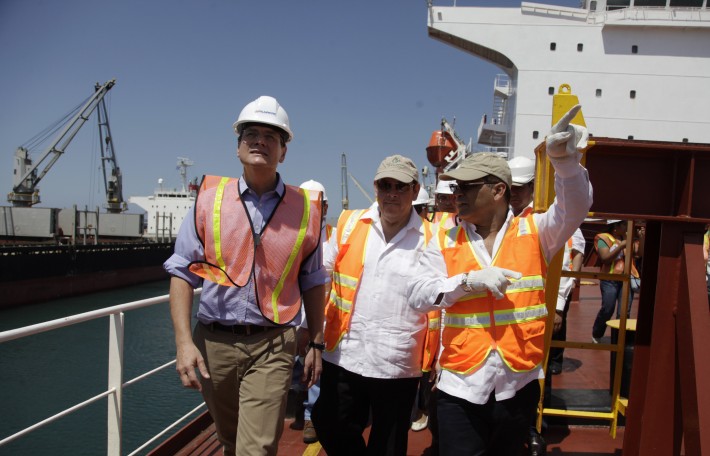
Aug. 21 – El Salvador’s President Salvador Sanchez Ceren told a national TV audience last night that El Salvador had broken diplomatic relations with Taiwan and established relations with the people’s Republic of China, in order to fulfill the government’s promise to secure a dignified life for all citizens, and create a future for new generations. He reported that a delegation of three high-level officials, led by Foreign Minister Carlos Castaneda, were in Beijing, and had just signed a Joint Communiqué on the Establishment of Diplomatic Relations with China.
The President did not mention the Belt and Road Initiative in his speech, but Panama’s eager participation in the BRI, after its decision to break with Taiwan in June 2017, has sparked discussion throughout Central America on prospects for increased integration and actually crushing poverty, drugs and violence. In point of fact, El Salvador’s move in the direction of the BRI is the single most important action it could have taken to stop the scourge of drugs and Satanic gang violence which, along with Wall Street looting, has driven over 20% of 1st generation Salvadorans to emigrate desperately to the U.S.
El Salvador has been looking for some time for international assistance to relaunch its container port at La Union in the Gulf of Fonseca on the Pacific, and China has expressed interest in the project. The initial concept for the La Union port was to turn the Gulf into a development hub with Nicaragua and Honduras, which also border the Gulf, and to connect it to the Caribbean through a railroad across Honduras. At the same time, the high-speed railroad in Panama which China has agreed to build has sparked active discussion in Costa Rica, El Salvador, and Honduras, minimally, of building a regional railroad, {EIR} has learned.
El Salvador’s decision increases the potential for other Central American countries–Honduras, Nicaragua, and Guatemala, in particular–to also leave the “Taiwan Gap” and enter the future. President Sanchez Ceren had met with the Presidents of Honduras and Guatemala earlier in the day, on the occasion of his nation joining the Customs Union which those two nations had created, bringing the 32 million people in those three countries — 73% of all of Central America’s population — closer together.
“I am speaking to you on this occasion to make public a decision which will have a profound impact on the present and future development of our country,” President Sanchez told the nation. When he was inaugurated, he explained, he promised to create the conditions needed to transform the nation towards securing a decent life for each one and their families, and after analyzing the domestic and foreign situation, we have made the decision to break relations with Taiwan and establish relations with the P.R.C., he explained.
This is a decision which will bring “great benefits to the country and offer extraordinary opportunities on the personal level to each of you. The People’s Republic of China is the second economy in the world, in continuous development, and whose development achievements in diverse fields has enabled it to position itself among the most successful countries,” he said, citing China’s promotion of “shared development … in countries such as ours through South-South cooperation.”
Sanchez reported that dialogue will immediately begin between the two countries to identify “potentials and concrete actions in the areas of trade, investment, infrastructure development, scientific, economic and technical cooperation, in health care, education, tourism, and support for micro and medium-sized companies,” as well as coordinating immediate humanitarian aid for Salvadoran farmers affected by drought.
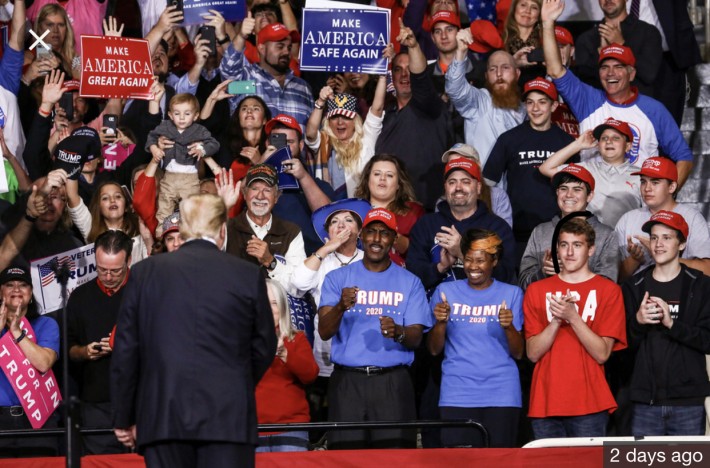
Forget what the pundits and anti-Trumpers say. The midterm election was no victory for Democrats, but changes, for the better, the situation in the U.S. Helga discusses this, with its implications for U.S. politics, and for Europe, in this week’s webcast. Ironically, as a result of Trump’s success, he will be coming to Paris this week in a stronger position than either Macron or Merkel!
She also identified the enormous potential of the Shanghai expo, with its implications both for resolving trade problems between the U.S. and China, but also to move towards a New Bretton Woods.
Speaking of Paris, Helga emphasized the urgency of using the Nov. 11 commemoration of the end of World War I, to learn the lessons of why the era of British geopolitics must be brought immediately to an end.
She called on viewers to study Xi’s speech in Shanghai, as an example of what Lyn has spoken about for years, on how creativity and innovation must be a continuous process, for the betterment of mankind.


The University of Alabama has climbed to #1 in the COVID-19 rankings amongst major American universities. Their main campus at Tuscaloosa climbed over the 1,000 mark after only nine days of school, now totaling 1,063. If CNN’s figure of around 8,700 cases currently for all U.S. colleges and universities is correct, then this one campus has about 12% of the known cases on campuses in the country.
The Tuscaloosa campus has some well-deserved notoriety, having made the news months ago for the fad of “COVID” parties – where parties were arranged with at least one known COVID- infected student. The other students would put money into a pot, with the first new case of COVID declared the winner. Such a demented subculture will give a new meaning to their school nickname, the “Crimson Tide.”
In the first six days of school, the campus showed 90/day, while the last three have climbed to 160/day. (These numbers only include the students, as the numbers for the faculty and staff together pale in comparison — nine cases, or one/day.) Assuming an approximate 4-5 day lag time from infection to symptoms to test results, it suggests the uptick happened last weekend. On Monday, all the bars in town were closed, by order of Mayor Walt Maddox. In tandem, the University has issued a moratorium on all in-person events, outside of classes; and has closed all common areas of dormitories, fraternities and sororities. They are hoping that their actions will be reflected in a drop in the new cases — unless the barn door was closed too late.

On the occasion of the release of the French version of the Schiller Institute’s report “The New Silk Road becomes the World Landbridge,” Helga Zepp-LaRouche presents the urgency of making this new paradigm a reality.
Image credit: Getfunky Paris, https://en.wikipedia.org/wiki/File:Eiffel_Tower_and_Pont_Alexandre_III_at_night_(banner_esVoy).jpg
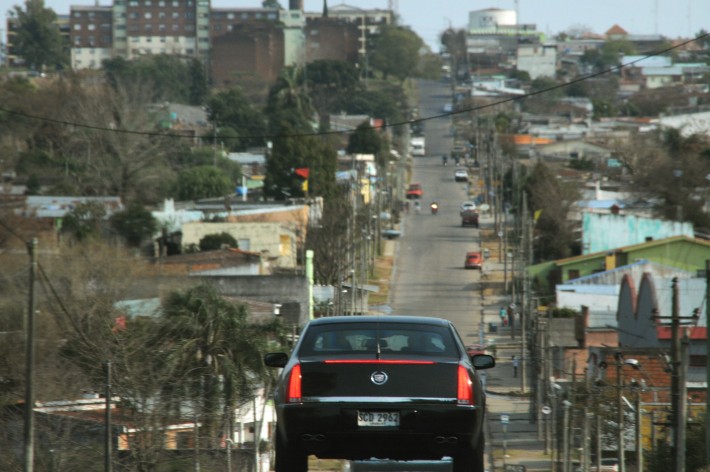
Aug. 20, 2018 — Meeting in Beijing yesterday with China’s Foreign Minister and State Councillor Wang Yi, Uruguayan Foreign Minister Rodolfo Nin Novoa signed a Memorandum of Understanding (MOU) by which his government formally joined the Belt and Road Initiative. China is Uruguay’s most important trading partner, purchasing 27% of that country’s exports. In addition to Wang Yi, Nin also met with the head of the National Reform and Development Commission, He Lifeng, among other dignitaries.
The meeting with Wang Yi also served to commemorate the 30th anniversary of diplomatic relations between the two nations, as well as to officially launch “Uruguay Week in China.” During his Aug. 19-28 stay, Nin will lead a large delegation of businessmen to the cities of Chongqing and Guangzhou, and will return in November to head up the Uruguayan delegation to the Shanghai International Import Fair.
Uruguay and China have enjoyed a comprehensive strategic association for the past few years, but Uruguay wants to deepen that relationship, increasing cooperation in several other areas in addition to trade, while offering attractive conditions for Chinese investors, particularly in the area of infrastructure. He identified as key investment projects Uruguay’s Central Railroad, a new fishing port, and rural electrification in the country’s north.
“We believe that all the conditions Uruguay offers make China’s presence, permanence, and closer ties with our country very attractive,” Nin told EFE news service. “In Uruguay, there is an absolutely consensual policy on the role that China plays and the relationship we should have with it.” According to Xinhua, he also stressed that Uruguay is the first member of the four-nation Common Market of the South (Mercosur) to join the Belt and Road Initiative, but expressed the hope that his country can serve as an “entry point” for China into the region, and help promote closer ties between China and Mercosur, and with other Ibero-American countries as well.

Nov. 4 -Jose Graziano da Silva, Director-General of the UN Food and Agriculture Organization (FAO), gave an interview to Xinhua on Nov. 3 which lavishes praise on China’s role in both alleviating hunger and advancing agricultural science. “China has made great achievements in curbing hunger and increasing food security, both domestically and globally, since the launch of its reform and opening-up 40 years ago,” Graziano da Silva told Xinhua.
Most interesting, Graziano da Silva totally debunks the 1995 book by Lester Brown titled {Who Will Feed China? Wake-Up Call for a Small Planet}, one of the major propaganda tools for the depopulation movement. “But China did succeed,” Graziano da Silva said. China lifted 80 million people out of hunger in what Graziano da Silva called “the most successful program that I know of in the world.”
Xinhua quotes the FAO 2018 World Food Security report, which states that the world produces enough food to feed everyone, yet one in nine people goes hungry and 821 million people are chronically undernourished. In 2007 over 15% of the chronically undernourished were in China, but that is now down to 9%. Graziano da Silva said this is “closely related to what China is doing to eradicate poverty, especially in rural areas.”
Xinhua reports that Graziano da Silva designed and implemented a Zero Hunger program that lifted 28 million people out of poverty in 10 years in his native Brazil, and that China’s program using reforestation to combat poverty along the Mongolian desert became “an example for my country.”
Graziano da Silva said China is helping the FAO with its South-South cooperation programs in Africa, including Chinese scientists helping to develop drought-resistant varieties of rice. He notes that in 2006, China was the first country to establish a strategic alliance with the FAO on South-South cooperation, and today more than 1,000 Chinese experts and technicians have supported 37 countries in Africa, Asia, the Pacific, Latin America and the Caribbean on agricultural issues.
On the Belt and Road, Graziano da Silva said: “The BRI is providing support for countries such as Malawi, for example, they produce enough food, but they lose half of it due to lack of storage. So we believe that infrastructure (projects) that are part of the BRI can help a great deal to improve food security and reduce food loss and waste, which in turn will also reduce pressure on natural resources.”
Graziano da Silva announced on Nov. 2 that the FAO will establish an International Center of Excellence for Agriculture Innovation and Rural Development in Beijing, aimed at helping to reach the FAO’s Zero Hunger goal by 2030.

Nov. 2, 2018 -In a major address to the 22nd World Russian Peoples Council, organized under the aegis of the Russian Orthodox Church for the past 25 years, Russian President Vladimir Putin emphasized the basis for peaceful global coexistence among nations and cultures–perhaps providing a preview of topics that will also be on the table in his upcoming meeting with President Trump on Nov. 11. He said mankind must organize its affairs so that each “unique civilization supplements and enriches the others,” specifying the role to be played by Russia, “India, China, Western Europe, America and many others.”
Putin began by praising the World Russian Peoples Council: “You never set narrow ethnic or other limits and are always open for an interethnic, intercultural and interfaith dialogue. These traditions–the traditions of mutual understanding–have always strengthened our large family, the people of Russia.” He counterposed such an apporach to the fact that “efforts are being taken today to `reformat’ the world and destroy the traditional values and the cultural and historical spaces that have been forming for centuries. The goal is to create various bleak `protectorates,’ because it is easier to rule peoples who are disconnected, have no national memory and are turned into simple vassals, and to use them as bargaining chips. Crude nationalism and anti-Russian sentiments are also used.”
Putin then presented his view of the alternative: “These issues are undoubtedly very relevant today. It is now being decided how the world will look in the future, in the coming decades. Will this be a world of monologue and the rule of force, or a world of dialogue and mutual respect? How well will technology combine with ethical and moral values? There are more questions than answers so far. But there is one thing I am certain about: the voice of Russia will resound with dignity and confidence in the future world.
“It is defined by both our tradition and internal spiritual culture, our identity and finally, by the history of our country as an authentic civilization, a unique one, but one which does not assertively and aggressively claim its exceptionalism. Because it is impossible to imagine the history of humanity without such unique civilizations as India, China, Western Europe, America and many others. It is really a multifaceted complexity where each facet supplements and enriches the others.”
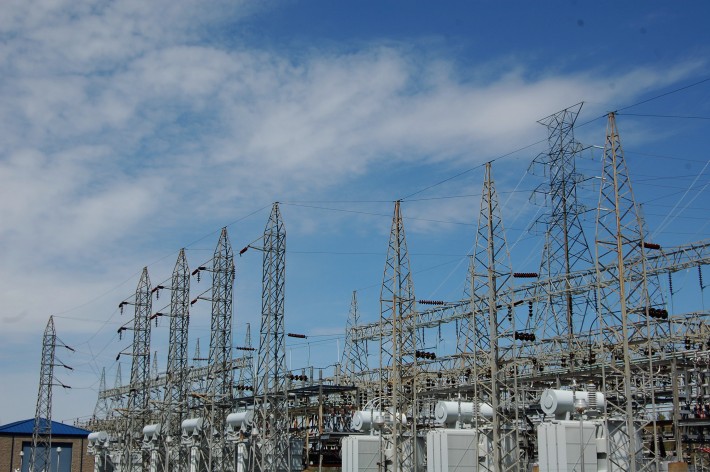
Aug. 21 –The ultra-high voltage (UHV) cable lines China’s State Grid company and local Brazilian companies such as Tractebel are now putting up to transmit electricity from the huge Belo Monte dam on the Brazilian-Bolivian border in the Amazon region down to power-short southeastern city of Rio de Janeiro, is a great step forward for the Belt and Road Initative in Ibero-America, the Portuguese-language edition of {People’s Daily} reported yesterday.
The transmission lines, which will provide power to Rio de Janeiro and vicinity, are the second phase of the Belo Monte project which radical environmentalists did everything in their power to stop. China’s Ambassador to Brazil Li Jinzhang told {People’s Daily} that China’s UHV technology is “a calling card of `Made in China’…. This is the first time that China applies UHV technology abroad. Its construction inaugurates a new historic stage, which marks the recognition by other countries of UHV technology and other technologies created in China. Through the Belo Monte project, Brazil’s government, businesses and local population expressed the will and interest in deepening mutually beneficial cooperation which is advantageous to all.”
Former U.S. Secretary of Energy Stephen Chu has called China’s development of UHV technology a “Sputnik moment” for the U.S., the {Financial Times} reported on June 6, 2018. “China has the best transmission lines in terms of the highest voltage and lowest loss. They can transmit electricity over 2,000km and lose only 7% of the energy. If we transmitted over 200km we would lose more than that,” Chu stated.