Top Left Link Buttons

Global Diplomacy

Category Archives

So. Korea Plans: Producing Up to 1 Billion Vaccines in 2022

South Korea Plans for Producing Up to 1 Billion Vaccines in 2022

July 28 (EIRNS)—While it remains to be seen how the U.S. will follow through on their commitment to assist India in ramping up COVID-19 vaccine production, the U.S.-Korea plans are moving forward. In India’s case, the U.S. has a bumpy history of blocking critical raw materials for India’s world-leading vaccine production operations, and then turning down repeated requests for vaccines when India was in the greatest need. And today, Antony Blinken offered a paltry, even insulting, $25 million for India’s vaccination program. No vaccines included.

On May 23, when South Korea’s President Moon Jae-in came to the White House, agreement was made on a Global Vaccine Partnership (GVP), first with a “KORUS GVP Experts Group” of scientists, public officials and various experts. Seoul had actually wanted immediate vaccines from the U.S. in exchange for future vaccines to be provided from Seoul to the U.S.—but that was refused. Instead, four deals were initiated, beginning with Samsung Biologics arrangement to produce “hundreds of millions” of Moderna vaccines, as soon as technology transfer and trial production were completed. South Korea would be putting up the money for purchasing the vaccines produced. Moderna also signed an MOU with the Ministry of Trade, Industry and Energy, and also the Ministry of Health and Welfare, for Moderna to invest in production facilities in Korea using a Korean workforce, with Korean government support for Moderna. Another MOU was signed by both the Health Ministry and SK Bioscience with the U.S.’s Novavax for vaccine development and production.

The update this month, from “a senior South Korean government official” is that Seoul is in talks with Pfizer and Moderna on expanding production up to 1 billion doses in 2022. (This is on top of deals with AstraZeneca and Novavax.) Health Ministry official Lee Kang-ho commented: “We have had frequent discussions with large pharmaceutical companies to produce mRNA vaccines. South Korea is keen to help by offering its facilities and skilled human resources.” The speculation is that Hanmi Pharmaceuticals and Quratis might be ready to start up production immediately. Hanmi said it has a large capacity reserved to produce Sanofi’s diabetes drug, but that is at a temporary standstill, and the capacity can meanwhile be used to produce COVID vaccines. And Quratis has a one-year-old factory which makes a tuberculosis vaccine, and they say they have capacity for mRNA vaccines. It appears that the technology, workforce and capital is all present, waiting to move forward.
U.S.-Russian Relations, Strained; They Must Be Repaired

Russian Response to Biden Won’t End with Recall of Ambassador

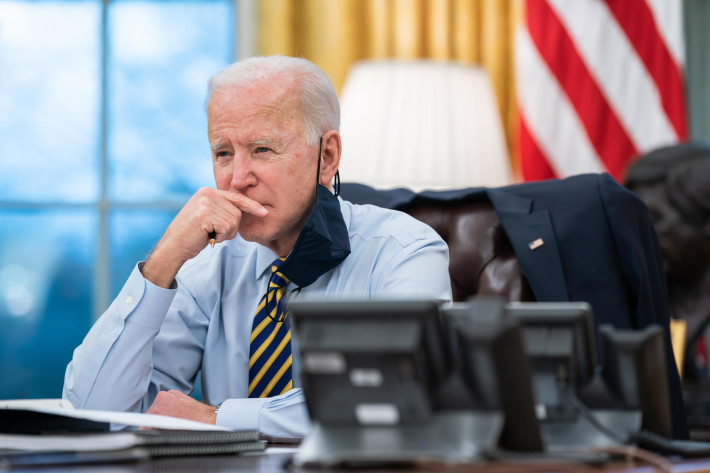
March 18, 2021 (EIRNS)–Following President Biden calling President Putin a “killer” in a set up by CNN, Russian Ambassador to the United States Anatoly Antonov has been recalled to Moscow, and will leave Washington on March 20, according to a statement by the Russian Embassy. The statement added: “The current situation stems from Washington’s deliberate policy. As a matter of fact, Washington has been deliberately driving bilateral cooperation to a dead end in the recent years. The U.S. administration’s non-constructive policy towards our country is in the interest of neither Russia nor the United States and certain reckless statements of U.S. senior officials pose a threat of utter collapse to bilateral relations, which are already excessively confrontational.”

Russian Foreign Ministry Spokeswoman Maria Zakharova told the Soloviev Live YouTube channel on Thursday that Antonov will stay in Russia for consultations for as long as it takes.
“The consultations will take place not only in the Foreign Ministry, but also in various government agencies. How long will it take? Exactly as long as the consultations themselves will take,” she said.

Deputy Speaker of the Russian Federation Council (the upper house of parliament) Konstantin Kosachev commented on Biden‘s statement on Facebook on Thursday: “Such remarks cannot be tolerated under any circumstances and will inevitably raise tensions between our countries. The recall of the Russian ambassador to the U.S. for consultations is a prompt, adequate and the only sensible response in such a situation. I suspect that if the U.S. fails to provide an explanation and apology, it won’t end there,” the senator pointed out.

“This is a fault line. These boorish remarks have killed off all expectations that the new U.S. administration will pursue a new policy towards Russia,” Kosachev noted. According to him, “evaluations like these from a statesman of such a high rank are generally unacceptable.” The Russian senator stressed that the remarks had come from the president of the country “that drops a bomb somewhere in the world every 12 minutes, according to expert estimates. As a result, the deaths of more than 500,000 people have been linked to U.S. actions since 2001. Could you comment on that, Mr. Biden?” Kosachev said. 

Dmitry Medvedev, deputy chairman of the Russian Security Council, referred directly to the current state of Biden’s mind. “I met with incumbent U.S. President Joe Biden at various international events,” Medvedev pointed out, reported TASS. “He gave the impression of a reasonable person then,” he added. “However, it seems that time hasn’t been kind to him,” Medvedev said, declining to give further comment. “I can only quote Freud: ‘Nothing in life is more expensive than illness and stupidity.’”


Uzbek President Evokes Central and South Asia’s Historic Contributions to Humanity to Spur Its Development Today

Uzbek President Evokes Central and South Asia’s Historic Contributions to Humanity to Spur Its Development Today

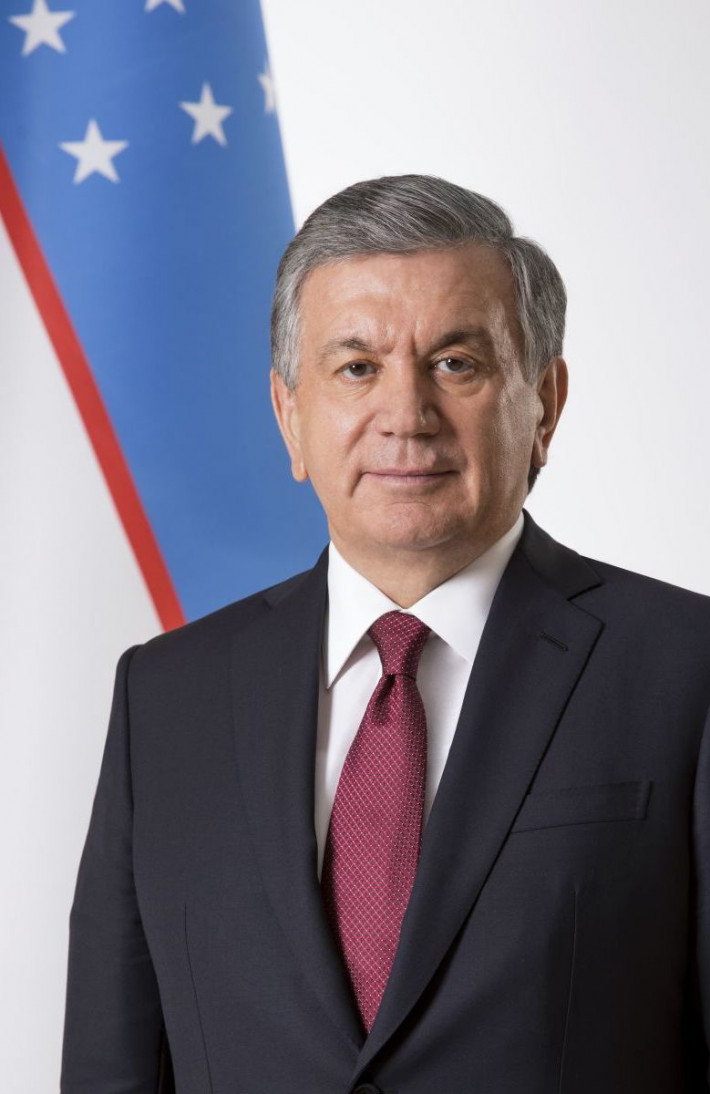
July 27, 2021 (EIRNS)—Addressing the July 15th-16th Central and South Asia Regional Connectivity conference in Tashkent, which his government organized, Uzbek President Shavkat Mirziyoyev proposed that this region of almost two billion people conceive of its development today as a return to its role as a historic center of “active dialogue between peoples and civilizations … the crossroads of the Great Silk Road, Central and South Asia.”

No official translation of the speech into English is available yet, but the machine-translation of it quoted here, while not precise, captures the spirit of his call. He invoked names that every schoolchild on the globe should be familiar with some day.

Miziyoyev spoke of the great civilizations which arose in this region, going back as early as the third and second millennia BC, which “have left a deep mark on human history.” He reminded his audience, that “thanks to the spread of Islam, Buddhism, Hinduism and the unique traditions of different peoples in Central and South Asia, a great ethnocultural commonality has been established, and a rich and colorful culture of the East has been formed.”

The resulting strong ties between our peoples “ensured rapid intellectual and enlightenment growth… which brought to the world many more mature scholars and thinkers, such as Charaka and Sushruta, Brahmagupta and Al-Khwarizmi, Al-Farghani and Al-Farabi, Al-Beruni, Ibn Sina. They marked the development of human science and philosophical thought centuries ago,” he said. He then named some of the region’s outstanding representatives of literature who “with their immortal works … have made a great contribution to the development of the principles of peace, freedom and humanity, the ideas of friendship and mutual trust among the peoples of the world.”

“Unfortunately,” he added, “due to the historical situation, in the nineteenth century, the relations between the two neighboring regions were severed,” creating barriers between Central and South Asia. The end of that era of cooperation and mutual understanding is responsible for “the current lack of effective cross-border routes, poor development of trade and economic relations, as well as the underutilization of cultural and humanitarian relations.”

“It is time to harmonize the existing intellectual potential and our joint efforts, given the great historical, scientific, cultural and educational heritage of our peoples and the ability of our economies to complement each other,” he urged. “We are convinced that interdependence, cooperation, dialogue and, most importantly, the consistent and sustainable development of trust, will become a driving force for increasing the living standards and prosperity of the people of our regions.”

It was within that context, then, that he proposed specific ideas for regional cooperation, centered on logistics infrastructure and rail lines, and within that, aiding Afghanistan to find peace at this “important turning point in its recent history.”


Latin American and Caribbean Space Agency Formally Launched

July 27, 2021 (EIRNS)—During the July 24 summit of foreign ministers of the Community of Latin American and Caribbean States (Celac), held in Mexico City, five nations joined with Mexico to officially establish the Latin American and Caribbean Space Agency (AECL). Mexico, Argentina, Ecuador, Bolivia, Paraguay, and Costa Rica are the current signatories, but when Celac heads of state meet in September, it is expected that several more governments will sign on. When a preliminary agreement on AECL’s founding was reached last October, participants expressed great optimism that space exploration and related technological and scientific developments and spin offs would be the best way to address the poverty and underdevelopment affecting all their nations.

The same sentiment was expressed by the foreign ministers who signed on July 24, according to Forbes Mexico the same day. The agency’s creation, said Ecuador’s foreign minister, Mauricio Montalvo, is the result of the “coordinated and harmonious work” within Celac which will “certainly be of benefit to all of our societies.” Costa Rican foreign minister Rodolfo Solano added that “in the case of Costa Rica, together with nations like Mexico, I find no more responsible way to celebrate 200 years of independent life than to think of the next 200 years, and see space as the frontier to be conquered.” And addressing the skeptics, or those who ask why poor nations think space exploration is an option, Paraguay’s foreign minister, Euclides Acevedo, put it this way: “We may not yet have satellites to place in orbit, but we are beginning to place in orbit those enemies of success, those apostles of failure, the mediocre and the resentful.”


Bolivian President: A Fight for ‘Scientific Bolivia’ Is a Fight for the Future

Bolivian President: A Fight for ‘Scientific Bolivia’ Is a Fight for the Future —

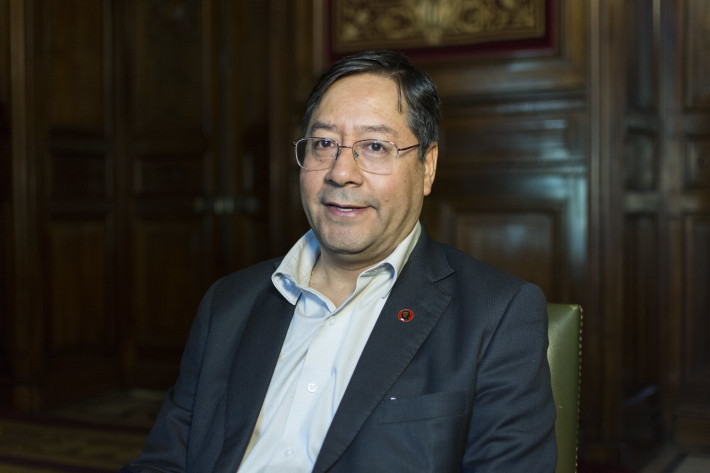
July 27, 2021 (EIRNS)—Yesterday Bolivian President Luis Arce, together with other government officials and Rosatom’s deputy director general, Kirill Komarov, presided over the ceremony in the city of El Alto to inaugurate construction of a research reactor, which is the third component in the state-of-the-art Nuclear Technology Research and Development Center (CIDTN) being built in the city of El Alto, next to La Paz, by the Bolivian Nuclear Energy Agency and Rosatom Overseas. The other two components include a Radiopharmacology Cyclotron complex (CCRP), which will produce isotopes for the diagnosis and treatment of cancer patients and a Multipurpose Irradiation Plant, the construction of which is already underway and scheduled to be completed by year’s end. The research reactor should be completed by 2024.

The project’s location in El Alto carries special significance. When the Project Democracy “Maidan” coup government took over in November of 2019, it immediately shut down the project, while military and police repressed the city’s largely indigenous population that had opposed the coup. When President Arce took power last November, he immediately restarted the project. At 4,000 meters above sea level, CIDTN is the largest Russian-sponsored project in Ibero-America and, as Komarov explained, is considered to be a top priority for Rosatom. “The project is unique, a technological marvel that will put Bolivia on a par with the major countries of the world,” RT reported him as saying. Arce has emphasized that this project is not just for Bolivians, but “for all of humanity,” and as he expressed it yesterday, quite beautifully, is also to ensure that young Bolivians have a future. Future generations, he said, “will inherit and harvest what we do today in terms of technological advancement; they shall be the standard-bearers of scientific Bolivia, because a millenarian people with advanced technology is invincible. So, I want to take this opportunity to assure you that as a national government, we have the firmest will and conviction to advance on the road to scientific development for Bolivians… Our country needs highly-trained human resources in nuclear engineering, chemical engineering and biotechnology to advance toward a change from the pattern of accumulation to the transformation of our country’s productive matrix, which is moreover, a challenge for Latin America and the Caribbean,” the President’s press office reported. The full press release is here.   


Caribbean Nations to Join China’s Belt and Road Initiative

Caribbean Nations Want to Cooperate With China on the Belt and Road

March 17 (EIRNS)—Chinese President Xi Jinping held separate teleconferences yesterday with the President of Guyana and the Prime Minister of Trinidad and Tobago and their teams, encountering great interest from each in expanding their country’s collaboration with China on economic development, and with the Belt and Road Initiative, in particular, according to Xinhua’s report. Xi spoke with both of China’s willingness to work together with the entire Caribbean region on development.

Guyanese President Dr. Irfaan Ali had his Vice President and three cabinet ministers (Foreign Affairs, Public Works and Finance) join him in the discussion, his office reported. Xinhua reported that Dr. Ali thanked Xi in the name of the leaders of major political parties and ministers of Guyana, for China’s assistance in the fight against the pandemic, and spoke of how Guyana “regards China as the most important cooperative partner in its national development, and is committed to strengthening relations between the two parties and two countries.” He conveyed that “Guyana expects to actively promote the Belt and Road cooperation with China, and strengthen cooperation in infrastructure and other fields, and stands ready to actively promote the development of relations between the Caribbean Community and China,” Xinhua noted.

Trinidad and Tobago Prime Minister Keith Rowley was also joined in his teleconference call with Xi by three ministers (Foreign and CARICOM Affairs, National Security and Health), along with the Permanent Secretary to the Prime Minister, his office reported. From Xinhua’s report, it can be said that the geopolitical tale of a “malign” China has not made headway here. Rowley spoke of “the great achievements of the Chinese people, under the leadership of the Communist Party of China (CPC), in such fields as economy, science and technology and poverty alleviation.” Citing China’s success in defeating the COVID-19 epidemic, and leadership in the global fight against the pandemic, Rowley told Xi: “the CPC should feel proud of itself.” As had the Guyanese President, he expressed his nation’s willingness to work with China to actively promote Belt and Road cooperation.


WFP Beasley To Bezos: ‘The Sky Is No Longer the Limit’–Let’s End Hunger!

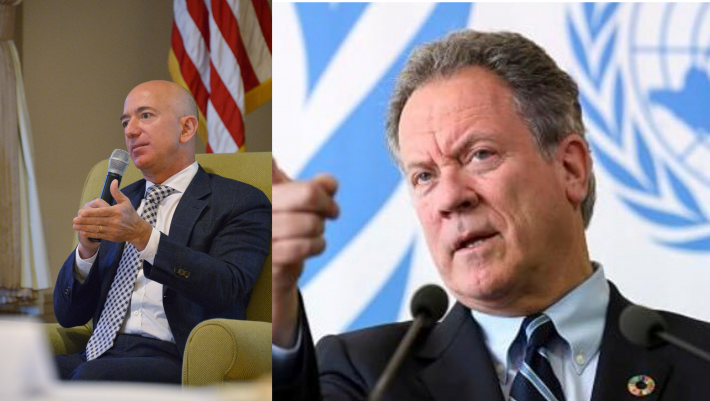
July 24 (EIRNS)–David Beasley, Executive Director of the World Food Program, tweeted on July 20, on the day billionaire Jeff Bezos took a ride into space and back:

“To @JeffBezos, @blueorigin, tremendous congratulations today! I can only imagine how incredible it was to see OUR planet from above. We’re all ONE human race. The sky is no longer the limit!! Now, let’s go end hunger together! Earth needs you!!
…you have proven over and over that anything is possible when you set your heart and mind to it. As you saw from space, Earth is a special place. 41 million people are on the brink of famine. I need your help. We need your help. Together, I know we can! #SpaceForBoth”


RIAC Analyst Believes Geo-Economics Is Overtaking Geopolitics in Central Asia

July 24 (EIRNS) — Moscow-based American foreign affairs expert Andrew Korybko writes on his blog on the website of the Russian International Affairs Council (RIAC), that the ongoing settlement of the Afghanistan war is putting “geo-economics” ahead of the zero-sum game of geopolitics. He writes that “geo-economics” is at the center of the cooperation among the U.S., Russia, China and Pakistan in seeking an Afghan settlement and the creation of the so-called “Quad” of Uzbekistan, Afghanistan, Pakistan and the United States which was created on July 16 at the connectivity conference in Tashkent, Uzbekistan. This latter, Korybko writes, “complements the prior such platform between the former two states, China and Tajikistan back in 2016 as well as the Pakistan-Afghanistan-Uzbekistan (PAKAFUZ) railway project that was agreed upon in February.”

Crucial to the development according to Korybko is Pakistan’s new “Geo-Economic Grand Strategy Is Multi-Alignment,” which was adopted during March’s inaugural Islamabad Security Dialogue, where it was announced that geo-economics will now constitute the basis for all policy formulation and not geopolitics. The first fruits of the policy was the creation of the so-called Quad platform among Pakistan, Afghanistan, Uzbekistan, and the U.S.

Korybko writes: “Pakistan is actively fulfilling its geostrategic destiny as the ‘Zipper of Eurasia’” by connecting a variety of stakeholders through their shared economic interests. “Islamabad is leveraging its influence in Afghanistan to advance the neighboring country’s peace process, which saw it facilitate Beijing and Moscow’s incipient ties with the Taliban. Upon these multipolar great powers establishing pragmatic political relations with the group, they were then able to seriously countenance the viability of trans-Afghan connectivity corridors. Russia is interested in reaching the Indian Ocean Region through PAKAFUZ (which can also unofficially be conceptualized as N-CPEC+), while China is pioneering the so-called “Persian Corridor” to Iran via Tajikistan and Afghanistan. The U.S., meanwhile, aims to use PAKAFUZ as a means for expanding its economic influence in the post-withdrawal Afghanistan and the Central Asian republics (CARs).”

As for India, it is finding itself left out of the process, he writes, because it is maintaining a geopolitical policy aimed at countering Pakistan. Nonetheless, he believes now India has begun to seriously reassess its policy away from geopolitical principles, which of course will require an improvement of relations with Pakistan. One option would be reversing the August 2019 abrogation of Article 370 which dismantled the autonomy of Jammu and Kashmir to bifurcate the region, which would admittedly be a very difficult political decision.

He concludes: “The very fact that the U.S., which is known for its geopolitically driven zero-sum policies, is joining together with Pakistan, Afghanistan and Uzbekistan in order to expand its economic influence in Central Asia speaks to just how dramatically everything is changing.”


“Vaccine Diplomacy” ~ U.S. Stopped Approval of Russia’s Vaccine to Brazil; Now Brazilian Deaths Rising

U.S. Dept. of Health and Human Services Brags It Used Diplomatic Pressure To Stop Brazil from Approving Russia’s COVID Vaccine

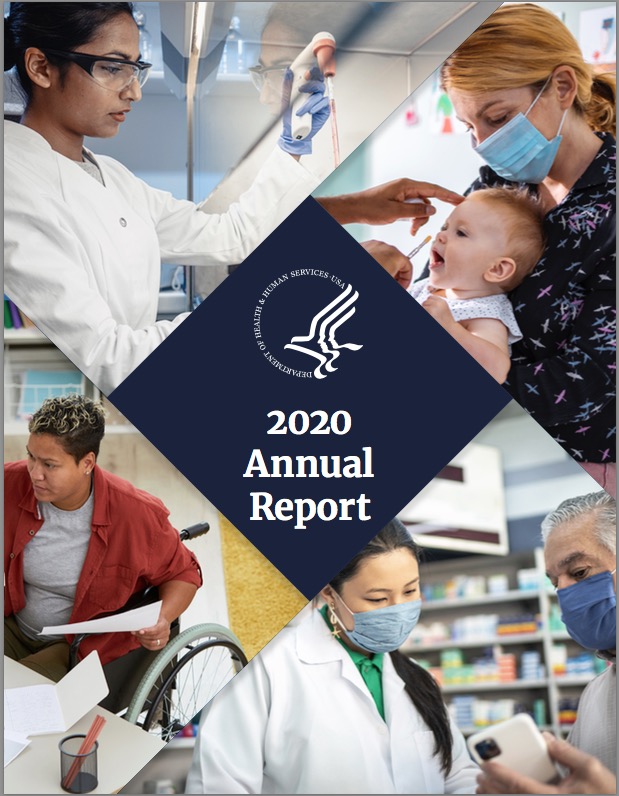
March 16, 2021 (EIRNS) — The annual report of the HHS’s Office of Global Affairs stated that they had “used diplomatic relations in the Americas region” to stop Russian and Chinese “vaccine diplomacy” in the region “to the detriment of US safety and security.” In the report, signed by Trump’s HHS Secretary Aznar, they pat themselves on the back about for having successfully used “OGA’s Health Attaché office to persuade Brazil to reject the Russian COVID-19 vaccine.” When questioned by TASS today, the Biden HHS repeated their adherence to that approach with the standard sophistry: “The United States is a firm believer in the need for vaccines that meet the minimum clinical standards of efficacy.”

Russia’s {RT} covered the story as a “bombshell admission,” noting that Brazil is currently sinking into an uncontrolled COVID crisis with a very small percentage of the population vaccinated. The article cited an expert at Moscow’s Gamaleya Institute, which developed Russia’s Sputnik V vaccine, saying that “we believe countries should work together to save lives. Efforts to undermine the vaccines are unethical and are costing lives.”

China’s {Global Times} published an article by editor Wang Wenwen which also pointed to the HHS admission that it used diplomatic pressure “to force Brazil, one of the worst-hit countries in terms of the COVID-19 pandemic, to reject the Russian coronavirus vaccine Sputnik V.” The editorial more broadly attacked, saying that “the West’s indulgence and zeal of the Cold War era is being manifested by its politicization of vaccines. The US, in particular, is practicing its very selfishness in vaccine distributions and exploiting vaccines as a geopolitical weapon, which, consequently, is dividing the world into two camps — one represented by countries inoculated with Chinese and Russian vaccines and the other with US and European vaccines.”

Europe is publicly lined up with the United States, Wang noted, but, “What is even more ironic is that the EU publicly dismissed Russia’s global vaccine supply, but has been turning to Sputnik V shots behind the scenes, according to media reports. Clearly, the EU cannot afford the self-invented geopolitical game involving vaccines.”

China’s approach is different, Wang argued. “Being a major power, China’s offer of vaccines to other countries is out of responsibility and morality without political attachment. That is why many countries welcomed and defended Chinese vaccines. If China’s influence expands, it is a natural outcome… Just imagine, if the global supply of vaccines is monopolized by the US, how many more people would die? Does the US care? The answer is clear.”


Railway Service in Europe Seriously Disrupted by Floods

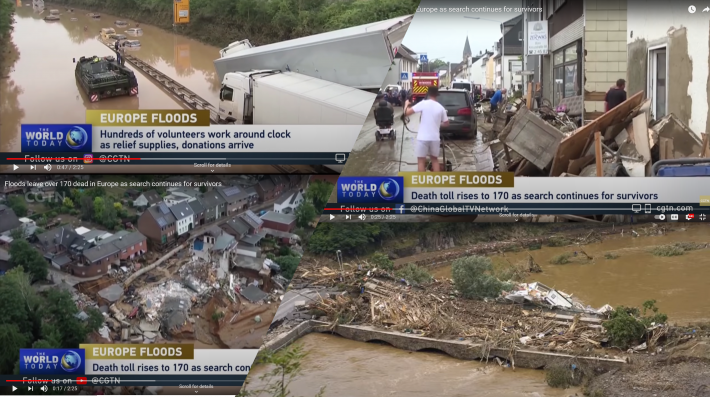
July 22, 2021 (EIRNS)–The Trains.com website comments that portions of the rail network in Western Europe could be out of service for months or years in the wake of flooding that has left hundreds dead across a swath of western Germany and Belgium. Rail service has been suspended after the floods, which saw rivers running three yards higher than previous records in some cases and destroyed homes and businesses. See report here.

In Belgium, most rail lines south of Brussels saw disruption, with many in the hilly Ardennes region seriously damaged. The high-speed rail line connecting Brussels with Cologne in Germany was briefly closed, but as this goes through hills and over valleys, it was not seriously damaged. Services restarted over the weekend. The older rail lines that follow river valleys, often no more than a few yards above the river, fared much less well. Several routes are so badly damaged that reconstruction is expected to take until late August; less damaged routes reopened July 19.

In neighboring Germany, where the scale of destruction and loss of life has been greater, some rail lines, again built following river valleys, have been completely washed out. In total, German national railroad Deutsche Bahn has reported that 600 kilometers (more than 370 miles) of tracks and 80 stations are impassable.

The worst affected route along the valley of the Ahr River from Remagen to Ahrbrück has seen around 12.5 miles of its 18-mile length destroyed by flood water, with all seven bridges destroyed where the line crossed from one side of the river to the other.

In the Ruhr region, the main station in the city of Hagen was flooded and closed, along with rail lines through the city, as were those in the nearby city of Wuppertal. The flood waters knocked out power and telecom services in many areas. In the city of Bonn, the electronic signalling center controlling the main rail lines along the Rhine valley was unable to function, due to flood damage. Countries neighboring Germany have also seen flooding, with the south of the Netherlands hit with large-scale disruption to rail and road travel. As the weather system moved on, flood waters have affected Switzerland and by last weekend the rain had moved east to Bavaria in Germany and the neighboring Czech Republic, with the rail line between Dresden and Prague shut down July 18 as the Elbe River burst its banks. The Elbe alley was the scene of massive flooding in August 2002, which closed the rail line for three months.


Page 31 of 35First...303132...Last