Top Left Link Buttons

Jason Ross

Author Archives

Possible Reestablishment of Vatican-China Relations

Vatican Bishops’ Praise of China Foreshadows Possible Reestablishment of Vatican-China Relations

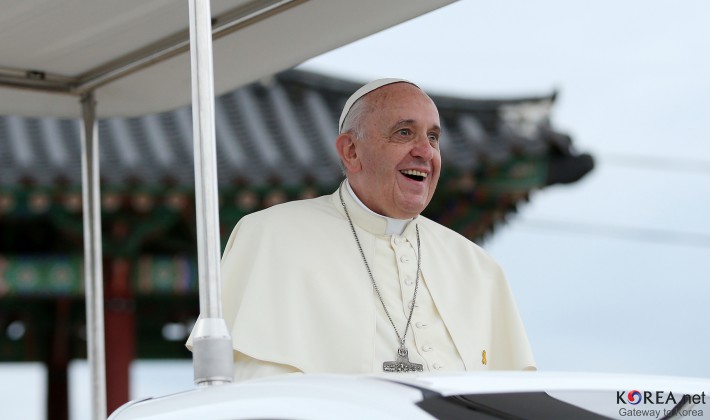
Feb. 9, 2018 –The statements by Bishop Marcelo Sanchez Sorondo, the chancellor of the Pontifical Academy of Social Sciences, who, speaking to {Vatican Insider} after a visit to China, characterized the country as extraordinary, raised some hackles from anti-China circles in the Catholic Church. “You do not have shantytowns, you do not have drugs, young people do not take drugs,” Sanchez Sorondo had said after visiting China. “Instead there is a positive national consciousness.” “Right now, those who are best implementing the social doctrine of the Church are the Chinese,” he said.

While he praised China for upholding the Paris climate agreements, he also obviously, during the course of his visit to China, received more of an insight into what China is doing to advance the lives of their people. Sanchez Sorondo’s visit to China was part of an ongoing round of diplomacy between the Vatican and China, which is aimed at resolving the key issue of the appointment of Catholic bishops, a major point of dispute between the Vatican and China. Sanchez Sorondo’s statements has been heavily criticized by some conservative Catholic circles, including Hong Kong’s retired cardinal, Joseph Zen. But it is strongly supported by Pope Francis, who would like the Vatican to assume full legal responsibility for China’s estimated 13 million Catholics. Zen has also said that if the Pope comes to some arrangement with the Chinese government, he will also fall in step with the arrangement.

The diplomatic activity of Pope Francis has been receiving regular coverage in the Chinese press, including the more conservative {Global Times}, to whom Archbishop Sanchez Sorondo had also spoken. Just recently Pope Francis made the unusual decision to retire two bishops in China who had not previously received the approval of the Chinese government, which has also raised an outcry by church conservatives, covered extensively in Breitbart News. The Breitbart coverage was attacked today in a {Global Times} editorial by Ai Jun, who called Sanchez Sorondo’s statements “the perspective of an authoritative religious figure” which were helpful “in contradicting misunderstandings of China.” “The overwhelming majority of Catholics in China have full access to freedom of religion while abiding by Catholic doctrine and China’s rule of law,” Ai Jun writes. “Chinese Catholics are no different from Catholics in other countries simply because they live in a socialist nation, which reflects the fact that the Chinese government respects their religious freedom and provides them with enough room for religious activities.” Most of the Catholic bishops now in China have been accepted by the Chinese government and the Vatican, but there are still many exceptions in the “underground church”.

Negotiations are ongoing as to the procedure of the appointment of bishops. But a resolution of the issue could lead to the re-establishment of relations between Beijing and Rome which have been broken for the last 70 years.

China Is Preparing for Manned Missions to the Moon

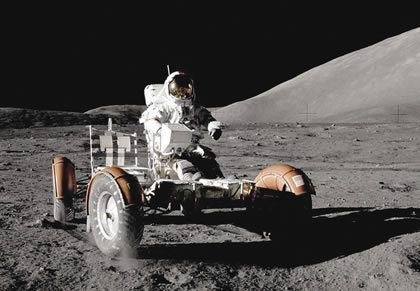
Jan. 27 -In 1971, the Apollo 15 crew left a retro-reflector on the Moon. It is a passive instrument, and just reflects laser pulses from Earth back to Earth. The time–very precisely measured–of he return pulse, indicates the distance between Earth and its nearest neighbor. In all, three reflectors were left on the lunar surface during the Apollo missions, and one by the Soviet Lunokhod 2 over. They are still used by scientists for research in astrodynamics, Earth-Moon system dynamics (the Moon is slowly moving away from the Earth), and lunar physics. The technique is called Lunar aser Ranging (LLR), and now Chinese scientists are using the Apollo 15 reflector for LLR experiments, in preparation for their future missions to land astronauts on the Moon.

On Jan. 22, Xinhua reported yesterday, an applied astronomy group at the Yunnan Observatories in Kunming carried out China’s first Lunar Laser Ranging experiment, to obtain precise measurments of he distance between the Earth and the Moon.

While it was an interesting scientific experiment, the technique also has important practical applications. Landing an unmanned vehicle on the Moon requires using detailed orbital photographs to define a safe and interesting general landing region, where the engineers aim the lander. For a robotic spacecraft, the landing ellipse can be a relatively wide area to aim for. But or a manned mission, a more precise targetting is preferable. China can now use the laser ranging technique for its manned lunar program.

Until now, only the U.S., France, and Italy have successfully deployed laser ranging technology. It is reported that on a future mission, China will place its own retro-reflector on the Moon.

Chinese scientists are also studying the human factor itself, and technology to support crew on the Moon. Chinese student volunteers have just completed 200 days in Beihang University’s “Lunar Palace.” The two men and two women are biomedicine students and are the second group to work in the simulated space lab. A main capability needed to live off Earth is regenerative life-support ystems, where waste is recycled, and in the advanced phase, virtaully no materials have to be suppplied from the outside. The “mission” also entailed study of the social interactions and sychological condtion of the crew.

Chief designer Liu Hong said that her team would apply to have a mini-life support system on a lunar or Martian probe, with another system as a ground control. NASA and its partners have used the International Space Station to test closed-cycle life support systems, and the station itself recycles various waste products to reduce the amount of material that has to be delivered from the ground.


Let Us Celebrate The Future Spirit of Humanity

Helga Zepp-LaRouche Victory Day Message

– Let Us Celebrate The Future Spirit of Humanity –

Only 73 years after the Second World War when people
responded to that horrible catastrophe with the solemn commitment
“Never Again,” we find ourselves again on the verge of a possible
hot war.

With one provocation after another, each more transparently
false than the previous one, the war faction of the City of
London imperial oligarchs and their Wall Street neo-con/neo-lib
partners continue their efforts to sabotage the potential of the
New Paradigm, which is emerging in Eurasia to be a worldwide
movement with breathtaking speed. Even though Russiagate, the
Skripal poisoning, and the Douma chemical weapons “false flag”
hoax all have been exposed as originating in the diseased minds
of British intelligence circles, still they are at it again, this
time with Netanyahu claiming he has “proof” that Iran never ended
its nuclear program, attempting to trap the United States into
yet another disastrous war in the Middle East and a possible
nuclear confrontation with Russia. Many in the governments of the
West have stepped on that slippery slope again, which was warned
about in the Nuremburg Tribunal, by violating international law
and the principles laid down in the United Nations Charter.

But their power is diminishing, as they have increasingly
been forced to act in their own name, thereby exposing
themselves. Their ability to keep control has also been
diminishing, due to the challenge from the New Silk Road and the
New Paradigm it represents. In the last weeks, diplomatic and
economic events and summits have greatly advanced the New
Paradigm. The strategic partnership between Russia and China and
the integration of the Belt and Road Initiative with the Eurasian
Economic Union have created hope for especially the developing
countries, who see the chance to overcome poverty and
underdevelopment for the first time.

The best way to commemorate the losses, the suffering, and
the heroism of the individuals who lost their lives in the Great
Patriotic War is by creating a new era of mankind, which puts the
concept of the one humanity first, in that way creating a new
international order, which overcomes geopolitics forever.
Imperialism must be defeated as a relic of a bestial image of
man, and be replaced with the noble image of man as the only
creative species known in the universe so far.

Let us celebrate the future spirit of humanity, which is so
beautifully expressed in the {Ode to Joy}by Friedrich Schiller
and the 9th Symphony of Ludwig van Beethoven:

“All men become brethren…
Be embrac’d, ye millions yonder!
Take this kiss throughout the world!
Brothers — o’er the stars unfurl’d
Must reside a loving Father.”


Putin Will Join the Two Koreas in Big Projects

TASS reports today that South Korean President Moon Jae-in telephoned Russian President Vladimir Putin and the latter welcomed the results of the inter-Korean summit.

“While exchanging their opinions, the two sides positively assessed the agreements reached at that meeting. Special attention was paid to the intention to secure the non-nuclear status of the Korean Peninsula enshrined in the Panmunjom Declaration through its total denuclearization. It was affirmed that coordinated measures to develop inter-Korean cooperation will also contribute to the region’s advancement towards peace and stability,” the Kremlin specified.

Russian President Vladimir Putin confirmed Russia’s intention to further contribute to the development of cooperation between North and South Korea. “Russia’s intention to further contribute to the development of practical cooperation between the Republic of Korea and the D.P.R.K., in particular through the implementation of large trilateral infrastructural and energy projects, was confirmed. Vladimir Putin highlighted the importance of continuing efforts by all parties concerned for a politico-diplomatic solution of the Korean Peninsula problems, including with regard to milestones contained in the Russia-China roadmap,” the Kremlin press service said.

The South Korean news agency Yonhap reported today that the South Korean Transportation Ministry is reviewing a set of measures to prepare a potantially full-fledged implementation of criss-border economic projects. Officials said that inter-Korean cooperation can be discussed, as the two Koreas are expected to hold working-level talks to execute the railway construction projects to connect them.


Major Breakthrough in China-Japan-South Korea Relations

Jan. 28 -The two-day visit to Beijing by Japan’s Foreign Minister Taro Kono has brought several major developments to the urgent task of uniting the three Asian powers around the concept of peace through development.

At the end of the visit Sunday evening, China and Japan jointly announced that the annual summits among the Chinese, Japanese, and Korean leaders would be revived “as soon as possible,” after having been cancelled since 2015, supposedly over terrritorial issues in the East China Sea. Premier Li Keqiang will represent China at the summit.

In addition, Norio Maruyama, a spokesman for the Japanese delegation, said the summit could set the stage for reciprocal visits by Prime Minister Shinzo Abe and Chinese President Xi Jinping — a trip neither leader has made since coming to power in 2012, as Bloomberg pointed out. “What we are envisaging is a visit to China by Prime Minister Abe and after that a visit to Japan by President Xi Jinping,” Maruyama said.

Kono met with Foreign Minister Wang Yi, Premier Li Keqiang, and State Councillor Yang Jiechi. Xinhua reports that the talks were frank, with Li stating that Japan needed to “properly handle sensitive issues related to history and differences between the two sides,” while Wang Yi said: “At present, China-Japan relations are at a crucial stage. There is positive progress, but many disturbances and obstacles remain.”

Kono’s visit came on the 40th anniversary of the signing of the China-Japan Treaty of Peace and Friendship.

China’s strained relations with South Korea were lessened with China’s agreement to allow their opposition to the THAAD missile issue to be put aside in order to work together on other issues. The Japan-China relationship has been greatly improved by Prime Minister Abe’s announcement last year that Japan will co-finance projects with China in the Belt and Road Initiative.

“Kono said the government was ready to cement political trust and concrete cooperation with China, enhance high-level exchanges and contacts among various levels to promote the full improvement of ties.” Most importantly, the press release by Kono and Wang Yi addressed the East China Sea dispute:  “China and Japan should work together to build the East China Sea into the sea of peace, cooperation and friendship.”

Equally important, in light of the militarist statements coming from the U.S. institutions calling Russia and China “adversaries” and “threats,” Wang Yi asked both sides to build political trust, and urged Japan to treat China as a “partner” instead of “rival,” and view China’s development as an “opportunity rather than a threat.”


Xi and Modi Agree to Joint Economic Project in Afghanistan, and Other Actions

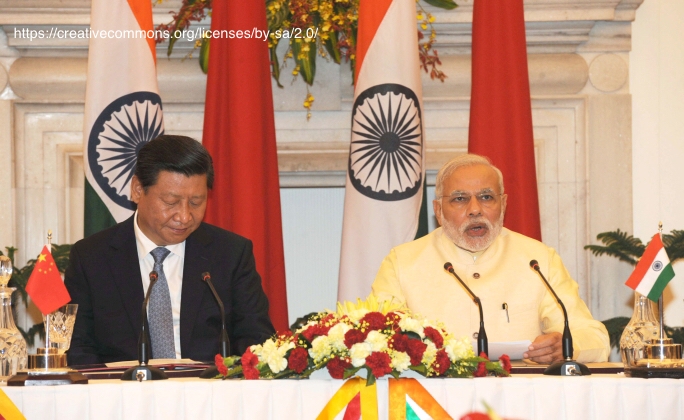
While the two-day “Informal Summit” of Indian Prime Minister Narendra Modi and Chinese President Xi Jinping did not issue formal, official dispatches, results have been made known, which include commitments of major importance. {The Hindu} reported these today in a summary way.

The two nations will undertake a joint economic project in Afghanistan, the first ever such collaboration.

There will be stepped up military-to-military collaboration between the two nations.

The “Closer Development Partnership” between China and India will be strengthened, involving economic cooperation and people-to-people exchanges.

In economic relations, there will be a push in bilateral trade and investment, for more balance between the nations, by taking advantage of economic complimentarities.

Each nation will appoint a Special Representative to play a role in these functions.

There will be stepped up cooperation against terrorism.

Both leaders concurred on the value of the “Informal Summit” format and will continue to hold more such dialogues. Modi has invited Xi to India for a similar occasion in 2019


Modi and Xi in Wuhan — The Launching of an Asia Century

April 27, 2018 -On the same day as the historic Summit between North and South Korea’s leaders, Prime Minister Narendra Modi and President Xi Jinping met today in Wuhan for an “informal meeting,” which, although there will be no communique or press conference, could presage the launching of an “Asian Century,” and a new paradign for mankind. The tension between China and India, over the military confrontation on the border in Doklam and over the China-Pakistan Economic Corridor (which passes through an area contested between Pakistan and India) has held Modi back from participating in the Belt and Road Initiative.

Reports that Modi might have campaigned in the next election on an anti-CHina platform (which was certainly being encouraged by the Brits and the neocons) is now a thing of the past. The visit to China was not long planned, but a recent decision to change the course of relations to the better.
Modi tweeted before arriving today: “President Xi and I will exchange views on a range of issues of bilateral and global importnace. We will discuss our respective visions and priorities for national development, particularly in the context of current and future internation situation.” They will have two long discussions, and four other events.
       Among the events was was a visit today to the famous museum of artifacts discovered only in 1978 in the tomb of Marquis Yi of Zeng, burid in 433 BC, which included the incredible Bianzhong
Bells — a set of 65 bronze bells which produced a twelve tone scale tuned to C=256, with 2800 characters inscribed on the bells — a “music manual” form the 5th Century BC. Both Xi and Modi
played the bells.
Modi noted that as Chief Minister of Gujarat, he had been so impressed by the construction of the Three Gorges Dam that he had visited Wuhan and spent a day at the dam. “The speed with which you constructed it and the scale inspired me,” he said. He said that “India and China acted as engines for global economic growth for 1600 years out of the past 2000 years,” clearly intending that this relationship should continue and expand.
Xi said that he had accepted an invitation to hold another such informal meeting in India next year.
A China Daily article today noted that Deng Xiaoping told Rajiv Ghandi when he visited China in 1998 that, if there were to be an Asian Century, it would require close and sustained cooperation between China and Russia. It appears that time is finally at hand.

Egypt: Fresh Vegetables Grown in the Desert

Chinese company, Sinomach Heavy Industry Corp., is building what is described as the world’s largest greenhouse complex in the Egyptian desert. The site is within two hour’s drive from Cairo, CGTN reported yesterday. The complex, which when complete will consist of about 3,000 greenhouses, will grow vegetables and fruit, such as tomatoes, cucumbers, eggplants, and peppers. This was decided in consultation with Egyptian agricultural experts, Hou Huicong, the deputy project manager explained. The water for the crops will come from a sub-branch of the Nile River, and ditches will be built to divert water to the greenhouses.

Components for the greenhouses have been produced in 80 factories in China that have been working on the project since July. On this ambitious schedule, operation of the greenhouses is expected this year. This accelerated timetable can be met, said Sun Guiding, purchase manager for the project, because, “We mobilized almost all resources producing agricultural appliances in China. Many are working around the clock.”

The $400 million project is the product of an agreement signed with the Egyptian government last May.


China to Drive International Rebuilding of Syria

April 30, 2018 – More than 140 factories have restarted production in Damascus’s Fadlon industrial zone in southern Syria, and another 100 production facilities are being repaired now, the Syrian Arab News Agency (SANA) reported today. The industrial zone of Fadlon comprises half of the industries of Damascus. Textile, chemical, clothing, medicine, steel, and others have rehabilitated their facilities and begun production. The rehabilitation of water, electricity, sewerage, telephone lines, and other necessary services have assisted this zone in going back to work and its factories to produce again.

Xie Xiaoyan, the Chinese government’s Special Envoy on the Syrian issue, has signalled Beijing’s willingness “to do its best” to contribute to ordinary Syrians returning to a normal life. The envoy estimated that at least $260 billion in aid money is needed to restore the devastated nation, and that this is a task for the entire international community: “Many people have died; millions have lost their homes or become refugees, and they all need humanitarian aid. As a member of the UN Security Council, China has always paid attention to providing humanitarian assisstance both to Syrian citizens and refugees in the form of goods, medicine, food, and money.”

Xie promised that “China is ready to become a driving force in this process and to involve its companies in the restoration work in Syria as soon as the security situation improves there. Apart from China and Russia, the countries of the region should also take part in the process, because only together will we be able restore Syria,” Xie said.


Pakistan PM Abbasi: “BRI More Than Infrastructure”

Pakistani Prime Minster Shahid Khaqan Abbasi, speaking at the Davos World Economic Forum (WEF) Wednesday, praised the quality and scope of the BRI.

“We strongly recognize the vision of China and President Xi Jinping…. We believe the Belt and Road Initiative is perfectly in sync with the WEF theme of creating `shared future in a fractured world.’ It is much more than just a partnership on infrastructure and it will cause significant improvement in lives of people from different countries.” He said half of humanity lives in the region of the Silk Road. He said the China-Pakistan Economic Corridor has started to show results in Pakistan with a major increase in manufacturing and exports. “The key principles are financial stability and lessening of environmental impact and Pakistan being a more responsible global citizen,”


Page 9 of 27First...8910...Last