



June 23 (EIRNS)–The Russian International Affairs Council (RIAC) has posted a link to the invitation for the Schiller Institute’s conference this weekend on its home page, announcing simply “Schiller Institute Conference `For the Common Good of All People, Not Rules Benefiting the Few!’ View it here.

Life Expectancy Plunged in U.S. in First Half of 2020
Feb. 18, 2021 (EIRNS)—Preliminary estimates issued today by the CDC indicate that life expectancy in the United States dropped by a huge one year in the first half of 2020 alone, largely as a direct and indirect result of the COVID-19 pandemic. The average drop for Black Americans was a stunning three years; for Hispanics nearly two years. This is a lawful expression of what Lyndon LaRouche warned for 50 years would happen if society’s Potential Relative Population Density drops below the actual population: the total population and its average life expectancy will follow into the abyss, sooner or later.
“This is a huge decline,” said Robert Anderson, who oversees the numbers for the CDC, according to a report published by AP. “You have to go back to World War II, the 1940s, to find a decline like this.” Dr. Kirsten Bibbins-Domingo, a health equity researcher and dean at the University of California, San Francisco said: “What is really quite striking in these numbers is that they only reflect the first half of the year … I would expect that these numbers would only get worse,” said.
In 2019, average life expectancy in the US was 78.8 years—75.1 for males and 80.5 for females. In the first half of 2020, it had dropped to 77.8 years for all Americans. “As a group, Hispanics in the U.S. have had the most longevity and still do. Black people now lag white people by six years in life expectancy, reversing a trend that had been bringing their numbers closer since 1993,” according to AP.
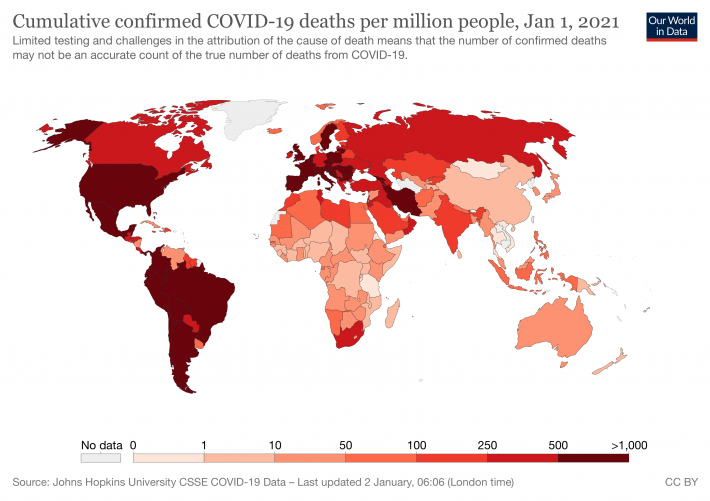
Dr. Otis Brawley, a cancer specialist and public health professor at Johns Hopkins University, stated: “The focus really needs to be broad-spread of getting every American adequate care. And health care needs to be defined as prevention as well as treatment.” He said “our mishandling of the pandemic” is largely responsible for the drop in life expectancy. “We have been devastated by the coronavirus more so than any other country. We are 4% of the world’s population, more than 20% of the world’s coronavirus deaths.”

El Salvador Asserts Government Responsibility for Clean Water, Decent Hospitals
June 23, 2021 (EIRNS)—Salvadoran President Nayib Bukele sent a draft Water Bill to the National Assembly on June 19, which declares affordable access to clean water to be a human right, which it is the government’s responsibility to secure. Given the fact that the government’s “New Ideas” party has a majority in the Assembly, the bill could pass within 90 days. The bill’s Article I asserts the crucial principle:
“Article 1. The human right to water and sanitation is the right of all people to have sufficient, healthy, safe, acceptable, clean water available to them, accessible in amount, quality, continuity and coverage at an affordable price.
“The State, in all its basic authorities and institutions of Government has the obligation and paramount responsibility to guarantee, without any discrimination whatsoever among persons, the effective enjoyment of the human right to potable water and sanitation for its population, for which purpose it must adopt all policies, legislation and measures which lead to the full realization of this right.”
It is no wonder that most Salvadorans are now more optimistic about their future than they have been for decades. The Bukele government at the same time is celebrating the arrival of enough new, modern hospital beds to replace 50% of the existing beds in the country’s public hospitals. Those new beds are already being distributed around the country. The other 50% of old beds will be replaced in the second phase. Pictures of the existing decrepit beds, many dating back to the 1950’s, are sickening. As President Bukele pointed out: these beds have been used during 10 governments—not counting the coups d’etat.

Perseverance Safely on Mars, Right on Target, Ready for Her Search for Life
Feb. 18, 2021 (EIRNS)—NASA’s Mars rover, Perseverance, programmed to arrive at Mars this afternoon, plunged through the atmosphere, and landed at 3:55 PM, Eastern Standard Time, exactly on schedule. It was the fifth time NASA has successfully landed a spacecraft on Mars. For the first time, American and European orbiters already at Mars were aimed, and in some cases repositioned, to photograph and film the craft’s entry, descent, and landing. Perseverance, itself, was equipped to record for the first time the sounds and some images of its entry, descent, and landing (EDL). It was described as the first time we put ears on another planet. Within minutes of landing, Perseverance herself had sent back pictures of her surroundings. Mission managers expect to receive more imagery over the next day or so.
During a post-landing briefing, EDL Project manager Al Chen happily reported that Perseverance had found a good “parking lot” in the Jezero crater, well within its target landing site, landing with very little tilt (1.2 degrees). The Surface team, which will be functioning on Mars time in tandem with their rover, is already at work checking out the Rover’s status, with its power systems looking good right after landing. The rover will be “unwrapped”—various arms and instruments opened up—over the next few days, and the team will then begin to figure out where it will travel and by what route, avoiding sand ripples and examining differences in terrain as it heads out to find a good spot for a heliport to test Ingenuity, the first powered flight vessel ever deployed on Mars.
Perseverance, known as “Percy” by her developers and admirers, is a major advance over its solar-powered golf-cart-sized predecessor. Percy weighs a ton and is the size of an automobile, and she is nuclear-powered. (The team described how there is no need to worry anymore about sand getting on the solar panel.) There’s plenty of dependable power for the two-year mission. She supports advanced equipment, specially designed to search for life on Mars.
The Jezero crater is the site of an ancient lake. It was picked because of its unique status on Mars—having clearly identified channels of the entrance and exit of the water. Near the entrance is a very rich “delta” region, thought to be ideal for finding Martian micro-organisms. Science team member Matt Wallace described the geological richness of the site, saying that they have ahead of them “years of scientific investigating.”
One of the most exciting features of this mission is its sample-caching system, to collect and store soil samples to be recovered and returned to Earth by the first “round trip” Mars mission which must follow. The tubes being used to collect samples were put through a highly rigorous sanitizing process, to make sure that any microorganisms found would actually be Martian in origin.
President Biden called to congratulate the team, and said he would congratulate them in person.

Beethoven’s “Cuckoo” sonatina.
One might suspect that the Opus 79 sonatina was actually composed much earlier than its publication date of 1809, but Beethoven’s sketchbooks show that it is a contemporary of such works as the Emperor Concerto and the Harp Quartet. This miniature sonata is also known as the “Cuckoo” for the repeated chirping motive in the first movement, which is followed by a plaintive barcarolle and a lively finale. It’s beautifully interpreted here by the Polish pianist Marta Czech. [Notes by Margaret Scialdone.]

Russia Designing Its Own Maglev
Feb. 17 (EIRNS)– Chief Designer Yuri Solomonov of the Moscow Institute of Thermal Technology, a Russian engineering and scientific research institute which is part of the Roscosmos space corporation, told TASS this week that his institute is developing an experimental prototype of a magnetic levitated train that can operate in an unmanned mode.. “The aim of the project,” he said, “is to create…a full-scale demonstration model of a train to check and confirm the main technical characteristics of new technological solutions related to implementation of the maglev (magnetic levitation) technology.” The project involves a significant modernization of the current monorail transport system, created in the early 2000s. It will move along a single steel beam and operate in an unmanned mode or with minimal human control. “The tentative time frame to begin running tests is the third quarter of this year,” Solomonov added. Following trials, a decision will be made on whether to begin full-scale work to launch the serial production of the new transportation system. This same institute has developed Russia’s intercontinental ballistic missiles, including Topol, Topol-M, Yars and Bulava.
Beethoven’s “Shakespeare” sonata, “I scorn to change my state with kings;” the great Appassionata.
Opus 57 – the “Appassionata” – one of the greatest works of Beethoven’s so-called “heroic” period, provides the backdrop for the following account:
In the late autumn of 1806, as Beethoven was putting the finishing touches to this sonata, his patron Prince Lichnowski ordered him to perform for officers of the occupying French Army. Beethoven refused, departed in the middle of a furious storm, and later wrote to Lichnowski, “Prince! What you are, you are by circumstance and birth. What I am, I am through myself. Of princes there have and will be thousands. Of Beethovens there is only one!” The manuscript for the Appassionata bears the stains from that rainstorm.
This performance by Murray Perahia is the best I’ve heard. [Notes by Margaret Scialdone.]
World Food Program Warns There Are 41 Million People at Famine’s Door
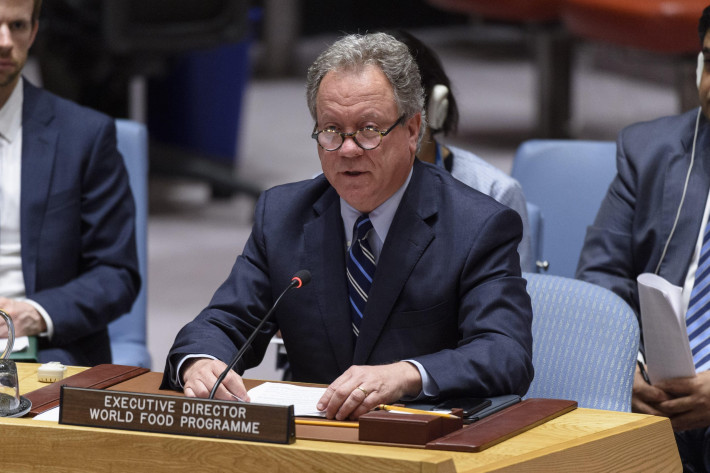
June 22 (EIRNS)–The World Food Program today issued a warning headlined, “41 Million People Now at Imminent Risk of Famine.” The UN WFP press release quotes Executive Director David Beasley, who addressed the WFP Board on June 21, “I am heartbroken at what we’re facing in 2021. We now have four countries where famine-like conditions are present. Meanwhile, 41 million people are literally knocking on famine’s door. If you look at the numbers, it’s just tragic—these are real people with real names. I am extremely concerned.”
The four countries with famine-like conditions are Ethiopia, Madagascar, South Sudan and Yemen, where people are experiencing famine-like conditions, which is phase 5, “famine/catastrophe,” on the IPS acute food insecurity index from 1 to 5. Nigeria and Burkina Faso also have people in this worst category.
The 41 million people are across 43 countries. “The slightest shock will push them over the precipice. This number has risen from 27 million in 2019,” said the release.
Further from the release, “Conflict, climate change and economic shocks have been driving the rises in hunger, but pressures on food security are being compounded by soaring prices for basic foods this year. Global corn prices have soared almost 90% year-on-year, while wheat prices are up almost 30% over the same period.
“In many countries, currency depreciation is adding to these pressures and driving prices even higher. This in turn is stoking hunger in countries such as Lebanon, Nigeria, Sudan, Venezuela and Zimbabwe.
“This year, the UN World Food Program is undertaking the biggest operation in its history, targeting 139 million people this year.” Beasley asks for $6 billion. “We need funding and we need it now.”

June 22, 2021 (EIRNS) — Today is the “Day of Remembrance and Sorrow” in Russia, commemorating the 80th anniversary of the June 22, 1941, with the Nazi invasion of the Soviet Union beginning the Great Patriotic War. On this occasion, Russian President Vladimir Putin has written a feature for the German weekly newspaper Die Zeit, titled “Being Open, Despite the Past,” also made available in Russian, English, and other languages. He recalls the enormous sacrifices made by the Soviet people in the fight against Nazism, whose memory is seared into their consciousness, and explaining the current security situation in Europe, he demonstrates that the Western-orchestrated geopolitical machinations of the past 75 years have created dangerous strategic tensions and heightened potential for conflict. But, he argues, however important it is important to understand the past, “we simply cannot afford to carry the burden of past misunderstandings, hard feelings, conflicts and mistakes,” as these will “prevent us from concentrating on the challenges at hand. We are convinced that we all should recognize these mistakes and correct them.”
Putin described the hopes that Russia held at the end of the Cold War, that there would be a “common victory for Europe … the logic of building a Greater Europe united by common values and interests.” Instead, he points out, “a different approach has prevailed,” based on NATO’s eastward expansion, leaving nations confronted with the “artificial choice of being either with the collective West or with Russia. In fact, it was an ultimatum.”
As a result of these events in the post-war period, Putin wrote, “the whole system of European security has now degraded significantly. Tensions are rising and the risks of a new arms race are becoming real. We are missing out on the tremendous opportunities that cooperation offers–all the more important now that we are all facing common challenges, such as the pandemic and its dire social and economic consequences.” The “entire post-war history of Greater Europe, confirms that prosperity and security of our common continent is only possible through the joint efforts of all countries, including Russia.… We are open to honest and constructive interaction. This is confirmed by our idea of a common space of cooperation and security from the Atlantic to the Pacific Ocean which would comprise various integration formats.” Watch the event.
Africa Entering Third Wave; Equitable Vaccine Distribution Could Have Prevented It
June 21 (EIRNS) — Africa has officially entered its third wave of the COVID-19 pandemic in less than two years — having been struck with two waves in 2020, and now going into another Winter season — with little relief in sight, and new more-virulent variants to deal with. “New cases, continent-wide are up by nearly 30% in the past week, and deaths are up by 15%,” said WHO Africa Regional Director, Doctor Matshidiso Moeti, in her weekly press conference June 17. “The threat of a third wave is real and rising.” A meager 1% of the African population has been vaccinated, due to the massive logistics barriers involved, along with lack of vaccine accessibility and financing.
The land-locked nation of Uganda is the latest crisis spot– as cases in the nation of nearly 50 million have shot up over 131% in the last week– with Namibia, DR Congo and Angola each showing lesser spikes. Many more of the victims are now younger, and a much higher percentage of them now require oxygen as part of treatment. Uganda’s hospitals are nearing their limits, and the nation has put out requests to neighboring states for emergency relief supplies.
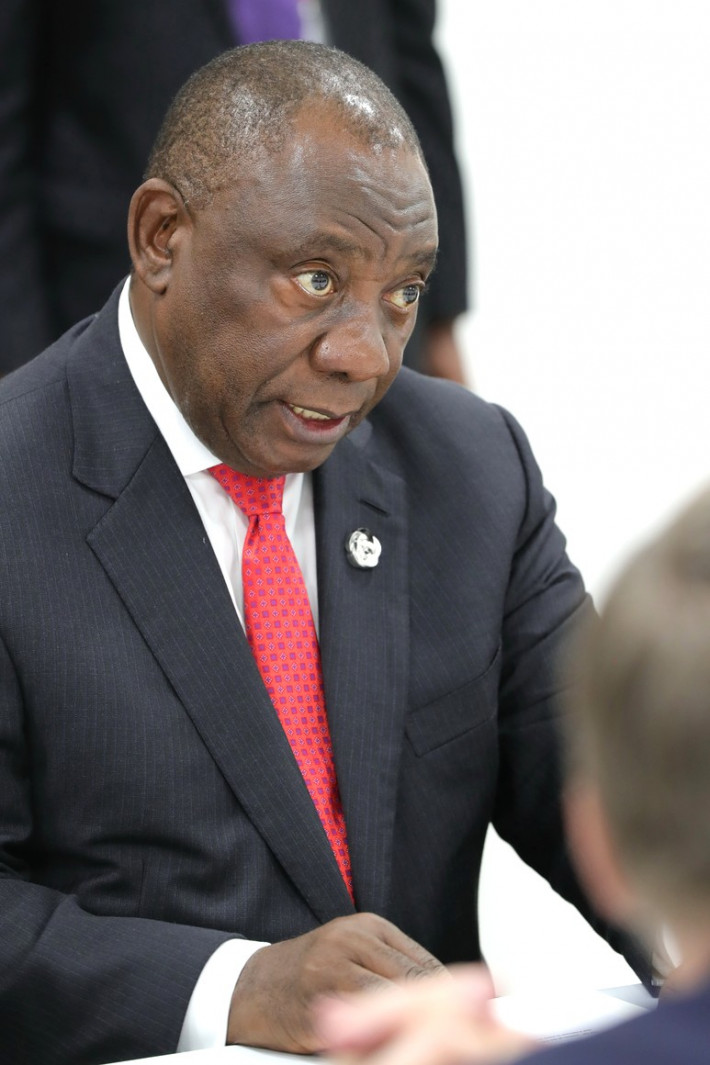
The other nation again in the unwanted spotlight is South Africa, where President Cyril Ramaphosa was forced to make a national address on June 15, as he once again declared a Level 3 lockdown. “A third wave of infections is upon us,” the president said. In just the past two weeks, “the average number of daily new infections has doubled. Then, we were recording around 3,700 daily infections. Over the last seven days, we have recorded an average of 7,500 daily infections. Hospital admissions due to COVID-19 over the last 14 days are 59% higher than the preceding 14 days.”
Again reflecting the increased threat from variants, Ramaphosa said, “The average number of people who die from COVID-19 each day has increased by 48% from 535 two weeks ago to 791 in the past seven days.” [emphasis added] Although South Africa responded effectively and built emergency capacity last year, four of the most populous provinces are officially in a third wave, with Gauteng — the most urban and populous — accounting for nearly two-thirds of new cases in the past week. “The increase in infections … is now faster and steeper,” he said, and “within a matter of days, it is likely that the number of new cases in Gauteng will surpass the peak of the second wave.” And Winter is just starting.
South Africa’s vaccine rollout has been severely frustrated, first by the denial of AstraZeneca vaccines from India (as they faced their own crisis), and further by the complications around the Johnson & Johnson version, either one of which could have prevented this crisis. Vaccines are “the one statistic that provides a clear reason for hope,” Ramaphosa said. Last year (during the second wave), over hundreds of healthcare workers had become infected, as the “South African variant” was first encountered. “In the last seven days,” he said, “only 64 health care workers have been infected.”
By the end of the week, South Africa is expected to produce its own Johnson & Johnson vaccines.