Oct. 27, 2017 -Matteoli, chairman of the Italian shipowners association Confitarma, said that the New Silk Road initiative represents a major o ppMario ortunity for growth mainly for Italian ports, since they become the next preferred gateway for goods coming from Asia into Europe, while today, cargo flows are more often offloaded in Northern Europe before being distributed in Central and Southern Europe.
“The Belt and Road project is of course challenging and scary at the same time,” Matteoli said,”but I think that the Italian players should be aware of this great opportunity mainly because instead of being at the terminus of the belt, we could have an inversion of the tendency of what the flows are now. Many industries in the north of Italy import goods from the ports based in Germany and The Netherlands, but the new infrastructure projects could instead invert the trend, and eventually Italy could become the entry point for the goods to be distributed towards the north.”
Matteoli also addressed a crucial role of shipowners for mankind, stating that “we, as shipowners, have to participate (in the New Silk Road) in order to grant a better world for the future generations.”
Oct. 29 – “China is an important country in all respects. It is a country with which we want to develop our relations, and revive the historical Silk Road together,” Turkish Foreign Minister Mevlut Cavusoglu said yesterday, in a speech in the southeastern city of Sanliurfa, Xinhua reports. He noted that the Silk Road includes many issues, including those of economy and security.
President Recep Tayyip Erdogan was a prominent participant in the May 2017 Belt and Road Forum for International Cooperation in China; the country’s {Official Gazette} reported two days ago that Emin Onon, described as Erdogan’s “chief advisor” by Turkey Minute website, has been appointed Ambassador to China.
The pro-government newspaper {Daily Sabah} ran a story that same day reviewing the last decade of Turkish-Chinese economic ties, with an eye to how, “having gained momentum in the last decade, Turkish-Chinese cooperation is set to capitalize on further cooperation with additional joint investment projects to unlock the potential offered by the Belt and Road project.”
“Millennia-long ties between the Turks and the nation of dragons, China, have not always been marked with lucrative cooperation,” {Daily Sabah} wrote, but “history tells us that the two nations have enjoyed the benefits of trading on the ancient Silk Road…. China’s willingness to render the Belt and Road initiative as integrated into Turkey’s development strategy, will also help strengthen the exchange between China and Turkey.”
Among the economic cooperation underway or in the works mentioned by {Daily Sabah}, are ongoing negotiations on construction of the Edirne-Kars high-speed railway route, the agreement on China’s State Nuclear Power Technology Corp.’s construction of a third nuclear power plant in Turkey, and promotion of the use of direct renmimbi-lira currency transactions to finance trade and investment by the Chairman Xu Keen of the Turkish branch of Industrial and Commercial Bank of China (ICBC Turkey).
Xu told {Daily Sabah}, “we will strengthen the market surveys in Eastern Europe and the Black Sea region, while acting as the major partner to infrastructure projects including energy power plants, railroads, highways and others, in addition to other projects in Turkey and surrounding regions.”
Likewise, PowerChina (Power Construction Corporation of China) decided at the end of last May to establish its Eurasian regional headquarters operations in Istanbul. PowerChina Deputy General Manager Wang Bin explained, in opening the regional headquarters, that “Turkey is one of the most important countries along the Silk Road and has important regional advantages,”
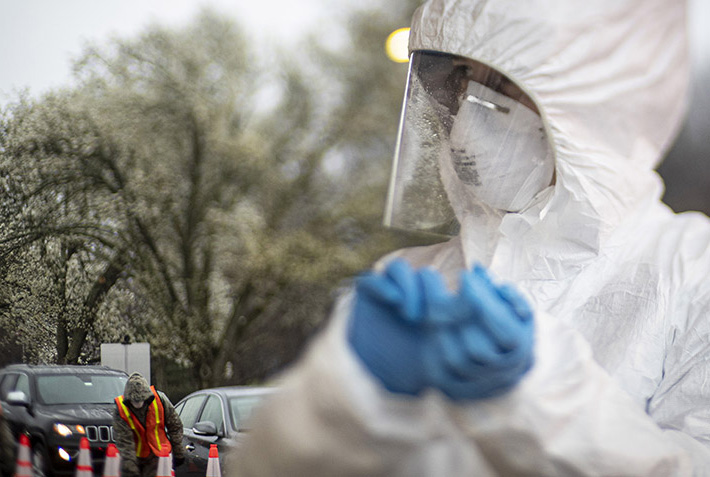
Helga reiterates the serious warnings from leading German infectious disease officials and looks at the Wuhan model of breaking transmission paths at the outset. Helga calls on countries to coordinate their efforts to conquer this pandemic, including stemming the economic impacts on the global economy, but that doesn’t mean a bailout for Wall Street! See her updated petition.
Helga and Harley discuss the fraud of the just-in-time economy, reminding people of Lyndon LaRouche’s warning that if we continued down the road of zero-growth, the West would no longer be able to support itself and implode. She calls for an end of geo-politics and all efforts to be focused on solving the joint virus and finance crisis.
The Schiller Institute is organizing a Day of Action, Wednesday, January 15, to intensify support for the Institute’s January 7 “Call for Presidents Trump, Putin, and Xi To Convene an Emergency Summit to Address the Danger of War.” Activists on five continents will mobilize citizens, government officials, diplomats and institutions, in support of the call, which was authored by Schiller Institute President Helga Zepp-LaRouche.
January 15, which is the birthday of Dr. Martin Luther King, Jr., is the day of rallies and activity at appropriate locations, and on social media, websites, and all means of outreach. The Schiller Institute encourages all to commemorate the ideas and life’s work of Dr. King, by organizing for peace through economic development, as in the Call for the Emergency Summit.
The central international event will be at the United Nations in New York City, from 12 noon to 3 pm, Wednesday, January 15. Follow us on Facebook for on-the-ground reports from organizers throughout the world. To participate in New York, please contact: Lynne Speed, in New York, at (201) 562-9890.
The first cargo train linking China’s western-most Xinjiang province with Ukraine pulled out of Urumqi,
Xinjiang today, heading for Poltava in Ukraine with a load of oil drilling equipment, Xinhua reports. Cheng Jingmin, Deputy Manager of Xinjiang Beiken Energy Engineering, which provided the equipment, said the new route, running through Kazakhstan and Russia, will cut transportation time from more than two months by sea to 15 days.
Schiller Institute Chairwoman Helga Zepp-LaRouche, in her Oct. 26 webcast, pointed to the importance of expanding Ukraine’s participation in such Belt and Road projects, thereby creating grounds for ending that dangerous crisis. Noting that Chinese Foreign Minister Wang Yi had just met with his Ukrainian counterpart Pavlo Klimkin, and both said that they want to cooperate very closely in the Belt and Road Initiative, Zepp-LaRouche continued: “That is what we have said for years: The only way that you can solve the Ukraine crisis–where the west of Ukraine is Western oriented, Catholic; and the eastern part, is Orthodox, Russian oriented–the only way that you can get back to the unity of Ukraine, is if the Eurasian Land-Bridge, the New Silk Road, is in construction from the Atlantic to the Pacific, and in that way, a higher level of cooperation is implemented, which then solves all of these conflicts. So that is also a very promising development.”
Major Qatari Daily Publishes Op-Ed by Dr. Kedidi on LaRouche’s Strategic Outlook
Feb. 28, 2017 –The following is a translation from the Arabic of a syndicated op-ed that was published today (February 28, 2017) in the leading Qatari daily {Al-Sharq} (http://www.al-sharq.com/news/details/473796 ). It is republished in several other Arabic newspapers and websites. The author is Dr. Ahmed Kedidi, former Tunisian diplomat and guest lecturer in many Arab strategic studies institutions. He is a long-time friend of Helga and Lyndon LaRouche, and frequent participant in Schiller Institute conferences in the 1980s and ’90s. He has also signed many petitions presented by the Schiller Institute. Dr. Kedidi is currently a resident of Qatar.
by Dr. Ahmed Kedidi
The most important international strategic event that took place last week, in my view, is the call issued by Russia’s Foreign Minister Lavrov to create a new world order to replace the old system, known as the transatlantic system, stressing that the latter system has reached its expiry date. It is a system that has been based on the West’s control over the livelihood of the world. This call was issued during the cessions of the international security conference held on Feb. 17-19 in Munich, Germany, in the presence of the U.S. Vice President and the German Chancellor. Coinciding with this, the President of China stood in the Beijing conference for international cooperation to express the same desire, proposing to replace the decaying transatlantic system with the “New Silk Road” project which relies on economic development and cooperation and peace among all the nations of the world.
Then, I became certain that President Trump’s description of the NATO system as an outdated one, falls into the same strong and joint paradigm towards changing the rules and aims of the world order and replacing it with an alternative order. But what most observers missed is that this is the alternative that was proposed to the leaders of the world by Lyndon LaRouche, the American thinker, politician and economist who was an advisor to President Reagan, and was the true father of the Star Wars [Strategic Defense Initiative-ed]. He is the indefatigable fighter, who keeps exposing, in spite of passing the age of 90, the misdeeds of the Transatlantic system which is dedicated to looting and war.
Mr. Lyndon LaRouche was the only one who warned the world about the collapse of the international financial and monetary system. He was also the only one who prescribed the remedy more than a third of a century ago through a unique vision and capability to foresee the future and avoid approaching crises. He is now a reference point for American and international experts and politicians in order for them to make radical decisions to establish a new international economic and strategic order replacing the Bretton Woods System and NATO, an alternative system based on justice, security, and cooperation among the U.S., China, Russia and India, and on constructing networks of roads, bridges and communications among nations. A system based on building relations among nations on the foundation of cultural ties that bring a swift end for the manipulation and looting of other nations, and eventually solving the major crises by resorting to international law. One of the first such crises to be resolved is the current one in the Middle East, through ending the support to the reckless madness of Israeli policies, because, according to his [LaRouche’s] analysis, it has become a threat to international security and peace, and has turned into a focal point for violence, murder, and ethnic cleansing.
Mr. Lyndon LaRouche is also a proponent of every nation’s sovereign right over its resources and wealth, and an avowed enemy of usury, illusive trade, and replacing physical reality with virtual axioms. He is a fierce resistance fighter against financial speculators and their manipulations, because he has always been an advocate of an international system based on physical production of wealth, employment, justice and economic welfare, technological progress, commerce, and opposing the tyranny and imperialism of the transcontinental banks and corporations. These views have been expressed by Mr. LaRouche for more than 30 years through his monthly (sic) magazine {Executive Intelligence Review}, which is published in three languages ({New Solidarity}), and in his newsletter targeting the ruling elites, The {Strategic Alert Service}, and through the American and European parties that propagate his ideas and call for listening to his voice. These stances are exactly what the leaders of Russia, the U.S. and China are aspiring to change their policies to orient with, i.e., a change that means a clean break with the policies of the neocons in Washington and the ambitions of the extreme right wing parties of Europe.
I have known Mr. LaRouche personally for more than 35 years. I visited him frequently in his home in the outskirts of Washington, and his house in Germany, near Wiesbaden, and I met him a countless number of times in European capitals in international economic and political conferences. He joined me in several international committees, like the committee to free Palestinian leader Marwan Al-Barghouthi, and I joined him and his wife, Helga LaRouche, in the international effort to ban violent computer games that plant the seeds of violence and the desire to kill in our children. I still believe that he is one of the American personalities with the most far-sighted vision, the fairest, and the closest person to the issues of the oppressed people of the world. Therefore, he is the most competent to bring back to the American nation its respect and dignity which it has lost in the past decade. I never give up on the possibility of changing the U.S. foreign policy towards the issues of the Arab world, because this is a very likely proposition no matter what President Trump’s improvised positions may be, only if we Arabs realize what the ways and means to reaching that change are. It is not enough to be right. It is equally important to know how to impose that right in the sphere of international relations, where our enemies are imposing their injustice.
The following resolution is being circulated internationally by the Schiller Institute.
At a time when we are witnessing growing mindless violence, the degeneration of cultural values, an almost unrivaled dumbing-down of popular taste, and the brutalization of interpersonal relations, we nonetheless still have a crucial source from which a cultural and moral regeneration can be spawned: classical art! The magnificent image of man that is associated with the poetic works of Dante, Petrarch, Lessing or Schiller, or the sublime compositions of Bach, Mozart, Verdi, Beethoven, Schubert, Schumann or Brahms, is still a reference point for the way in which we define ourselves as a society.
But when we consider the role of the artist in contemporary culture, and apply the yardstick given by Schiller:
The dignity of man is in your hands,
Preserve it!
It falls with you! With you, it will rise!
A degraded picture emerges. Our education system hardly conveys any knowledge of classical culture, our so-called youth culture is dominated by a cult of ugliness, and classical culture itself is under massive attack. For decades now, post-war theater companies have invented new abysses of hideousness, productions of Shakespeare or Schiller have become unrecognizable, opera stages have also become battlefields for some time, on which the perverse fantasies of various directors are played out, and now self-styled modern composers are even molesting the compositions of Beethoven, evidently because they are unable to create anything themselves.
This must be stopped! The time has come to launch a counter-offensive!
The Year of Beethoven, in which many Beethoven compositions will be performed all over the world, offers a wonderful occasion for us to recall the best of our cultural tradition in western culture and to oppose it to the moral downward trend of the past decades. We can no longer leave a theater and music mafia, that has ruined classical art, at the helm. Therefore, we call for the creation of a Renaissance movement for the defense and revival of classical art. As Friedrich Schiller demonstrated so incontrovertibly in his Aesthetical Letters: It is only in great art that we can find the inner force to develop our own creativity and to improve ourselves as persons.
The world is currently in the midst of an epochal change in which the previous era, dominated by trans-Atlantic countries, is clearly coming to an end, and the focus of development is shifting to Asia, where there are several peoples who are rightly proud of their civilizations, some of which are more than 5,000 years old, and foster them. If the West has anything to contribute to shaping in a humanist spirit the emerging new paradigm in the world, it is our advanced culture of the Renaissance and the Classics.
“People in the West are so behind the curve,” Helga Zepp-LaRouche commented today, taking note of the extraordinary conclusion of the 19th National Congress of the Communist Party of China. By and large, the governments in the West seem intent on sinking with the Titanic of the trans-Atlantic financial system. And the populations generally remain woefully ignorant of what is actually happening in China, and the Grand Design to use the Belt and Road Initiative to help build a “beautiful world” for all—an ignorance which Zepp-LaRouche’s weekly webcasts on the “Spirit of the New Silk Road” are designed to help remedy.
“We, more than 1.3 billion Chinese people, live in jubilation and dignity,” Chinese President Xi Jinping reported in his brief, concluding remarks to the CPC Congress. As significant as the achievements of the past have been—such as raising 700 million people out of poverty—Xi focused on the tasks of the future, stating that China “embraces brilliant propsects,” and will “stride forward to an ever promising future.” He soberly added that “we also feel the heavy weight of responsibility upon us.”
“People in the West are so behind the curve”
The CPC Congress issued a final Resolution which located China’s mission in the global context, announcing their commitment to “preserving world peace and promoting common development.” The keystone of this mission is to “actively promote international cooperation through the Belt and Road Initiative,” and to use the win-win approach championed by President Xi to “work together with the people of all countries to build an open, inclusive, clean, and beautiful world that enjoys lasting peace, universal security, and common prosperity.”
Whether or not that “beautiful world” will be built, depends in large measure on the upcoming Asian trip of President Trump, and most especially on his Nov. 8 meeting with Xi Jinping. If Trump accepts Xi’s repeated offers to join the Belt and Road Initiative, a dramatic strategic sea-change will be underway. If, however, Trump remains largely tied down by British slanders and threats against him—such as the tidal wave of Russiagate and anti-China propaganda spewing from the British Empire and their assets—then the entire world may well sink with the bankrupt Old Paradigm.
Just as the CPC Congress’s concluding press conference was about to occur yesterday, China Global Television Network turned to EIR Washington Bureau Chief Bill Jones for a live interview on his views on the Congress, and on Trump’s upcoming meeting with Xi. Jones’s response was to the point: the Belt and Road Initiative “could be the glue that really could cement the relationship” between the two countries; if Trump and Xi reach such an agreement, “the whole world will move toward a new era of development.”
If the world is to escape a spiral of retaliations and counter-retaliations in the wake of the the killing of Iranian Major General Qasem Soleimani and Iraqi Popular Mobilization Units Deputy Commander Abu Mahdi al-Muhandis , the Presidents of the United States, Russia and China must convene an emergency summit to address the current crisis in Southwest Asia and the solutions to that crisis.
Seventy-five years ago, the United States, Russia and China were joined together in the global fight which defeated fascism, and today, these Presidents must act in concert to save the peace.
“It is clear, that among the three presidents, President Trump—who promised to end the endless wars and has already taken several steps in that direction—and Presidents Putin and Xi, there is the intention and the capability to outflank the maneuvers of the war-mongers and to establish a higher level of cooperation. That potential is the reason that the coup—Russiagate and now the Impeachment—are orchestrated against Trump. It is now the time for those three outstanding leaders to fulfill the potential that historical providence has bestowed upon them.”
The Crisis
Every world war and major war of the past century has been triggered by the British Empire’s geopolitical policy of permanent warfare, throwing nations against each other to maintain their power as a global elite.
Nowhere have the effects of that evil imperial policy of pitting nations, peoples, religions and factions against each other been more evident than in the Mideast, where that policy was codified by the Sykes-Picot Treaty established by the British and French imperial powers after World War I.
Understanding that history, Lyndon LaRouche, in a speech delivered 15 years ago, provided the framework in which to understand and act on today’s crisis.
“And when you look at the possibilities for this region, like Southwest Asia, the only chance will come, not from inside Southwest Asia. We will do, and must do, what we can, for that area, to try to stop the bloodshed, the agony, to prevent the war. But we will not succeed, until we change the history, change the world in which this region is contained.”
The Solution
Therefore, we call on President Trump to meet with Presidents Putin and Xi to not only address the immediate danger of war in Southwest Asia, but to do so with permanent effect by creating a New Paradigm for the world—to change the world, as LaRouche said.
Such a paradigm must be based on the principles of the Treaty of Westphalia, which ended the Thirty Years War in Europe. Warring nations broke the cycle of retribution and revenge and acted for the “advantage of the other.”
Such a paradigm must end geopolitics and imperialism, and establish a new financial and strategic architecture for the world, based on defense of the sovereignty and cultural integrity of all nations.
The U.S., China, Russia and other nations such as India, must act to establish a joint plan for the economic development of the entire region, informed by policies put forward by Lyndon LaRouche and Helga Zepp-LaRouche over the decades, and now given life by China’s Belt and Road Initiative.
Such a policy will realize LaRouche’s vision: “There is a solution, a solution in principle. And the solution is: End this blasted imperialist system! And understand that we, as a people, must develop our spiritual culture; that is, the creative powers of mankind, to carry further the development of mankind.”
Moderated by the Schiller Institute’s Dennis Speed, the speakers included Helga Zepp-LaRouche, Bill Binney (former NSA technical director), Kirk Wiebe (former NSA senior intelligence analyst), and Michael Billington (EIR). Held at the Thalia Theater on Manhattan’s Upper West Side, the dynamic between the speakers and the capacity audience of about 160, exemplified the historic moment. A typical New York audience, it consisted of Democrats, independents, Republicans, 9/11 truth seekers, Assange WikiLeaks networks, foreign press, etc. A third of the audience had never attended a LaRouche movement event before, and were brought through various networks as well as a week of daily distributions on the Upper West Side.
Transcripts below
Helga Zepp-LaRouche, the founder of the Schiller Institute, delivered the following remarks by pre-recorded audio, to the February 29, 2020 Schiller Institute event, “Rescuing the Republic from the Surveillance State.”
Hello! I’m Helga Zepp-LaRouche, and I’m the founder of the Schiller Institute. I am very happy to speak to you in this extremely important moment of history. The world is heading for what easily could become the worst crisis since the end of World War II. Unless we have a change in direction, there is very clearly the danger that the whole strategic situation could get completely out of control. What makes it so difficult, is that there are many interactive elements to this crisis.
Now, let me start with a very worrisome aspect. Despite the fact that President Trump clearly has the intention to improve relations with Russia and China, there are also very different tones coming out of some other parts of the U.S. administration. Recently, U.S. Secretary of Defense Esper was participating personally in a war game which was based on a scenario of a “limited nuclear war” between the United States and Russia in Europe, which included the use of so-called “low-yield nuclear weapons.”
Now recently the United States did deploy exactly such low-yield warheads on submarine-launched ballistic missiles on the Trident submarines, and that deployment of such “low-yield nuclear weapons” is very dangerously lowering the threshold of nuclear war.
This week there was a hearing in the Senate Armed Services Committee where U.S. Air Force Gen. Tod D. Wolters, who is also the commander of the U.S. European Command and the Supreme Allied Commander Europe — the so-called SACEUR — was asked by Senator Deb Fischer, “What are your views about adopting a so-called ‘no first use’ policy. Do you believe that this would strengthen deterrence?” General Walters said, “Senator, I’m a fan of flexible first-use policy.” Now, this is Dr. Strangelove in the position of the Supreme Commander of the U.S. forces in Europe. And this is occurring as the Defender 2020 NATO military exercise, which is the largest maneuver since the end of the Cold War, is moving tens of thousands of U.S. troops and others — like the Bundeswehr — to the Russian border for several months of maneuvers.
In light of all of this, the spread of the coronavirus, which, according to top health officials, is only a step away from a pandemic, naturally shows that we are on the verge of an uncontrollable situation. In Europe already, most international events and conferences have been cancelled, and the Lombardy region of Italy is now under quarantine; it has been named the Wuhan of Europe. People are being told by the media, by the TV, by the papers, to get food reserves for several weeks. Already now, the spread of the coronavirus has had a significant impact on the real economy.
In China, which has, according to the head of the WHO, set a new standard in the fight against such epidemics, because they put up the defense of life as the first priority and did outstanding measures to contain the spread of the virus. Nevertheless, their GDP in the first quarter will probably go down to 0% as distinct from the expected 6% [growth].
Now, China probably has the best chance to recover, but for the so-called West, it looks much more grim, because the international supply chains have been interrupted, and will be interrupted much more. This is now that the effects of so-called globalization are striking back. Globalization has led to an outsourcing of production into cheap labor markets such as the food production, which is now no longer under the sovereign control of countries, but under the control of international cartels. We no longer have food security in most countries.
The coronavirus, if it becomes a pandemic, or even if it spreads to more countries, is, in all likelihood, becoming the trigger for the financial meltdown. This is not the cause, but the trigger, because this financial system is already at the absolute limit. Since September of last year, the Federal Reserve has been pumping unbelievable amounts of money into the system in the form of the so-called repo loans. The other central banks — the ECB [European Central Bank], the Bank of England, the Bank of Japan, and others — have pushed money into the system through quantitative easing, negative interest rates, and this is just absolutely now reaching an end point, an absolute boundary condition.
There is a way out.
On January 3rd, after the assassination of Iranian General Soleimani, and there was for about two days the danger of a very dangerous strategic confrontation, I issued à proposal for an immediate summit between the Presidents of the United States, Russia, and China, to introduce a new level of cooperation to overcome the danger of geopolitical confrontation. Now, in the meantime, President Putin has made a similar proposal that the governments of the five permanent UN Security Council countries should have such a summit. China and France have already accepted. And today, TASS reports, quoting a high-level U.S. official, that the United States would be very interested to have such a meeting on the level of the UN Security Council governments for a new arms control agreement.
Now, I think what we have to do is, we have to push the agenda of such a summit to occur immediately. Because I think any delay, given the dangers of the military situation and the dangers of the pandemic, the dangers of the financial system, any postponement is really not very meaningful. This summit must adopt what Lyndon LaRouche has proposed with his Four Laws: a global Glass-Steagall banking separation; the introduction of a national bank in every country; fixed exchange rates among these different nations, and clearly defined infrastructure and development plans which then can become, as a totality, a New Bretton Woods system; and then have an international crash program for reaching a new level in the productivity of the world economy by focusing on a crash program on fusion power, on optical biophysics and other life sciences, and international space cooperation.
Now, this is a moment of extraordinary danger, and we could lose human civilization. But if enough forces around the world join in our mobilization to bring this New Paradigm about, it could also be the beginning of a completely new epoch. There has been one man who proposed and prognosed all of these developments as early as August 1971. That is my late husband, Lyndon LaRouche, who, when Nixon basically abandoned the fixed exchange rate system, and decoupled the dollar from the gold standard, Lyndon LaRouche said, if this tendency is continued, it will lead either to the danger of a new fascism and depression, or a just, new world economic order will be implemented.
Now, he also worked out the solutions for what can be done, which we have published and will continue to publish much, much more.
Therefore, I think that the exoneration of Lyndon LaRouche, who was innocently put in jail by the same apparatus which was involved in Russiagate and the impeachment effort against President Trump, his exoneration will be key for the implementation of this program I just mentioned. To get mankind out of the present danger and into a new era, I think is absolutely linked to the exoneration of Lyndon LaRouche.
Therefore, I am appealing to all of you to join the fight for the exoneration of Lyndon LaRouche, and the implementation of his ideas. This is the very best thing you can do to secure the future.
DENNIS SPEED: Who is on this stage? And what has happened to the people on this stage? What happened to Lyndon LaRouche? What happened to you?
People like to talk about something they call the “deep state.” We don’t mind that, but we know that it is neither a state, nor is it deep. [laughter] We know, those of us that have been involved, from those early days of the ’70s in some cases, and later in other cases. That you’re talking about an imperial force, and it’s an imperial force that terrifies a lot of people, but it mainly terrifies them, because they refuse to submit themselves to rigorous thought in the service of bold action. That’s all the problem is.
The problem does not involve secret police and funny microchips, and weird drugs, and subliminal messages, and all those other things. It involves the inability to look into oneself, and admit that the actions taken by people like Martin Luther King, or the actions taken by people like Malcolm X, or the actions taken by JFK, are only characteristic of the actions that all of us must take, in the context of what we have been confronted with, ever since the 1960s, particularly coming out of the United States. It doesn’t originate in the United States, but it will only be resolved if people in the United States decide to act.
We’re starting today with someone who’s well known to most, and he and his associate who is with him, Kirk Wiebe, have been fighting for 20 years, to tell a story — they told the story; they told the story 20 years ago — but they’ve been fighting for 20 years to get other people to stand up. It’s important to say that there is a faction of the American military and military intelligence, which is patriotic. It’s a faction that intended to defend the United States, and it’s a faction that also intended to make certain kinds of engineering and technical, and even scientific breakthroughs, on behalf of utilizing technology for positive purposes.
William Binney, a former intelligence official at the National Security Agency for over a 30-year period, attempted to do that, and was prevented at a critical moment, prior to September 11th of 2001, from doing his job. The United States paid for that. And you can’t walk away from that crime.
But talking about that from the standpoint of whether the planes were real, or how the buildings came down, or all these other things, doesn’t cut it. You have to confront something else: You have to confront what’s happening to you, right now, apart from your partisan beliefs, your political affiliations, you have to confront the fact that something is happening to all of us, and it’s your responsibility to listen to the people that can tell you what that is, in such a fashion that you can then take the responsibility that many of us, all, want to take!
Bill has spoken to several audiences, including to one here, three years ago, at Symphony Space, and we’re happy to have him here with us today. So, without further need to say anything, I’d like you to join me in welcoming William Binney, NSA whistleblower. [Applause]
WILLIAM BINNEY: Thank you. As Dennis said, the government we had opted for bulk acquisition for two basic reasons, I think. One was set up by Dick Cheney, and he wanted to know everything about all his potential adversaries, politically or otherwise. So, that meant he had to have information about everybody. So, the bulk acquisition satisfied his need in that respect. But in the other respect, in the bureaucracies of the government, bureaucrats tend to like to get bigger and bigger budgets and bigger and bigger organizations, so that meant more and more money, and more and more influence. In order to do that, if you opt for this bulk acquisition on everybody so that you can satisfy Cheney’s needs, it also requires the Congress to give you much more money so you can build your bureaucracy. And those are, I think, the basic motivations to do this.
But they had known also from the very beginning that there was another solution that would actually do productive things, because when you took the bulk acquisition, that meant you couldn’t see the threats coming; there was just too much data. That’s why they haven’t been able to prevent any of the terrorist attacks that have occurred anywhere in the world. Because everybody has adopted this policy, and they can’t see the threats coming. This is documented internally in NSA records produced by Edward Snowden and also by MI5 and MI6 records, and some in GCHQ. They are saying, their analysts are telling them that there is too much data; you’ve buried us, you’ve overloaded us. We can’t see the threat coming.
Just for that reason alone, they shouldn’t be doing it, but the real point is, the solution existed all along, and we were developing that in the Thin Thread program. That basically had three tenets: one was a deductive approach; one an abductive approach; and one was an inductive approach. For the deductive approach, we simply looked at social organizations that stayed within one degree of the known bad guys, and used that data to pull out information, and only that information, from the data flow that we were looking at. We were looking at a number of terabytes a minute or so at the time, and we wanted to up that to about 20 terabytes a minute. That was our approach. That was the deductive side. So, that was the human behavior property that showed probable cause. If you’re contacting a terrorist, then you need to be looked at; that’s easy to justify in a warrant.
In the inductive approach, we used simply you’re looking at sites that are advocating pedophilia or sites that advocate terrorism or violence against the West, or bomb-making, or things like that. You could try to watch people who visit those sites so you can see their frequency of visit, and say that they are probably getting radicalized, or in the process of radicalization. Or, you have people who have cell phones in the mountains of Afghanistan, or satellite phones in the mountains of Afghanistan, or the jungles of Peru. And you say, they’re dope traffickers, or they’re terror potentials. And you look at those kinds of things. That’s kind of the inductive approach.
So far, those two approaches would have caught every terrorist attack in the world before, during, and after 9/11; every one. But did we do that? No, because that’s a focused, disciplined, professional attack on the data and against bad behavior by people indicating potential threats. The abduct approach is a little bit more abstract; it says you look a geographical distributions. If you have a network at one degree that is distributed in countries that are involved in terrorist advocation or something like that, you need to look at them to see if they’re terrorists or in any way affiliated with a terrorist attack or organization. Once you look at them, if they’re not, then you take them out, and you simply say they’re out. The rest data you simply let go right by.
Now what that does is, it gives everybody in the world privacy. And it respects the Constitutional and privacy rights of everybody in this country and every country in the world. Plus, it creates an extremely rich environment for analysts to succeed at preventing threats and potential adversarial attacks. That’s the whole point of why we did the Thin Thread program to begin with, because even back then our analysts were buried with data.
So the end result today is, we have a situation where — the key point here is NSA databasing of information. Because our country is the only country in the world that afford all the data storage that can store all the information they’re collecting. They’re collecting multiple petabytes a day. My estimate of the Utah storage facility alone was based on Cisco routers being put into it, and what they were estimating was 966 exabytes of data going into that data center a year by 2015. So, I figure they had to have at least five years of storage capacity, which meant five zettabytes, which is much less than a yottabyte, but still, it’s quite a bit. After that, we get a bunch of bytes, and a lot of bytes, and all that kind of stuff. So, it hadn’t been named above a yottabyte.
But the point is, NSA is the key element here, because it’s a storage facility for not just NSA, but all of the agencies of the United States government, all the Five Eyes, and the nine other countries that are participating with them in this worldwide collection of data and bulk acquisition of data on everybody on the planet. And all we would have to do is take our rules — deductive, inductive, and abductive — take those rules and run it and process the entire database that’s stored, and pull out only that which is relevant and purge the rest of it. At that point, there would be no data available for anybody in the US government or the British government or anywhere to use against their people. So it couldn’t be abused. So, that would fix the problem. That would mean that the FBI, the DEA, the DOJ, or anybody in the intelligence community, or in the Five Eyes, or any of the others, could not go into that database and find information on any one citizen, unless that citizen had probable cause, warrant-based evidence that they should be there. That’s the way to fix this whole problem and do it rather quickly. Because once you take that data out, no one has the ability to abuse it.
SPEED: Let me say that we’re going to have an extensive Q&A session, so anybody who has particular questions, you’ll be able to ask those questions. What Bill has just done is provide the solution; and that’s what we asked him to do.
We’re going to next hear from Kirk Wiebe. I don’t think a lot of people know much about Kirk, so I’ll just say the following: He and Bill, and another gentleman by the name of Ed Loomis, developed what is called the Thin Thread system, which was referred to just a minute ago by Bill. I’m going to let Kirk tell you a little bit; he has a very specific view about the relationship between intelligence and the Constitution. Kirk?
KIRK WIEBE: Hello. Thank you, Dennis, and thank you to the LaRouche organization for making this possible, and for inviting us to address these fine people before us.
A lot of people don’t realize it, but the National Security Agency — and I’m going to pick on them, because I worked there for a long time with Bill — has operated unconstitutionally for about 70% of the time it has existed on the planet. What do I mean by that? Well, the people in charge — namely, the Executive, namely the Legislative branches of government — have formed a cabal, a cartel, if you will, that has decided to mass surveil the world, stuff the information in a big database somewhere, and claim that they’re not violating your rights under the Constitution. Because they say, “Yeah, we collected it,” although they won’t overtly admit it, “But we haven’t looked at it. And if we haven’t looked at it, it hasn’t meant anything to an official in the government.”
Now, if we go back to the late 1700s, just before the outbreak of our famous Revolutionary War, King George of England, it’s documented, wanted to put a Redcoat — a British soldier — in the home of every colonial settler in the United States. And why do you think he wanted to do that? You know the answer. He wanted to know what they were thinking and doing. Let me suggest to you that, with all the electronic devices — if I asked any one of you, “How many electronic devices connected to the internet does your family have?” I know it’s more than one; probably four. What do you think, more? I agree. The point is this: Each of those is sources of information about you and those who you love the most. Every detail, every thought that’s communicated via those devices can be collected and put in a database. And when someone decides you’re important for some reason — it could be anything; somebody wants to blackmail you, somebody wants to scam you. The only difference between a good person and a bad person in government is what? What is it? Yeah, really, it’s opportunity. Do you have what we would call moral clarity? But beyond that, do you have a sense of what’s right and wrong in this nation? The founding document of which is the United States Constitution, and do you care?
Well, I would submit to you, we have in the news, events going on — namely, the attack using the weaponized sources of the intelligence community to subvert a duly elected President. If that’s not a warning, what do you think they could do to one of you? Or three of you? Or Bill and me? Or anyone else?
So, the threat is real. It has been abused, and it lies at the feet of people who are greedy for power. It didn’t start out that way; it started out nobly. But now, we’ve reached a point where people have decided they know better, they know best how to manage all of our lives. And it’s not just the NSA anymore. Google knows what you’re doing; Facebook knows what you’re doing; Instagram knows what you’re doing. It’s proliferating everywhere, and now we have the internet of things, where even your refrigerator can talk to the internet. It’s ridiculous; your whole lives are stuck in a database.
The point of it is, Bill has suggested that there’s a way to put the genie back in the box. But it’s going to be you, who makes it happen. Don’t expect some Senator, don’t expect some Congressman to do it. With the exception of CIA chief Pompeo inviting Bill to talk about the DNC data hack, no member of government has ever approached him or me, and said, “Would you come talk to a few Congressmen about what’s happened? Your ideas for fixing it.” No! Why? They like it the way it is. Your data is available to anyone in 16 agencies within the intelligence and law enforcement communities. That’s the threat, and only we can change it. Thank you.
SPEED: Thank you, Kirk. We’re going to hear now from Mike Billington, and Mike is going to tell you a bit about himself. He is, as is listed here in your program, Executive Intelligence Review Asia Editor. He’s author of a book called Reflections of an American Political Prisoner. Mike was offered — I say it and he has to say it — after two trials; one trial for which he served 2-3 years, he was offered a plea bargain, which would have meant that he would have simply time served. No time would have been additional. All he had to do was claim to be guilty of something of which he was not. A lot of his friends would have had a big problem. And Mike decided, “You know what? I don’t think I’m going to do that.” Despite the fact that his own attorney asked to be replaced, despite the fact that Mike said he would replace him, the judge in the case refused to do that; and Mike was given a 77-year sentence. He served eight years of it. Is that the price you have to pay for integrity in this country?
Now if it is, I will submit to all of you, as you listen to him, you think about whether or not that’s the kind of country you want to live in. Mike Billington.
MICHAEL BILLINGTON: Thanks, Dennis. If any of you have a sense that calling for the exoneration of Lyndon LaRouche is a pipe dream, or that Trump would never do this, I want you to put that out of your minds. And I’ll try to prove that.
This is a rare moment in history for many reasons. But one, which I will address, is that this is, in fact, the time that the exoneration of LaRouche is both possible, absolutely necessary, and will transform not just the nation, but the world, forever. And I want to try to convey that in as clear a way as I possibly can. Let’s start by looking at the fact that just last week, Donald Trump pardoned or commuted the sentences of 11 people. Some of them were people who, like myself and my co-defendants, were innocent and were illegally and unjustly charged and tried and sent to prison. Others did commit crimes, but they were subjected to outrageous sentences, not just to silence them, but to terrorize other people. The fact that Trump did this, and that he also addressed quite publicly and at some length the issue of Roger Stone, and the fact that, as he said, “He will probably be exonerated one way or another,” means that this very much on Donald Trump’s mind. And I’ll mention that Roger Stone, who is someone who has quite publicly addressed Lyndon LaRouche as one of the greatest minds of the 20th century, has interviewed him, has spoken at our conferences, is very well known to the criminal network in the criminal justice system who have run the entire operation against Trump, against Roger Stone, and others. And I’ll come back to that.
One of the people released by Donald Trump was Rod Blagojevich. [shuffles papers] Somehow, I don’t have what I wanted to read to you. I will convey, in brief, some of what he said the day he came out, where he and his wife and his two daughters met outside the house. He addressed the fact, first of all, that there was no way to thank President Trump for freeing a man from a charge which he had not committed; there was no way to thank him. He said that Trump is a very firm leader, a very tough leader, but also has a huge heart. And that releasing Blagojevich was an act of kindness, which people had to recognize.
He then went on to say, to the people of Illinois who had elected him twice as Governor, he said, “I did not let you down. I would have let you down had I given into this; had I admitted guilt to something I didn’t do. If I had gone along to save myself this 14-year sentence” — of which he served 8 years. He then quoted from a Supreme Court Justice, Justice Breyer, who said that the idea that people in politics and the political world could be charged criminally for what they’re supposed to do as politicians is one of the greatest threats to America today. This is a Supreme Court Justice. And that in particular, he said, “Prosecutors armed with this potential is a grave danger to our system of government.” And Blagojevich said he learned that the hard way, as many of us did.
But I think it’s extremely important that you have people at that level directly addressing the broken criminal justice system that existed, he specifically said, since 1994 when this Crime Act was passed, which was a disaster. He described it as a racist and illegal act.
Lyndon LaRouche, long before that, was convicted and served 5 years of a 15-year sentence, from 1990-1995. He could have been exonerated by President Clinton; Clinton was considering it. Literally tens of thousands of leading citizens of this nation and from around the world wrote to Clinton, calling on him to pardon and exonerate Lyndon LaRouche; but he didn’t. He did make sure that LaRouche was released after the first parole potential, after five years. So, he served 5 years of that 15-year sentence. When he was released, he organized here in Virginia, a forum before a panel of very distinguished jurists and political leaders and others, testimony on the LaRouche case and on other cases of the misuse of the criminal justice system — in particular, the Fruehmenschen case, which was the official FBI doctrine that any black elected official was, by the fact that of being black, more prone to corruption and therefore legitimate to be investigated. In that hearing, I want to read some of what Lyn said himself in that testimony. He said — and this is long before the 1990s and 9/11 — this is back in the 1980s:
“We have, in my view, a system of injustice whose center is within the Department of Justice, especially the Criminal Division of the U.S. Department of Justice. The problem lies not with one administration or another, though one administration or another may act more positively or more negatively. You have permanent civil service employees … who are coordinators of a nest of institutions in the Criminal Division, which show up repeatedly as leading or key associates of every legal atrocity which I’ve seen.
“In my case, when the time came that somebody wanted me out of the way, they were able to rely upon that permanent injustice in the permanent bureaucracy of government, to do the job. … Always there’s that agency inside the Justice Department, which works for a contract, like a hitman, when somebody with the right credentials and passwords walks in, and says, ‘we want to get this group of people,’ or”we want to get this person.’ And until we remove, from our system of government, the rotten, permanent bureaucracy which acts like contract assassins, using the authority of the justice system to perpetrate assassination, this country is not free, nor anyone in it.” [applause]
Odin Anderson, Lyn’s lawyer, then presented a series of documents which we had obtained through Freedom of Information from the FBI, and I’ll just briefly mention, it included the idea of putting out false leaflets under the LaRouche organization’s name, going back into the 1960s and 1970s. It included Henry Kissinger’s letter to the head of the FBI saying, can’t you get this guy? He’s being very obnoxious. A letter from the Director of the FBI to some of his subordinates, saying let’s investigate him. We don’t know where his money comes from; let’s investigate him as being funded by a foreign hostile force, which then calls into being Executive Order 12333, which basically says somebody financed by a foreign hostile force, you can throw the Constitution out and do whatever you want. And others of this sort. So, this was well documented.
Then, Ramsey Clark spoke. Ramsey Clark, I’m sure most of you know, was the Attorney General of the United States under President Johnson. He became our lawyer for the appeal, when we were first convicted in the Federal case. Here’s what he said, first of all, in a letter that he wrote to Janet Reno, then the Attorney General — the same position he had held. He says:
“This case [the LaRouche case], I believe, involves a broader range of deliberate and systemic misconduct and abuse of power over a longer period of time, in an effort to destroy a political movement and leader, than any other Federal prosecution in my time or to my knowledge. A tragic miscarriage of justice.”
In the testimony of the same hearings that Mr. LaRouche spoke in, he said:
“What was a complex and pervasive utilization of law enforcement, prosecution, media, and non-governmental organizations [NGOs — those ‘no-good organizations’] focussed on destroying an enemy, this case must be number one. The purpose can only be seen as destroying more than a political movement; more than a political figure. It is those too, but it is a fertile engine of ideas and a common purpose of thinking and studying and analyzing to solve problems regardless of the impact on the status quo or on vested interests. It was the deliberate purpose to destroy that at any cost.”
So, this is what the LaRouche case was, and was recognized increasingly by many people. That’s why they had to destroy him and try to poison his name in the media, to prevent these ideas from being placed at the accessibility of the American and world populations.
Clearly, it’s exactly this same network that went after Donald Trump. I don’t think I have to explain that; it’s pretty obvious.
In terms of my own case, I think to get at that, I want to say something else about Roger Stone. You probably all watched the raid; the great raid on Roger Stone’s house. A 66-year-old man with no criminal record, attacked at 5 a.m. or something like that; with, of course, CNN standing out there. Everybody watched this horrible criminal, being put in handcuffs and dragged off.
Well, I’m very familiar with that scene. On October 6, 1986, the day of what we call the Great Panty Raid in Leesburg, armed forces from many different law enforcement agencies raided our offices, surrounded Lyndon LaRouche’s house. And when my wife got up that morning and was taking the garbage down to the end of our lane, she saw a whole slew of armed men in police cars — and CNN — ready to come in; for some reason, not coming in immediately. So, we called our neighbors, John and Renée Sigerson, who happened to live near us at that time, and said, “Why don’t you come over while we wait ’til they come in and arrest me?” So, we were sitting there watching The Marriage of Figaro on a video, when these men finally decided to come running up the road with their guns drawn and surrounded the house. They pulled me out and put me in chains and took me off, and so forth. Why? And CNN. My wife came out and said, “Get the hell off my yard, you have no right to be here.”
This is something that was going on then, and is going on now. In my case, there was something of this deep state — so-called — directly involved. A fellow named Oliver North — some of you probably remember — who was, at that time, running through the Iran-Contra operation, a scam where we were arming terrorists in Nicaragua. And the planes unloading the guns that were being shipped down to them, just as we were shipping weapons to al-Qaeda in Libya and so forth, were coming back loaded up with cocaine. We exposed that; that this was drug-running operation, and that Oliver North — the good friend of Henry Kissinger and others — was running this scam. Then we found out that Ollie North was also running around raising huge amounts of money — stealing really, huge amounts of money from people. Telling them that this was to fight communism; it was to save America, and so forth. When in fact, it was financing arms-running and drug-running. One of the people they scammed was somebody who was a major contributor to us, and with whom I was in regular contact. Oliver North told her that you had bad people, who are trying to undermine your doing good things; therefore, you should let me tap your phone, which was done. They monitored our calls. This was not just to get me, but it was to be fully on top of what exactly we were doing as an organization at that time.
So, I think that’s the reason I was hit particularly hard with the indictments. I was indicted both in the Federal case and in the Virginia state case. The “Railroad” as we called it, went forth; we were all convicted. I won’t go through the ugly details, but it’s worth reading. And I got three years in the Federal case. And then, as Dennis explained, I was told in the state case, where I was charged with crimes that could have been 90 years, that I simply had to lie, and — pffft! — I could go home.
So, that didn’t happen. And as a result, I got a 77-year sentence. Many of the people I met in prison, when I said I had a 77-year sentence, said, “how many bodies do ya got?” [laughter] So, I did not [lie to get out of prison], and I want to read something that Dennis actually read at a previous event and which really struck me, from Martin Luther King. He said, “You may be 38 years old, as I happen to be. And one day some great opportunity stands before you and calls you to stand up for some great principle, some great issue, some great cause. And you refuse to do it because you are afraid…. You refuse to do it because you want to live longer…. You’re afraid because you will lose your job, or you are afraid that you will be criticized and will lose your popularity, or you’re afraid that somebody will stab you, or shoot at you, or bomb your house, so you refuse to take that stand.
“Well, you may go on and live until you are 90, but you will be just as dead at 38 as you would be at 90. And the cessation of breathing in your life is but the belated announcement of an earlier death of the spirit.”
And I can assure you, that my life is proof of that fact: Because I did have to spend a total of 10 years in prison. But I can honestly say, these were the best years of my life — [applause] my only problem with my fellow inmates was my trying to convince them that this was the only chance they had in life, where they didn’t have to work, they didn’t have to support a family, they should learn, they should read, they should not waste away, feeling sorry for themselves. But I was given, really, the assignment of China — I mean, 77 years, you’ve got a 5,000 years of history to study, you need 77 years to take that on. [laughter]
But it became a real passion. It was something we needed to do. My co-defendant, Will Wertz, was at the time, translating Nicholas of Cusa, who was the relatively unknown great mind of the European Renaissance era; and I was then reading Confucius and Mencius and another relatively unknown but magnificent figure called Zhu Xi during the Song dynasty in the 12th century, and saw the comparison between what I was reading of Cusa, and what I was reading of these Chinese philosophers, and was able to pull together a sense of the way in which the great Christian Renaissance of Europe, and the Confucian Renaissance, where Zhu Xi, like Cusa, was restoring the Platonic tradition and the Confucian tradition which had been lost, over the dark ages in both Europe and China. So this it was a profound chance for me to really make great discoveries, which enriched my life, and through my work, hopefully, enriched the world, and made those who put me in prison very sorry that they’d given me the opportunity, to do that.
And, then, lastly, I’ll say, there was one particularly profound experience: At one point another of my co-defendants, Paul Gallagher and I were in the same prison, and we formed a Classical chorus. So we had a chorus of people — of criminals, some fairly serious criminals, child molesters, murderers — but people who, with one exception had never participated in any kind of Classical music, were totally unfamiliar with Classical music, and had never tried to sing. But we had been trained in some bel canto methods, and we began to train them. We sang Bach, and we sang Schubert, and we sang Negro spirituals. And in particular, we sang Beethoven. Now, this is the Year of Beethoven, our theme is to “Think Like Beethoven.” Many of you may have seen Helga Zepp-LaRouche, two weeks ago, gave a forum here in New York, from Germany, on Fidelio, the great opera by Beethoven: In which the woman, Leonora, dresses as a boy, “Fidelio” to work for the warden of a prison where she believes her husband is being held illegally, and secretly, by a tyrant. And through this story, she eventually frees her husband, and this is a very powerful story, and you can imagine why Helga loves this story, with Lyn having been in prison at this time.
And I had a similar experience: My late wife, at that time, traveled the world meeting with presidents and world courts, and so forth, addressing this injustice to Lyndon LaRouche.
And one scene in this great opera is called the “Prisoners’ Chorus,” where Leonora/Fidelio succeeds in getting the warden to let the prisoners out for just a moment, to get some fresh air. And they come out, and sing this male chorus, called, “O welche Lust,” “Oh, what joy,” to breathe fresh air again. And they think about freedom, freedom, freedom — Freiheit, Freiheit. But then, they remember that they’re being watched, and they sort of skulk back into their cells.
We sang this at the prison, and that, in particular — the whole thing — but that in particular, that Beethoven principle, had a profound effect on everyone of those people. And I’ve told this story before, and I tend to choke up when I say it: But every one of them, at some point afterward, came up to me, to try to express that they had never known of this kind of beauty in the world — and, let alone, that they could participate in the creation of that kind of beauty. So, when Lyndon LaRouche launched the Manhattan Project here in New York, with the intention of creating a vast chorus that would sing both the Classical repertoire and the Negro spirituals, because there were not just popular music, or gospels, these were songs that were about the fight for freedom, and had a Classical nature, in that sense — I understood exactly what he meant: That this was the way in which we can build the necessary movement for a true Renaissance.
So the Schiller Institute’s motto has always been, the Schiller motto, that the path to truth is through beauty. And that this is an example of why building this chorus — there was a Musikabend last night, and I understand that those people who went and participated in the music, who are being recruited to our political ideas, but it’s through participating in this kind of great culture, which we’ve lost, in America, with the ugliness that now passes for “culture,” that this is the way we create the potential to reverse the decay in the collapse of the civilization that we’re living in, and actually creating the New Paradigm that Helga addressed.
So, I think this is why, if we make this possible that LaRouche is exonerated by a President Donald Trump, who wants to achieve what he says, in terms of bringing the world together around these powerful ideas of development, of science, of cooperation, and great culture, that all of these ideas of this brilliant man, these beautiful ideas, will be made available to everyone, which has been denied them for these last 40 or 50 years, which is the great crime of the persecution of Lyndon LaRouche, that these ideas were prevented from being known and uplifting the population.
So this is where we stand, and I think this is why we have this kind of a fight, to expose and destroy, whether you call it deep state or British intelligence, destroy those who have purposely set out to destroy both the culture as well as the economy and the participation of our citizens in this kind of commitment, to what, in fact, can and must be, a New Paradigm. Thank you. [applause]