Top Left Link Buttons

David Dobrodt

Author Archives

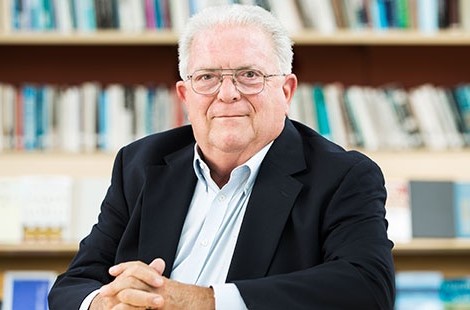
Interview: Promote Humanity To Defeat the British Empire — Chandra Muzaffar

Recorded August 21, 2024

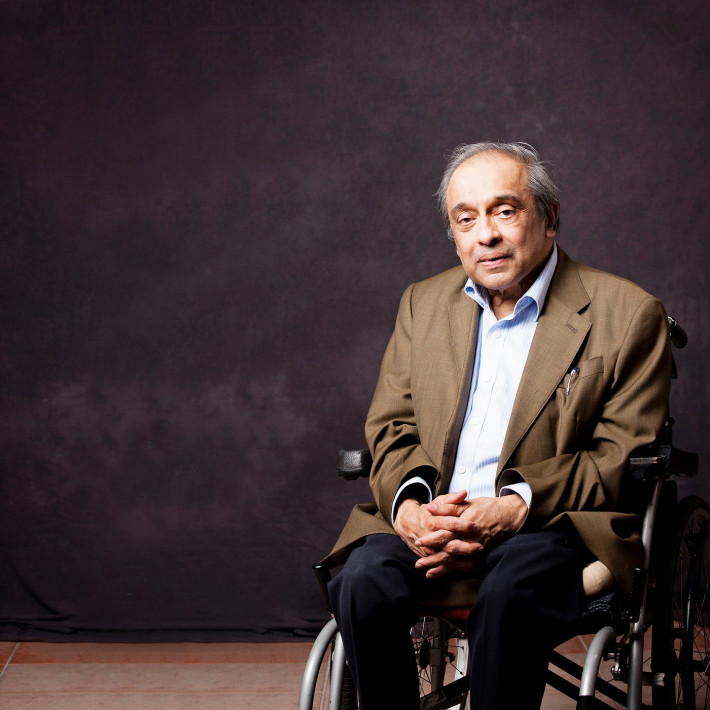
Mike Billington: This is Mike Billington, with the EIR and the Schiller Institute. I’m very pleased to have with me Chandra Muzaffar, a long time friend of the LaRouche movement, an international Islamic scholar and political scholar from Malaysia. Let’s begin. Chandra is the founder and the president of the International Movement for a Just World, which is just known internationally as JUST, since its founding in 1992. I noticed on your website says: “For the first time in history, a global empire has emerged.” So let me ask you to say a few words about JUST, its purpose and its history, and to explain that statement.

Chandra Muzaffar: Thank you, Mike, for this invitation, this opportunity to discuss certain issues which are important to both of us. This is an important moment in history to look at these issues in the larger context of what is happening in the world. Let’s begin with JUST. JUST is a registered society in Malaysia. It has a small membership spread across the globe, people from different parts of the world, from something like 40 odd countries. The membership is not large. It’s multi-ethnic, multi-religious in terms of its composition. Gender wise, it’s quite balanced. The whole purpose of JUST is to raise consciousness amongst people everywhere of, number one, the danger of a demonic power, the consequences of hegemonic power, what it means for all of us, including people who are living within countries that see themselves as hegemons. This is something which we see as part of our agenda, to raise people’s awareness and to articulate an alternative, a multi religious, multi ethnic alternative, in a sense multi civilizational alternative that draws out the values from the different civilizations, cultures, and articulates these values as the foundation for a different type of global order. That’s the whole purpose of JUST.

First, a critique of the existing global system, which is largely demonic. And number two, an articulation of an alternative which is egalitarian, which emphasizes human dignity and justice for everyone. And also articulates an alternative which is the antithesis of hegemony, by which an alternative that enriches, enhances the contribution of each and every human being, and of the different cultures and communities, to a world that is just beginning to emerge.

Now, that statement that you quoted just now, Mike, about global empire — that it emerged for the first time in history — is a reference to the first part of JUST’s mission. The hegemonic world we’re talking about, that’s the global empire, led by the US, with certain other countries in the West. Elites from the West and from the non-Western world, too, were part of this hegemonic pattern of power. And it’s a global empire, because if you compare it to the empires of the past, whether it was the Roman Empire or the Persian Empire or the Ottoman Empire, none of them had the same sort of global reach in terms of the tentacles of the Empire stretching everywhere, encompassing the whole world. They didn’t have that sort of reach. So I think it’s right to say that this is the first global empire, in that sense, the American led empire, in terms of its reach, its impact. Right. It is not an attempt to judge the Empire. All that we say is that there is such an empire. We are concerned about it because it is hegemonic and therefore has a certain impact upon people. And that’s what we are concerned about.

Mike Billington: You also created another organization, or participated in its creation, called SHAPE, Saving Humanity And Planet Earth,together with Richard Falk — I think many people watching this will know Richard Falk — and Joseph Camilleri from Australia, as Co-conveners. You’ve sponsored several international conferences addressing the growing danger of war and of nuclear war. How do you see the purpose of that organization? 

Chandra Muzaffar: Very similar in many ways to JUST, which is why JUST is a an active supporter of SHAPE. We have helped SHAPE in some of its programs. The differences: the emphasis which SHAPE gives to the danger of a nuclear war. We are also concerned about it. But I think SHAPE has made one of its principal goals to look at the question of nuclear weapons and its impact upon the world.

Mike Billington: Well, it’s certainly the case that the world has come closer to global war right now than perhaps any time in history. This includes the escalation of the war in Ukraine, with the recent invasion of Ukrainian forces into Russia proper; the continuing and escalating slaughter of innocents in Gaza; and the escalation of the US confrontation with China in Asia, which could explode into another war. Let me ask you first about Palestine, because I know you’ve spent a major part of your work in your life on the Palestinian issue.

Chandra Muzaffar: Mike, for me and for many of my friends, Palestine is our central concern. Why? Because if you look at global injustices, there are perhaps few injustices that can match the injustice related to Palestine. Here you have a situation where a people, the Palestinians, that lived together in peace and harmony, Jews, Christians and Muslims, for quite a long while. And then you had the British Empire came up with this idea of creating an exclusive Jewish homeland in Palestine, which is the root of the problem. I tell people all the while, Mike, that the problem is not these different religious communities living together. That is not an issue at all. It’s not an issue for the people there in the past. The problem is this notion of an exclusive homeland, which is what the British had proposed, the famous Balfour Declaration of 1917. It fits in with the pattern of British colonial rule everywhere, which is to divide people, to create animosity amongst different communities, and use that animosity as the basis for domination, which is what the British had done in India, in parts of Southeast Asia, parts of Africa, during its long colonial rule. Palestine is very much part of the same thing from that perspective. It is a colonial project, and like other colonial projects, it resulted in the expulsion of the indigenous people in wars and bloodshed, and it has not been resolved to this day.

So this is why I think Palestine is so important. It is perhaps the one challenge which stains our conscience as a family first, because of the way in which the issue was manipulated and how it became an issue through colonial manipulation. And then, of course, what it did as a result of that to the people, and how it is continued for more than 76 years. It’s difficult to resolve this partly because of the powerful vested interests linked with the creation of Israel and linked with Zionism, the fact that this is a racist ideology, Zionism, which has nothing to do with Judaism, and that is something that we keep emphasizing over and over again. Zionism is Zionism. Judaism is Judaism. It’s totally different. And so you have this Zionism parading as the ideology of the Jews, when actually it is a betrayal of the Jewish religion itself. And we would like to make people know this. We would like them to be aware of this, so that they would see the issue in its proper perspective. What had happened in history, the annexation, the usurpation of land, the expulsion of people. People have to understand all this. And I think there is a lack of understanding when it comes to these issues.

Mike Billington: The second major front is the Ukraine – Russia situation, which is moving very rapidly towards what could be a full scale war between NATO and Russia, which would certainly be nuclear and could very well mean the end of civilization. So your thoughts on that?

Chandra Muzaffar: I agree with what you just said about what the Ukraine war could lead to, but I don’t know whether that’ll happen. One can argue that if all of us, the Global South and in other parts of the world, got together and told the US and its allies, and the government in Ukraine, that there is no reason to prolong this war. Ukraine is not going to gain anything. It’s not going to win. NATO, I don’t think, would be able to win this war. This is what they’re hoping will happen. If the aim is to defeat and to pulverize Russia, to create a situation where Russia as a state and a society is totally destroyed, that’s not going to happen either. People forget that we are talking of a very resilient society. Russia has proven by its resistance to Nazi occupation, to Napoleon in history. It’s very resilient. Now, why are they pursuing this goal? I think people should tell them, look, this is futile. You don’t pursue goals like this in international relations if you want a peaceful world. I think if enough people spoke up and persuaded the US and the others — I’m not saying that they’re going to change their course, but it may be possible to sort of check them. Not enough people are speaking out on this question. I am particularly saddened by the way in which Europe had rallied around the United States. Is it in Europe’s interests? It’s a very important question to ask. Is it in Europe’s interests for this war to be perpetuated between Russia and Ukraine? Because at the end of the day, the Ukrainians just become cannon fodder. You’re not going to achieve your aim of destroying Russia. And by strengthening NATO in this manner, you’re not helping Europe either. Look at the impact of the war as far as relations between Germany and Russia go, and how it has impacted upon other European economies. Is this something which Europe wants? Is it in Europe’s interests? I think these are very important questions that Europeans in particular should ask and try to answer.

Mike Billington: And then, of course, China, you’re sitting in the middle of Southeast Asia. It clearly is the intent of the US to find some way to destroy China, and to destroy Russia and the BRICs phenomena, which is a threat to their ability to control the former colonial countries. I want to ask in particular, that Beijing and Jakarta just concluded a high level meeting between both military and political leaders, which was the first so-called “two plus two” cooperation between China and one of the ASEAN [Association of Southeast Asian Nations] countries. This, of course, is the largest of the ASEAN countries, Indonesia. So I’m very interested in how you think this is going to impact the rest of ASEAN, the internal relations within ASEAN, and ASEAN’s relationships with China.

Chandra Muzaffar: It’s a good question, Mike. If the various parties concerned adopt a mature attitude towards this issue, meaning by which they look at this as a challenge that we must all respond to in a positive manner. It is good for ASEAN that there is this tie up between China and Indonesia. I think generally, ASEAN has been supportive of this, and Indonesia is the biggest of the ASEAN states, and it is the most important. There would be no ASEAN without Indonesia. And so this attempt to strengthen relations between China and Indonesia, especially in matters pertaining to security, economic development and so on, I think this is something that is most welcome. There would be people who would try to wreck this. This is for certain. Those who would would not want to see these countries coming together, and it’s a pity that they continue to harbour intentions which smack of colonial mentality, of the colonial mentality of dominance and control. If they had a different sort of approach and different sort of mindset, they would allow this relationship to flourish between ASEAN and China, the former colonies, and China and Russia. China and Russia are very important in terms of world politics, as you had hinted just now, because taken together, they control this vast area of the world, the Eurasia region. And Eurasia is vital to the globe.

He who is in Eurasia and is able to set the tone and tenor of the development of Eurasia, will have a very big impact upon the world. Which is why I think the US and Britain and so on are very concerned about this. You know, Britain has been obsessed with this issue for a long while. It goes back to the colonial period, the emergence of cooperation between Russia and its neighbors, and so on. And given what the British Empire has done in the past and what it is doing today, and will continue to do in the future, they will do all they can to wreck this attempt at forging stronger ties between China and Russia, countries like Indonesia, and perhaps even countries which are not part of Southeast Asia, but in between South Asia and West Asia. Russia and China are very cognizant of this. They want to strengthen these relations. And I think it is for the good of people in this region and for the good of people everywhere if this happens.

Mike Billington: How do you think the internal relations within ASEAN are being affected by this question of the US effort to bring about a confrontation with China, and the Philippine situation, for instance?

Chandra Muzaffar: I think Philippines is something which concerns all of us, the neighbors of the Philippines and others. One hopes that the Philippine government will be sober in its response to this, and shouldn’t fall into the trap that the Americans have prepared for all of us. It’s not only the Philippines to fall into this trap. The Philippines should assert its independence and it should give greater priority to its own sovereignty. That is what is important. The issues which separate the Philippines from China, which have led to some of the recent skirmishes, I think these are issues which can be resolved very easily through diplomacy. There is no need to flex your military muscles. You can resolve them through diplomacy. Yeah, it’s true that they arise from a number of different factors, but they can be resolved. And I hope the Philippine government, and we have — I suppose I know what people would say about this — we have the example of.Duterte, when he was at the helm, the president of the Philippines, he tried to establish a different sort of relationship with China.

So one can argue that that offers some sort of hope, if the Philippines can see things that way, if it values its own tradition of sovereignty and independence. After all, the Philippines was in the forefront of the struggle against colonialism. If it understands that and tries to develop a different sort of relationship, would be good for the Philippine people. You should not be subservient to anyone. I’m against that. I don’t want to see a Philippines as subservient to China or Russia, or anyone else for that matter. But the Western powers in particular should also respect Philippines own independence and sovereignty. That is the right to shape its own destiny. It is the right to forge stronger ties with China, Russia, other countries. It would be to everyone’s well-being if this happens.

Mike Billington: You’ve had a long history of participation in Malaysian politics, including your close relationship at one point with the former prime minister Dr. Mahathir Mohammad, and with the current prime minister, Anwar Ibrahim, from somewhat different factions. But nonetheless, you’ve had collaboration with all of these. What do you see as Malaysia’s role right now in in the global geometry that we’re facing.

Chandra Muzaffar: If I may, Mike, begin by saying that I’ve had a long history of involvement in civic political action, in other words, political action related to non political parties. And that is very important. We’ve made the distinction. I was involved in a political party for a very, very short while. In 1999, I became the deputy president of the Justice Party in Malaysia, established in the aftermath of Anwar’s jailing, in the jail sentence and so on. We responded to that situation and we were there at that time. I was there only for a very short while — two and a half years. And then I quit politics completely, both Keadilan [a party run by Anwar Ibrahim – ed] and the larger political scenario in the country. So I wouldn’t see myself as someone who’s been part of politics. I articulate certain positions in relation to issues that are political, but that’s what citizens should be doing. I regard that as citizens responsibility. So that sort of responsibility I was trying to fulfill. But being in party politics and seeking political office, I’ve never really been part of that.

Now, coming back to the main thrust of what you asked. Doctor Mahathir, yes. there were times when I was supportive of what he was doing. Foreign policy, or even in domestic policy on certain occasions. But there are also times when I was very critical. And that’s the attitude that I have adopted, the approach that I’ve adopted to everyone in power. It doesn’t matter what party they come from, what their affiliation is, and what their inclination is. If there’s something good from the point of view of the larger society, we support it. And I would come out and support it, and if it is something which I think is going to be detrimental, I would criticize it. That has been my approach. Unfortunately, it’s not appreciated very much. Sometimes they would expect you to be totally on the side of one person or the other, and I am not keen on that sort of approach to politics where you support one blindly and oppose others blindly. I think one should retain this freedom to evaluate, retain freedom to try to understand the situation and come to your own conclusion. So that’s how I see the present Prime Minister Anwar Ibrahim. Likewise, the former prime minister, Mahathir. The present prime minister, if he does something good, like when he took a very strong stand against what the United States and its allies were doing vis a vis Palestine, we were supportive. I was very supportive.

If, on the other hand, he seeks to strengthen the hand of the biggest American fund manager, BlackRock. If that happens and you allow BlackRock to gain control over our airports indirectly, I would be very concerned and I would speak out against it, which is what I’ve done. So it depends on the issues and the situation. On BlackRock, I think it’s very obvious if you look at the way it has entered into the Malaysian economic arena. We know that the 39 airports in the country, they are not in need of funding. In fact, last year and the year before, those airports made huge profits. So they don’t need money as such from BlackRock. Why is BlackRock involved? Why is it involved in the management of our airports? Isn’t that a security issue, a strategic issue that one should address? And these are some of our concerns. So it depends on these actors, whether it’s Anwar Ibrahim or anyone else. If they do things which we feel are in the larger interest of the Malaysian nation, or the interest of the human family, we would certainly endorse what they are doing. But if, on the other hand, we find that it is detrimental, we would speak up.

Mike Billington: The title of a recent article you published was “BlackRock — No Compromise With Evil.” So you’re not compromising with what you recognize to be BlackRock’s intention, which unfortunately they are carrying out in countries all over the world. Do you expect any change as a result of addressing this?

Chandra Muzaffar: A lot of people are addressing this issue outside Malaysia. A lot of people, some Malaysians. But I don’t think it’s going to change that easily because BlackRock is undoubtedly a major actor and closely linked to the centers of power in the US and elsewhere, Britain. We have to be realistic. I don’t think things are going to change. But nonetheless, we must speak up. That is our duty. We cannot fail to speak up. We must. 

Mike Billington: On another side of of your role, you’re known internationally as an Islamic scholar, even though you’ve been very critical of some factions within Islam. Could you comment on that and on the role of the current rise of Islamophobia in the Western world today?

Chandra Muzaffar: Two different issues here, but perhaps interrelated. The first thing is about who wants a role in Islam. I don’t see myself as an Islamic scholar, I’m not an Islamic scholar in the sense that I’m well versed in the scriptures and all the rest of it. I’m not, But I’m a student of society, and I see my role as a political commentator. And among the things that I comment upon are issues pertaining to Islam and politics. And my concern has been with the way in which Islam is perceived by others, and even by some Muslims. That’s part of my concern. And you alluded to it. Islamophobia is something that I’ve been very concerned about for a very long while, and I’ve written quite a bit on this subject. I find that Islamophobia has deep roots in history. It goes back to the period before the Crusades. This attempt to demonize and to project Islam in a certain manner in the West. This has continued, even though the West has also produced some very fine scholars on Islam, open minded, who see the goodness in Islam and who are able to relate to it. So that’s also been part of Western history and the Western interaction with Islam. So there are different dimensions to it. But Islamophobia is a product of a lot of factors. It goes back to the rise of Islam, the early confrontation between Islam and the West, and later colonialism, because that had a very big impact. 

Most of the Muslim countries that interacted with the West were colonized by Western society, so also others who were not Muslims were colonized. But colonialism played a very big role. And in the post-colonial era, that’s our era, after the Second World War, you find that this is continued partly because one of the major resources that is so vital to the industrial world, oil. The major producers of oil are Muslim States, and because oil flows beneath the feet of Muslims, you find that the centers of power in the West have never been comfortable with this, because they want to control oil. They want to control its production and its export and distribution and so on. And they find that independent minded Muslim countries, they are an obstacle if they don’t want to just do the bidding of the US or Britain or some of the other Western powers, they will be targeted. And this is what has been happening for quite a long while. But let me also add very quickly, it’s not just Muslim countries that are targeted. A lot of non-Muslim countries have been targeted too, for strategic reasons, for reasons connected with resources, reasons connected with global economic or political power. So that’s the challenge that we face, and one hopes that Muslim countries and Muslim groups that respond to this challenge, they will do it in such a manner that they would help people resolve these challenges for the benefit of everyone, that they will do it in such a way that it does not smear relations between Muslims and others. And I would regard those who seek resort to arms, who use violence. I would regard Muslims who do that as individuals who are doing something that is detrimental to Islam. But let me also add very quickly, as many people know, that many of these so-called terrorist groups are actually linked to Western intelligence in some way or other. Like what had happened in the case of Turkey and countries around Turkey some years ago. And it’s still continuing. You have Islam being tarnished as the terrorist religion merely because it serves the interests of people who want to project Islam that way. If you look at the history of ISIS, if you look at the history of al Qaeda, especially al Qaeda and ISIS,if you look at their histories closely, very strong links to the Western centers of power and especially to their intelligence networks. This is a fact that has not been highlighted often by the mainstream media. We know of some of these groups that have controlled, oil in Iraq, for instance, and in Syria, they were selling oil to the terrorist groups, while claiming to be fighting the terrorists, but they were selling oil to them and helping them to indulge in the terrorist activities. This is something which I think people should look at very carefully, with the manipulation of terrorism, like the manipulation of many other things by the colonial and neocolonial centers of power. 

Mike Billington: What do you think about the Iran situation now. And what do you think they’re going to do in these circumstances?

Chandra Muzaffar: The Iranian leadership, by and large, is quite rational. They calculate very carefully. They look at the various options. Look at what they did in April 2024 after what had happened to Iran in Damascus. It was a rational calculation. They didn’t want an all out war, but on the other hand, they wanted to send a message. I think that is their thinking even now, after what had happened recently, the killing of the Hamas leader in Tehran. They didn’t just react emotionally. They’ve been calculating, looking at various options, because you have to think of Gaza. You have to think of Lebanon. They have to think of the Houthis and Yemen.  You have to think of all these actors, and they have to look at the United States of America, too. You get the impression that the US understands certain dimensions of this, at least certain individuals, which is why the US, in a sense, worked hand in glove with the Iranian government in the situation that emerged after the recent episode, where people thought Iran would act very strongly against Israel, but they didn’t. I think it’s partly because the US also did not want that sort of rash action to happen. All parties concerned, with the exception of perhaps Netanyahu. I think all the other parties concerned were quite measured in their response. The Iranian leadership, if one had to describe them in a sentence, I think they will continue to be measured and careful in the way in which they respond to situations. They will not start a war.

Mike Billington: They might be dragged into one anyway.

Chandra Muzaffar: Yeah.

Mike Billington: The last thing I was going to ask is that Helga Zepp-LaRouche has issued what she calls the Ten Principles, which she proposes to be the basis for a new global security and development architecture for all countries, for a world which is in desperate need of such a new paradigm. These ten principles cover the global economic breakdown crisis that we’re living through, the social crisis, but also the cultural decay which is dominating the Western world today and which is pretty obvious to the rest of the world. I’ll read you her 10th principle, the last of the Ten Principles. “Man is fundamentally good and capable to infinitely perfect the creativity of his mind and the beauty of his soul. And being the most advanced geological force in the universe, which proves that the lawfulness of the mind and that of the physical universe are in correspondence and cohesion, and that all evil is the result of a lack of development and therefore can be overcome.” This has provoked many different kinds of responses from people. And I’m interested in what you think.

Chandra Muzaffar: In principle, Mike. I support this notion of linking peace to development and the underlying principles behind Helga LaRouche’s thinking and the thinking of the Schiller Institute, including this clear vision of the human being as inherently good, capable of developing his or her goodness. The tremendous potential for this is something which I agree with. I’m very comfortable with this sort of thinking, because it is the sort of thinking which coincides with, runs parallel to, what all the major religions tell us about the inherent goodness of the human being. All the major religions, if you look at them in great depth, that is what they also believe in, and you lead to a better world if we can help that inherent goodness to shape our public policies, our attempts at ameliorating the human condition. But that’s not happening, because there are always other forces that are opposed to this. Nonetheless, I think it is a very good model. This model of linking peace with development and most of all, anchoring this model in the goodness of the human being. It is something that is worth pursuing. We have been supportive of this, as you know, Mike, and I hope it’s something which we can continue to work on in the future.

Mike Billington: You’ve agreed to participate yourself in what Helga is calling for, the building of a Council of Reason, of senior citizens who have made a mark, through their work in the world, to come together to effectively try to counter the kind of madness that’s leading the world to economic and military disaster. Do you have any other thoughts on that?

Chandra Muzaffar: Any attempt to respond to the challenge we face, the insanity that’s taken over, and the insanity which is so prevalent in certain capitals of the world — any attempt to respond to this, to provide an alternative, to offer concrete, tangible instances addressing this challenge, is welcome. It doesn’t matter where it comes from. And I think the Schiller Institute and the LaRouche movement, they have been at the forefront of some of these attempts. It’s something that we welcome, and it’s good they brought different people together. I’m aware of the IPC [International Peace Coalition -ed] meetings and so on and participated in a few of them. It is an attempt to respond to the challenge of the hour. It is for that reason, something that we should all encourage. We should support this endeavor.

Mike Billington: I encourage you to attend as often as you can. Everybody always appreciates your contributions at those meetings. You may not know that the last two meetings have been quite explosive. We had over 500 people both last week and the week before from over 50 countries. And in the last meeting, Scott Ritter spoke. I’m sure you know what happened to Scott Ritter when first he had his passport taken away, when he tried to go to Russia, and then had his house raided. But he appeared on our forum last Friday, along with Helga, and we went back and played a clip from back in the 1990s, with Lyndon LaRouche and Ramsey Clark, who was, among other things, our lawyer in our case that was brought against Lyn and myself and others by the government. They addressed that in a very powerful way, which we showed during the IPC  meeting. It’s a very powerful demonstration of both the danger of the fact that this permanent bureaucracy within the Justice Department in the US, which launched the original attack on LaRouche and his associates, are still very, very much alive. And we can see it very clearly in the raid on Scott Ritter’s home. And then you probably know Dimitri Simes, a leading Russian American also had his home raided by the FBI. We’re looking at a full scale war against free speech, including the use of the Justice Department to crush it. Of course, we also had an attempted assassination against former President Trump, which was barely avoided.  So we’re looking at, at a general breakdown of civilization. Which we have to address. And it’s something we should be frightened of. I think people are frightened. But on the other hand, we have to inspire a sense of optimism along the lines of what you’ve just been discussing, that this is the character of man, to do good and to be good, and we have to inspire people that this is the basis on which they can act in common with others all over the world, not just in their own country, but globally.

Chandra Muzaffar: If you can make people aware that there have been instances where people have worked together, where they have stood up against the tyranny of the hegemons. If we can show them that this is something that has happened, that people are capable of standing up and articulating what is just and true and noble in the midst of all the challenges that confront us, we can convince people that this is possible and people have done this. You know, Scott Ritter is an example, and various other individuals and movements that are examples of people have stood up. And if we can tell them, look, you know, this is possible. I think it is one of those recent, uh, articles written about the situation confronting the world that I read this quote from Margaret Mead, you know, about changing things. You know, Margaret Mead, the anthropologist, she had said that “All change that has taken place is due to the work of a small number of people who are prepared to place the interests of the larger community of the whole over their own interests and the interests of small little, pragmatic elements. We can do that. We can look at the larger interests and work together. Then I think it would be something worthwhile, even in opposing what is happening today. I feel sad that even the peace groups are not able to work together, you know, and they are all committed to the same goal, and they are all sincere in different ways. They should learn to work together

Mike Billington: I agree that was the purpose of the International Peace Coalition, which Helga stated when she  basically brought that movement into being, she said, there’s many, many different peace organizations, but they have different politics. But if we have a nuclear war, it’s not going to matter what your politics were. There won’t be anybody left to celebrate victory or loss. And therefore, we have to bring people together around the fundamental question of whether mankind is going to destroy itself or if we are going to find an alternative based on the idea that man is fundamentally good and has the creative power of reason, born in the image of God, to change these bad things, these evil things.

Well, thank you very much, Chandra. I appreciate this. I will get it out widely,of course. Uh, I invite you to attend our our IPC meetings. They’ll continue. We’ve had 63 now, 63 weeks of Friday afternoon International Peace Coalition meetings, and we’ll have another one this Friday, which your input would be very, very much appreciated. I might ask if I could just play a portion of what you had to say in this interview for the meeting?

Chandra Muzaffar: That’s fine. By all means yes.

Mike Billington: Well. Very good. Thank you very much. It was very good to see you again after all this time.


International Peace Coalition Meeting #62

Final Call Before World War Three–Or First Steps To A New Peace Paradigm?

Speakers include

  • Helga Zepp-LaRouche, Founder Schiller Institute
  • Col. (ret.) Lawrence Wilkerson, retired United States Army Colonel and former chief of staff of Secretary of State Colin Powell
  • Dennis Kucinich, served as the United States Congressman for Ohio’s 10th Congressional District from 1997 to 2013, independent candidate for Congress in 2024
  • Jack Gilroy, Veterans For Peace, Pax Christi, Ban Killer Drones
  • Dr Gershon Baskin, Israeli Peace Activist and Negotiator
  • Ray McGovern, former CIA analyst and co-founder of the Veteran Intelligence Professionals for Sanity (VIPS)
  • Steven Leeper, Chairman, Peace Culture Village, Former chairman, Hiroshima Peace Culture Foundation, Former US rep, Mayors for Peace
  • Prof. Steven Starr, Professor, University of Missouri, expert on nuclear war
  • J.R. Heffelfinger, Director at Runaway Horses, ‘8:15 Hiroshima

ANASTASIA BATTLE: Hello, thank you everyone for joining us. My name is Anastasia Battle, I’ll be your moderator today along with Dennis Small and Dennis Speed. We have a very important discussion ahead of us, especially given the incredible breaking developments which have led us, I believe, the closest we have ever been to thermonuclear war on two fronts; in both Palestine and Ukraine. We wanted to unite the entire peace movement around the world above ideologies, above people’s differences. There are all these various reasons why people don’t like one another, but if we’re actually going to accomplish true peace on the planet, we have to unite everyone under one umbrella in order to accomplish this. So, we wanted to have this meeting today on the anniversary of the Nagasaki atomic bombing, to remember and commemorate those who died in this crime against humanity. This should never happen again. We have people in official layers of government not just in the United States but around the world, who are actually talking about using nuclear weapons. This should never, ever be a thought that this could happen ever again. Human beings were obliterated and annihilated out of existence; they no longer existed. That is what a nuclear war means. This is not just a war on the ground where people die and you have casualties. This is the lack of existence of human beings; they no longer remain on this planet. We do not ever want to see that happen again. We thank all of you for joining us; we have nearly 300 people on the line right now. If you have any friends or organizations you’d like to invite, please bring them on now.

I put the agenda in the chat so you can see the line-up for today. To get us started, we’ll go to Helga Zepp-LaRouche, who is the founder of the Schiller Institute and the founder of the International Peace Coalition. It’s my pleasure to have you on; thank you for joining us today.

HELGA ZEPP-LAROUCHE: Thank you. Hello to all of you. As you just said, today is the anniversary of the Nagasaki catastrophe, and it is more urgent than ever before that people indeed remind themselves. Unfortunately, many people have completely gotten that out of their mind what the use of nuclear weapons can do. Unfortunately we are very close to the two major crises going out of control simultaneously.

Let me start with the situation around Ukraine, where on the one side there were some hopeful signs that maybe a dialogue solution can be found. There was the very important journey of Prime Minister Orbán of Hungary; there were signs that Zelenskyy would be willing to talk to Russia. But that’s not the whole picture. On Sunday, the Deputy Foreign Minister of Russia Sergei Ryabkov made an unusually stern warning by saying that the “era of unilateral concessions” from the side of Russia is over; that the situation has deteriorated in such a way that there are no more circuit breakers. As if to prove that, two days later, the invasion of the Kursk region inside Russia occurred with about 1,000 elite Ukrainian troops, armored vehicles, tanks. Now, it is very clear that this could not have been done without support from NATO, from the United States giving them intelligence that this was obviously a weak spot in the border defense of Russia. Why are the Ukrainian elite troops—and we heard subsequently from various analysts that these troops are an elite brigade trained to NATO standards, having NATO-standard equipment—while at the same time, the casualties in the other contested regions in the Donbass are horrendous? The latest figures are that in the last two months, 120,000 Ukrainian troops were killed, basically because they’re poorly trained. They just have a couple of days training, and then they are being sent to the front. Naturally, they don’t last long. So, with a casualty rate of 60,000 a month, why is Ukraine then deploying these elite troops to the Kursk region?

Obviously, there are all kinds of narratives that this is just to get territorial negotiations material for future settlements, but I don’t think that is really the official story, because we have seen step-by-step how the provocations are being escalated. The latest, according to various American press outlets, is that ATACMS should be used there. Russia has called a federal emergency, and obviously the casualties which have been inflicted on these elite troops are significant—the latest figure was 940. Well, if there were only 1,000 troops to begin with, then the question is, how many are left? In any case, this is an extremely dangerous escalation.

If you look now at the second crisis spot, the whole world is still waiting to see if Iran is going to retaliate against the two assassinations? There have been several days now, where obviously, supposedly, the United States is talking to everybody to prevent a wider war. For sure, there was the deployment of the former Defense Minister and now Secretary of the Russian Security Council Sergei Shoigu to Tehran, delivering a letter from Putin to the new President of Iran, urging him not to go into a massive strike and offering that Putin would mediate between Iran and Israel. At the same time, the head of the U.S. Central Command Kurilla was in Tel Aviv. This also demonstrates this is not just a wider regional war, which could involve Iran, Hezbollah, the Houthis, Türkiye, Syria, the Kurds, but given the fact that the Russians have deployed S-400 air missile defense systems which—according Colonel Macgregor—this means that very likely also Russian technicians are also on the ground in Tehran and that China has a vested interest not to allow any major attack on Iran. It shows you that we are sitting on a complete powder keg which potentially could involve the big nuclear powers. The situation in Israel is hard to describe, at least for a German, and I beg your sympathy. Others may help to describe the situation. The fact that Finance Minister Smotrich publicly said that the best would be to starve the 2 million Palestinians in Gaza to death, and that there was no public outcry by the international community about such a proposition, shows you what the state of affairs is.

Now, that brings me to the other element in the situation, and that is that the whole diplomacy, everything has gotten completely out of control. Ryabkov, in his statement, basically referred to an appeal that the United States should refrain from any assassination attempt against Putin or any other leaders. There was this article in Foreign Policy magazine with the headline, “Would the U.S. Consider Assassinating Putin?” There followed a description of a lot of regime-change operations by the United States. Then, going through a very detailed description about the personnel in the environment of Putin who could be involved in such an assassination. I find this a complete breach of all order of diplomatic relations among nations, which should cause people to get really upset. This goes along, obviously, with either a wartime or pre-wartime kind of control of the narrative. There was the raid by the FBI on the home of Scott Ritter on Aug. 7, accusing him of having violated the Foreign Agent Registration Act, against which Scott Ritter, who is one of the most powerful critics of the present U.S. policies, is referring to the First Amendment and his right as a journalist to do his work. That is a sign of the times that there is obviously an effort to suppress any kind of discussion of what the implications are of these policies. Then similarly, Tulsi Gabbard, who after all was a Congresswoman, a Presidential candidate, and still has a U.S. Army Reserves rank as lieutenant colonel, she was surveilled by U.S. intelligence as a terrorist threat on her air flights. There are similar efforts going on in various European countries, where there is a very clear effort to completely muzzle any criticism of these policies. We know from history that this is what happens when there is either a war about to break out or is already in motion.

I don’t want to go through more elements of the strategic situation. I think what I said so far makes it more urgent than ever that we really unify the international peace movement in ways it has not yet been done, even if the IPC has made tremendous progress in the year that we have been doing this. But I think we absolutely urgently have to have a New Paradigm in the thinking, what I have said from the beginning of the special military operation: We have to overcome geopolitics, because as long as we define in the case of NATO, Russia and China as the existential threat, we are in a dynamic which sooner or later will end in a catastrophe of the annihilation of the human species. We have to find a New Paradigm, where we replace geopolitical confrontation with the Five Principles of Peaceful Coexistence, with the UN Charter, with the principle of dialogue that we are the intelligent species who can settle any conflict through diplomacy and dialogue. That is why I think we need to have a new international security and development architecture which takes into account the interests of every single country on the planet. That is why I have called for the creation of a Council of Reason of wise people stepping forward from every country to discuss what the policy options are for mankind to get in a more human domain. That’s all I wanted to say.

Remarks during the Discussion:

Zepp-LaRouche: I just want to thank both Colonel Wilkerson and Mr. Kucinich for what you said, because it confirms what my deepest belief is; namely what Gottfried Wilhelm Leibniz said. He said that the universe is made in such a way that every evil causes an even greater good to emerge. I think what you both said is what is giving hope to the rest of the world that America can be saved; so thank you very much.

Zepp-LaRouche: I think we have to operate on two levels, simply because the crisis is so enormous. I think we need to really have the serious idea of building mass movements much bigger than in the 1980s, when the middle-range missile crisis existed and people in Germany knew that the warning time was 4-7 minutes between the SS-20 and the Pershing II. Everybody was aware at the time that we were on the verge of World War II. Even Helmut Schmidt, we heard from a close friend of his, that he once threw Zbigniew Brzezinski out of his office, accusing him of bringing the world to World War III. So, we need that kind of a mass movement. In Germany it’s an existential question, because if these long-range missiles are deployed in 2026 (provided we get to 2026), Putin already said that Russia will put symmetric responses to these weapons, not asymmetric, but the target will be Germany. If it comes to war, there will be nothing left of Germany, not even a rubble field for somebody to look at, because nobody will be left, elsewhere in the world, either.

So, I think mass action. The 1st of September is coming up, which is International Peace Day. We must have mass demonstrations everywhere. I don’t know now with Scott Ritter’s idea of having a big demonstration on September 28th is still on the table. If it is, we should absolutely try to amplify it. October 3rd there will include nationwide demonstrations in Germany by the peace movement. We should have that replicated in every country that we can. I think that is definitely something to be really concerned with. Get everybody into the streets, because that is the message without which it does not function.

But I also think we need to have this Council of Reason. I have issued this call, and we have started to organize for it already. We’re talking to people, asking “Who do you know who in your country has been in a government position and has shown care for the common good instead of selfish motives? Who has intellectually contributed something important in the field of science, strategy, beautiful art? Outstanding individuals who could constitute such a Council of Reason. I gave three examples in history of this—there are many more. One is the Council of Florence, which was able to unite the Catholic and Orthodox churches at least for some time; being an important part of the beautiful Golden Renaissance of Italy. Second example is the Peace of Westphalia, where the war parties came together and negotiated for four years in Münster and Osnabrück, ending with the Peace of Westphalia, which was the beginning of international law. Lastly, the Commission for Truth and Reconciliation in South Africa, which helped to overcome the wounds of apartheid. So, these are three examples of when mankind is confronted with an extraordinary crisis, the wise people are asked to step forward to bring in a difference element into the discussion and offer solutions coming from a wiser approach than that of the current leadership.

So, my appeal to all of you would also be, if you know such people, please bring them to our attention, help them to get into contact with us, and let’s form such a Council of Reason in a relatively short period of time, because I know that there are such outstanding individuals. If they would collectively make their voice heard, it could help to wake up those many sleepwalking people who are listening to the mainstream media and think that that is the only truth there is. So, to have this other voice come into being as quickly as possible, I think is also very important. That’s what I would ask you.

Concluding Remarks

Zepp-LaRouche: I hope I can address at least some of the points raised, if not, we will for sure review it and address it next week. I think that the difficulty, obviously, is that we have two exploding regional crises which have the potential to go global. Then we have in addition the kinds of problems which President Ramotar was mentioning in terms of the poverty levels and a lot of sub-problems, like what happens with the Palestinians in Gaza right now, who are in danger of being made extinct? I think that there is one concept which I would like all the listeners and participants to reflect on. I think we are looking, as a human civilization, at an unprecedented crisis. I think there were many Dark Ages in history, many empires which went under with great damage to the people. But never, ever, have we been in a crisis which is of such profound danger. Because of the existence of nuclear weapons, if it goes wrong this time, there will be nothing left for all the reasons Prof. Starr and others were saying. That’s why it is emphatically my view—and I think that of most people in the Schiller Institute and IPC—that you have to have a concept which addresses all the problems at the same time. Because if you are trying to solve only the Ukraine crisis, or only the Middle East crisis, or only this crisis, or that crisis, the danger is that these other ones will come up behind your back and eat you up, before you notice what has happened.

I think we have to address the systemic nature of what is causing all of these problems as a derivative. That is why I think we have to really think about this new global security and development architecture which should include every country on the planet. It should include Russia, China, the United States, Iran, North Korea, and all the other countries of the planet. It has to be designed in such a way that each of the countries can say, “My interest has been taken care of.” Because I don’t think that, unless we come up with an approach, will it be sufficient. It’s like when you have a cover on your bed which is too short, and you pull it over your head to warm there, then your feet get cold. It doesn’t work this way.

This is why I have designed these Ten Principles which could be the starting point of such an architecture. Deliberately, these are not programmatic points: These are principles, and there is a huge difference between programmatic points and principles. I have tried to come up with Ten Principles which are sort of the foundation for all the other programmatic points to be coherent and fall in line. The first seven principles address the immediate changes in the world system, like sovereignty, overcoming world hunger, a new credit system—all of these things, which I would urge you to read. But the last three principles, I deliberately added as those which pertain to the method of thinking which is required in the New Paradigm. I can for brevity mention only the last principle, because it’s also the most debated: That is that the new architecture has to proceed from the assumption that man is good by nature, and that therefore all evil is a lack of development and can be overcome by more development, more perfection, more improvement of the soul and the mind, the aesthetic education. In another place, I talk about the cohesion of the laws of the human mind and the laws of the physical universe. And that there is such a cohesion is easily proven, namely, that something which is completely immaterial—namely a new scientifically valid idea or artistically valid idea—has an impact in the physical universe by enlarging the potential and the degrees of freedom in the physical universe. So, there is a correspondence between an immaterial idea created by the mind and the impact this has on the physical universe. If such a coherence would not be there, it would not be efficient. You could have plenty of ideas, but they would have no impact on the physical universe.

So, I think we have to address this question in a very profound way, and in a certain sense, draw on the wisdom which humanity has produced in the different cultures up to the present development. I have found that you find the answers needed, if you do that kind of research. So, I think that that is a very important conception, and I would like to invite people to really discuss these matters deeply. That also has something to do with the answer to the global resources limit, because this global resources limit does not exist, because it goes against the laws of the universe. The universe has, according to the James Webb Telescope, we are aware of at least 2 trillion galaxies. We have maybe explored a tiny fraction of our planet Earth, which is a tiny, tiny planet in a galaxy which is too big to imagine. But just imagine 2 trillion galaxies, and then you get a sense that in terms of exploring the richness of the universe, we are only taking the first baby steps. So, we should not be pessimistic, and say we have reached the end of things and the limit of all things. It’s actually an intellectual challenge, which I think is very exciting, but that’s a long discussion.

In the meantime, I want to say that one of the members of the International Peace Coalition, who could not be here today for time reasons because he lives on the other side of the Earth in Asia. Mr. Chandra Muzaffar, who heads an organization called JUST [International Movement for a Just World], has just made a proposal which I would like to also bring to your attention. It is the idea that if the UN Security Council is blocked because of vetoes by one of the permanent members and you cannot come to any conclusion, or if you come to a conclusion then one of the members says “This resolution is not binding,” even if it is binding. So, there is clearly a problem. Therefore, the proposal which Chandra has made is to shift the discussion to have a resolution of the situation in the Middle East to the UN General Assembly. There is a clause which is called “Uniting for Peace”; and that mechanism can be used if it is being adopted I think by a majority of the nations. So, we will post all of this, and we ask you to help distribute that to all the UN countries, all the embassies, consulates, and just make sure that there is pressure to do that. Because I think a general debate in the UN General Assembly to address all the issues we addressed here today, I think that would be the gremium [commission appointed to carry out a specific task] which could act in the short term to address the problems we discussed.

Otherwise, I would like to thank you all for having been part of this. I think we will make the video available for the most part. I would say we can agree to that. And then you could take that, and take the passionate speeches—there were about 12 or so absolutely fantastic speeches highlighting different aspects of the world crises. If the 400-500 people who participated today, many of whom represent organizations with many members, get it out to as many organizations worldwide. Then bring those people to next week’s meeting, and then we can really start to become a force which has to be counted on. So, with that, I want to thank you. Be courageous and be loving.


Prof. Richard Falk: Western “Liberal Democracies” Responsible for Genocide in Palestine

Mike Billington : This is Mike Billington with the Executive Intelligence Review and the Schiller Institute. I have the pleasure of having an interview today with Professor Richard Falk, who has done another interview with us earlier. He is a professor emeritus at Princeton, among other positions he holds in institutions around the world, mostly peace related. Between 2008 and 2014, he was the UN Special Rapporteur for Palestine. So, given the circumstances that we have today in the Middle East, it’s a very timely moment to have a discussion with Professor Falk. So let me begin with that. Professor, the assassination of Haniyeh today in Tehran is clearly a sign that Israel is trying its best to get an all out war with Iran started, but also, it’s the fact they just killed the person whom I believe was the leading negotiator with Israel for peace in Palestine. So what are your comments on that?

Prof. Falk: I agree with your final sentences that this is certainly either gross incompetence or a deliberate effort to provoke a wider war. And from Israel’s point of view, to stimulate the engagement of the United States in their struggles in the region. One should also mention the double assassination. Not only Haniyeh, but Nasrallah’s right hand assistant and prominent military commander, Fouad Shaqra, who was killed 2 or 3 days ago, in Beirut. And so now Israel in successive assassinations has attacked the two capitals of Lebanon and Iran, certainly signaling an almost intentional search for some kind of response. The Supreme leader of Iran has already said that that Iran will arrange — he didn’t go into detail — arrange a response, a punishment for this criminal act. In the Lebanese context, Nasrallah and the Hezbollah deny the Israeli justification for the attack, which was the missile that landed in the Golan Heights a few days ago, killing a bunch of Syrian children on a soccer field. It is almost certainly not intended as the target by whoever fired the missile, and it’s still being denied by Hezbollah. The very explosive situation in the Middle East — perhaps it is a distraction from Israel’s failures in Gaza and Netanyahu’s unpopularity in Israel. A very dangerous way of proceeding because a war of this wider character will bring widespread destruction and probably involve attacks on Israeli cities, something Israel has avoided pretty much over the course of its existence. So it’s a dramatic turning point in the whole experience of Israel’s defiance of international law, international morality and just plain geopolitical prudence.

Mike Billington : You have been a very outspoken supporter of the role of the International Court of Justice, ICJ, and their rulings, including the decision on the South African petition that Israel is guilty of genocide in Gaza; the issuing of arrest warrants on both Israeli and Palestinian leaders; and more recently, the verdict that the entire occupation of the Palestinian territories has been illegal from the beginning, ordering it to end the occupation and withdraw the settlements. But of course, Israel has ignored them totally, while the US and the EU have equally ignored them. As you pointed out in one of your articles, Bibi Netanyahu even said “No one will stop us,” from driving all the Palestinians out or killing them. What can be done overall to deal with the Gaza genocide?

Prof. Falk: Well, it is, of course, a terribly tragic moment for the Palestinian people who are faced with this massively sustained and executed genocide, that has now gone on for more than nine months on a daily basis. As your question suggests, Israel has been backed up throughout this process by the complicity of the liberal democracies, above all the US. And so long as that power relationship persists, it’s very unlikely that an effective intervention on behalf of Palestine, or in order to stop the genocide, can be organized and implemented. So from that point of view, these judicial rulings, although they give aid and comfort to the supporters of Palestine, are not able to influence the situation on the ground. At the same time, the rulings are important in depriving Israel and the West of complaining about Palestine and Hamas as violators of international law. In other words, by finding that Israel is in gross violation of international law and issuing arrest warrants, the judicial procedures deprive these aggressive countries from opportunistically using international law as a policy instrument the way they have against Russia in the Ukrainian context. It also has an effect on civil society, particularly activists throughout the world, who feel both vindicated and challenged to do more.

There are is a variety of initiatives underway in civil society that not only brand Israel as a rogue state, but also propose nonviolent boycotting, divesting, and shows of opposition, including the activism of students in university campuses around the world. Which is a quite distinctive phenomenon — even during the earlier activist periods involving South African apartheid and the Vietnam War, there wasn’t nearly as much passion or spread of this kind of Civil society activism. This is the most universal reaction, including of the people in the country whose governments are complicit in supporting the genocide.

And it has uncovered a very unusual gap between what the citizenry wants and what the government is doing. Highlighted and dramatized by the scandalous, honorific speech that Netanyahu gave last week to a joint session of Congress, where he received a hero’s welcome, standing ovations, applause and a meeting in the White House with Biden and Kamala Harris, although it was notable that Harris didn’t attend the joint session of Congress, where ordinarily the vice president presides when a foreign leader is speaking at that sort of event.

Mike Billington : Your friend, and mine, Chandra Muzaffar, who is the founder and the head of the International Movement for a Just World based in Malaysia, has written a letter to all member nations of the UN noting, as you have also, that the West is ignoring the evil in Gaza, and called on the UN General Assembly to act upon Resolution 377, which, as I understand it, allows the General Assembly, when the Security Council fails to take action to stop a disaster against peace, to act in its own name, to deploy forces, I think un-armed forces, to intervene. You are, among other things, a professor of international law. What is your view of this option?

Prof. Falk: There is that option, that was adopted in the context of the Korean War. It was thought initially to give the West a possibility of nullifying the Soviet veto and mobilizing the General Assembly in that sort of situation. But as the anti-colonial movement proceeded, the US particularly became more and more nervous about having an anti-capitalist General Assembly empowered to act when the Security Council was paralyzed. To my knowledge that Resolution 377 has never been actually deployed in a peace – war situation. I think there is a reluctance to press the West on this kind of issue, because it would require, to have any significance, a large political and financial commitment, as well as a difficult undertaking to make effective. So I’m not too optimistic. I think the law can be interpreted in somewhat contradictory ways, as is often the case, particularly where there’s not much experience. But I don’t think the political will exists on the part of a sufficient number of governments to make the General Assembly act. In this context, though I think in general to have an effective UN, this empowerment of the General Assembly is a very important option that should be supported by people that want to have a more law governed international society.

Mike Billington : On that broader issue, do you have any hope or any expectation that the UN in general will be reformed in the current crisis situation internationally?

Prof. Falk: I’m more or less skeptical of that possibility. There is this Summit of the Future on September 22nd and 23rd. That is an initiative of Secretary-General Guterres which seeks to have at least discussed fairly ambitious ideas about reform, civil society, enlarged participation in the UN and a more democratic, transparent UN. But my guess is that the Permanent Members, and probably including China and Russia, will not push hard for that kind of development, because they’re both very conscious that their interests are better protected in a state-centric world than in a world which is more centralized in its authority structure and therefore would be more susceptible to Western domination and manipulation.

Mike Billington: On the US situation, you issued a public letter to Kamala Harris soon after Biden dropped out of the race. There and elsewhere, you have denounced what you called the “diluted optimism” of President Biden, who talks about American greatness and the great future America is looking forward to, and so forth. You called it: “a dangerous form of escapism from the uncomfortable realities of national circumstances and a stubborn show of a failing leader’s vanity.” you express some hope that Kamala Harris will dump the Biden team of Blinken and Sullivan. Who do you think could possibly come to be her advisors? Who could, in fact, change the failed direction of the Biden-Harris administration?

Prof. Falk: Well, it’s a difficult issue, because it’s hard to govern. And I think Harris would know, if you go too far outside the Washington Consensus and therefore the choices are somewhat restricted because those that are prominent enough to be eligible for confirmation in the top job are either conforming to this geopolitical realism, or they’re too controversial to get through the congressional gatekeepers and the media gatekeepers. So in fairness to her, or any leader for that matter, it’s a difficult undertaking to make American foreign policy particularly more congruent with the well-being of people and more oriented toward sustaining peace in a set of dangerous circumstances that exist in different parts of the world. And, of course, the Israeli domestic factor is probably also at least a background constraint. So the best that I think I could hope for, realistically, is some critical realist personalities like John Mearsheimer or Anne-Marie Slaughter, or possibly Stephen Walt. These are people that have been more enlightened in their definition of national interest and more critical of the Jewish lobby and of other manipulative private sector forces. But they’re strictly, properly, categorized as realists, A more progressive possibility, but probably too controversial for serious consideration, would be Chas Freeman, who has a distinguished diplomatic background. Obama wanted to give him an important position in the State Department. But he was perceived at that time as sufficiently controversial as to be blocked, and the proposed appointment was withdrawn. Obama himself is an outside possibility. He’s privately let it be known that he’s quite critical of the way in which Israel has behaved in this period. He is more oriented toward domestic policy and would like to promote a more peaceful, less war oriented world. But whether he would be willing to play that kind of role, having been previously President is uncertain, and whether she would want such a strong personality within her inner circle is another matter of doubt. Possibly, if he was willing, he could be the US Ambassador at the UN or some kind of other position. But it’s strange that in a country of 330 million people, there so few that are able to do the job and get through the gatekeepers, who make sure that more progressive voices are not allowed to do the job. So, for instance, someone like Chomsky or Ellsberg, if he had lived, would be perhaps amenable to serving in a Harris government. And she might be eager to chart a somewhat independent path and give more attention to foreign policy and more support to the people that have been suffering from inflation and other forms of deprivation resulting from a cutback in social protection that has occurred in the last decade or so.

Mike Billington : In a more general sense, you’ve been critical of what you call the “incredible stance of Democratic Party nominees to be silent this year about the world out there, beyond American borders, at a time when the US role has never been more controversially intrusive.” As you know, Helga Zepp-LaRouche, the head of the Schiller Institute, has initiated an International Peace Coalition (IPC) which is aimed at addressing that problem, bringing together pro-peace individuals and organizations from around the world, many of whom have different political views, but to put aside those differences in order to stop the extreme danger of an onrushing nuclear conflict with Russia, and also possibly with China, and to restore diplomacy in a West which has fully adopted the imperial outlook of the British Empire, which they now call the “unipolar world.” How can this movement be made strong enough to make those kinds of changes in the paradigm?

Prof. Falk: That’s an important challenge. There are other groups that are trying to do roughly parallel things. I’ve been involved with SHAPE [Save Humanity And Planet Earth], the group that Chandra Muzaffar is one of the co-conveners along with Joe Camilleri [and Prof. Falk himself]. But it’s extremely difficult to penetrate the mainstream media, and it’s very difficult to arrange funding for undertakings like your own, that challenge the fundamental ways that the world is organized. The whole point, I think, of these initiatives is to create alternatives to this kind of aggressively impacted world of conflict, and to seek common efforts, common security, human security, that meets the challenges of climate change and a variety of other issues that are currently not being addressed in an adequate way. But it depends, I think ultimately, on the mobilization of people. Governments are not likely to encourage these kinds of initiatives. So the question needs to be rephrased: how does one mobilize sufficient people with sufficient resources to pose a credible challenge to the political status quo in the world?

Mike Billington : In that light, Helga Zepp-LaRouche has also called for the founding of what she called a Council of Reason, reflecting back on the Council of Westphalia, which led to the Peace of Westphalia, where people of stature, as you indicated, are brought to step forward and speak out at a time when that kind of truthful, outspoken approach is sorely lacking and very, very much needed. What’s your thought on that?

Prof. Falk : I think all such initiatives help to build this new consciousness that is more sensitive to the realities of the world we live in. There has been, as you undoubtedly know, a similar Council of Elders composed of former winners of the Nobel Peace Prize and a few selected other individuals, but it hasn’t had much resonance either with the media or with government. It’s very difficult to gain political space the way the world is now structured, through a coalition of corporate capitalism and a militarized state. It’s hard not to be pessimistic about what can be achieved. But that doesn’t mean one shouldn’t struggle to do what at least has the promise and the aspiration to do what’s necessary. And the Counsel of Reason, presumably well selected and adequately funded, and maybe with an active publication platform, could make a difference to international public discourse. It’s worth a try, and I would certainly support it.

Mike Billington : I appreciate that. What are your thoughts on the peace mission undertaken by Viktor Orban?

Prof. Falk: Well, I don’t have too many thoughts about that. It seemed to uncover what many independent, progressive voices were saying. In any event, the interesting thing is that he’s a head of state, and therefore his willingness to embark on such a journey and to seek ways of ending the Ukraine conflict is certainly to be welcomed. He, of course, has a kind of shadowy reputation as a result of widespread allegations of autocratic rule within Hungary. I don’t know how to evaluate those, I haven’t been following the events in Hungary, but he’s seen as an opponent of liberal democracy. And for that reason, he doesn’t get a very good hearing from the media or from Western governments as a whole. The message may deserve wider currency, but whether he can deliver that message effectively seems to me to be in fairly significant doubt. I think the Chinese are in a better position to make that point of view more influential in the world.

Mike Billington : You’re saying that he is accused of being against “liberal democracy.” Do you think criticism of liberal democracy is wrong?

Prof. Falk: No, no. And I consider myself a critic of liberal democracy. But I think it’s powerful because it’s linked to corporate capitalism on the one side, and the most militarized states on the other side. So it’s an ideological facade for a rather repressive phase of world politics.

Mike Billington : You’re generally very pessimistic about the US election, saying that you saw the choice — this was before Biden dropped out — but you saw it as “a warmonger and a mentally unstable, incipient fascist.” That’s pretty strong. You welcomed Biden dropping out, but do you see any improvement in the choices today?

Prof. Falk: Yes, I see at least the possibility of an improvement, because we don’t know enough about how Kamala Harris will try to package her own ideas as an independent position. It’s conceivable it would even be to the right of Biden, but I don’t think so. Her own background is one of being quite progressive. As a younger person, she has a mixed record, to say the least. When she served as prosecuting attorney and attorney general in California. But I think there is a fairly good chance that she will be more critical of Israel than has been true in the last few years. She’s already indicated a determination to not support Israel, very openly, if they engage in a massive killing of Palestinian civilians. She probably feels she has to walk a narrow path to avoid alienating Zionist funders and others who would be hostile should she show a shift to a more balanced pro-Palestinian position.

Mike Billington : you referred to Trump in that passage as a warmonger. But on the other hand…

Prof. Falk: No, you misunderstood me. Biden is the warmonger.

Mike Billington : Oh, a “warmonger and a mentally unstable, incipient fascist.” I got it. So those terms were both as a description of Biden.

Prof. Falk: I wouldn’t call Trump “peace minded,” but he has at various points suggested an opposition to what he and others have called “forever wars,” these engagements in long term interventions that always seemed to end up badly, even from a strategic point of view, such as Iraq and Afghanistan. But he’s so unpredictable and unstable that I wouldn’t place any confidence in him. He does seem determined to move the country in a fascist direction if he’s successful in the election. And if he isn’t successful, he seems to want to agitate the country sufficiently so that it has an experience of civil strife, or at least unrest.

Mike Billington : Well, he clearly is insisting that there must be peace and negotiation with Russia on the Ukraine issue. Do you see any hope that he would also negotiate with China in terms of the growing crisis there?

 Prof. Falk: I doubt it because of his seeming perception of China as an economic competitor, and as one that, in his perceptions has taken advantage of the international openness to gain various kinds of economic leverage. So I think he, if anything, would be likely to escalate the confrontation with China and put it on a very transactional basis, which meant that only when it was to the material benefit of the US would the US in any way cooperate with China. 

Mike Billington : Of course, we saw just recently in China that the Xi Jinping government brought many diverse Palestinian factions together in Beijing, and that they did come to an agreement. What are your thoughts on the agreement that they came to and what effect will that have?

 Prof. Falk: Well, I hope it lasts. I mean, there have been prior attempts, mostly in the Middle East, mostly by Egypt before its present government. And none of them have lasted. There is a lot of hostility between the PLO, Fatah and Hamas. It relates to the religious – secular divide and the difference of personality. It was encouraging to me that Mahmoud Abbas, the head of the Palestinian Authority, condemned the assassination of Haniyeh. That, I think, was an early confirmation of the importance of this Beijing Declaration and the successful, at least temporarily successful, effort at bringing these Palestinian factions together. And from the Palestinian point of view, unity has never been more important as a practical matter to achieve and sustain. Their entire future probably depends on being able to have a more or less united front in seeking a post-Gaza arrangement.

Mike Billington : You recently signed an appeal which was issued by the Geneva International Peace Research Institute, which has called on the International Criminal Court (ICC) to investigate the President of the European Commission, Ursula von der Leyen, for alleged complicity in war crimes and genocide committed by Israel. What are your expectations for that effort?

Prof. Falk: The ICC, the International Criminal Court, is much more susceptible to political pressure than is the International Court of Justice (ICJ), which is part of the UN and was established when the UN was established back in 1945. The ICC was only brought into existence in 2002. It doesn’t have many of the most important countries among its members or signatories to its treaty, to the so-called Rome Treaty, and so it would be a pleasant surprise if it follows the prosecutor’s recommendation and issues these arrest warrants. Already, Netanyahu has given the recommendation of the prosecutor an international visibility by denouncing them and calling on the US and, and the liberal democracies to bring pressure to avoid their being actually issued. And that reflects the sense that even though Israel defies international law, it is very sensitive about being alleged to be in violation, especially of international criminal law and particularly of the serious offences. The arrest warrant doesn’t cover the elephant in the room — genocide. It enumerates other crimes that Israel, that Netanyahu and Gallant, are said to be guilty of perpetrating, and does the same thing for Hamas, in trying to justify issuing arrest warrants for the three top Hamas leaders. Of course, they don’t have to worry about Haniyeh anymore, and I think, I’m pretty sure he was one of the three that was recommended as sufficiently involved in the commission of international crimes, that an arrest warrant should be issued.

Mike Billington: As I mentioned, you were the UN Special Rapporteur for Palestine from 2008 to 2014. During that period, you were regularly declared by Israel to be an anti Semite for things you said and did during that time. I’d be interested in your thoughts on that at this point. Also, the current person in that position, Francesca Albanese, is also under attack from Israel. What do you think about her role today?

Prof. Falk: Well, as far as my own role is concerned, the attacks came not directly from the government, but from Zionist oriented NGOs, particularly UN Watch in Geneva and some groups in the US and elsewhere, all in the white Western world. I mean, all the attacks on me. And of course, they were somewhat hurtful. But this kind of smear is characteristic of the way in which Israel and Zionism has dealt with it for a long time. Jeremy Corbyn, the Labour Party leader in the UK, has been a victim of such smear and defamatory attacks. It’s unfortunately a tactic that has a certain success in branding one as not fit to be listened to in the mainstream. Israel and its Zionist network are not interested in whether the allegations are truthful or factual, they just use it as a way of deflecting the conversation away from the message to the messenger.

And they’ve done, shockingly, the same thing with Francesca Albanese, who’s a dedicated, very humanistic person and very far from having any kind of ethnic prejudice, much less anti-Semitism. She’s written very good reports in the time she’s been the Special Rapporteur.

It’s a real disgrace that this unpaid position is dealt with in such an irresponsible and personally hurtful way. The special rapporteurs enjoy independence, which is important, but they’re essentially doing a voluntary job, that frees them from the discipline of the UN, but also makes them vulnerable to this kind of attack. The UN does nothing very substantial to protect those of us that have had that kind of position, because they’re too anxious about losing funding from the countries that support Israel. After I finished being Special Rapporteur, I collaborated with Virginia Tilley to produce one of the early reports in 2017 on Israeli apartheid. That was denounced by Nikki Haley [US Ambassador to the UN] in the Security Council. I was singled out by her as a kind of disreputable person. The UN secretary General Guterres, newly appointed at that time, was threatened with the withholding of funds if he didn’t remove our report from the UN website, and he complied. He did remove the report, though it was the most widely read and requested report in the history of the Economic and Social Commission for West Asia, which is a regional commission of the UN.

Mike Billington: And who was it that had that removed?

Prof. Falk: Guterres. Yes. The head of this UN agency, the Economic and Social Commission for Western Asia (ESCWA), a  civil servant, resigned, Rima Khalaf, as a consequence of what was done. Our report was more or less an academic study. We were treated as independent scholars, not part of the UN. But the report was sponsored by a UN agency.

Mike Billington: Is there anything else you’d like to add before we close?

Prof. Falk: No, I think we’ve covered a lot. I would hope that things will look better in a few months, but I’m not at all confident that they will. They could look a lot worse if this wider war unfolds in the Middle East. And if they are new tensions that come to the surface in the Pacific area, and one can just have this marginal hope that Kamala Harris will surprise us by being more forthcoming in promoting a different image of what liberal democracy means internationally.

 Mike Billington: Let us hope. Well, thank you very much. I appreciate your taking the time to do this at a critical moment, with your own personal role in the Middle East having been so important historically and still today. So we’ll get this circulated widely. And let’s hope that, in fact, we do see a big change at a moment where the crisis is such that you would think people would be stepping forward all over the world to stop the madness.

Prof. Falk: Yes but they need — I found that they need the entrepreneurial underpinning. They have to have the support, sufficient funding. Support so that their words will have weight. So unfortunate, but it’s one of the dimensions of following the money,  

 Mike Billington: Something we’ve always had to deal with in the LaRouche movement. I invite you to join us on Friday, we will have the 61st weekly meeting of the International Peace Coalition, at 11:00 East Coast time, on Friday. And it would be very useful if you could attend and perhaps say some of what you said today in this interview or if that’s not possible, perhaps we could read a section of what you said today, during that event. So I’ll correspond with you to see if you can attend on Friday.

Prof. Falk : I know that I can’t because I have to go to Istanbul. You know, I’m living in southern Turkey, a plane ride away from Istanbul. And I’m taking part in a conference on international law after Gaza , a little bit optimistic in the title. I’m occupied all day either with this trip or with the conference.

 Mike Billington: All right. Well, I’ll correspond with you about whether we may be able to read a portion of what you had to say in the interview today for the for the attendance.

Prof. Falk: Great.

Mike Billington: Okay. Thanks again.  


Chas Freeman Argues To Return to the Approach of the Peace of Westphalia

Chas Freeman gave an interview to the “Douglas Macgregor Today” podcast on July 21, in which he used his years of diplomatic experience to give an accurate historical assessment of the world’s problems, and used his wisdom to provide a path out of the crisis.

Citing his July 10 address to the Chinese-Cambridge Executive Leadership Program, among Freeman’s main points was that the G7 nations, which he calls a “club of the imperial powers,” no longer follow UN mandates or guidelines from international agreements. This club of imperial powers has created the “rules-based order,” but the club will create the rules, alter the rules, exempt themselves from the rules, and decide which countries will be required to follow the rules. He says that this is not the “rule of law,” but the “rule by law.” The Global Majority prefers the UN Charter and international agreements, and views the “rules- based order” as hypocritical, arbitrary, fraught with double standards, and based on a narrative that denies reality.

The Global Majority is creating a new order that is not restricted to a “multipolar” concept, but is “multi-nodal,” meaning that countries interact differently at different levels with a vast variety of other countries. He also made the point that countries like the U.S. and China may not interact well politically, but have very large economic interactions. He was encouraged by the great diversity of medium and regional powers like Brazil, Saudi Arabia, Türkiye, Nigeria, Mexico, Poland, and Indonesia which may lack great clout on the global stage, but have growing influence, especially in their regions. Each country has sufficient power to make a difference in the world. These countries are independent and will not submit to some overlord. Freeman said that China dominates Pacific Asia, but also has become a global power like the U.S.. He said that there are no other global powers. Freeman compared it to Russia which has a global military reach, but Russia does not have the economic influence with the exception of the issue of energy.

He said that the U.S. has lost its dominance in every field except military. The U.S. is obsessed with a democratic ideology, yet it is becoming more authoritarian. However, the loss of democracy in the U.S. is not from meddling by Russia, China, or some other power, but rather it has been a self-inflicted wound. It has been the U.S. which has made the world a less democratic place by denigrating the UN, paralyzing the UN Security Council, and ignoring international agreements. If the UN cannot be rebuilt, then it should be replaced, but it will not by the U.S. which will lead any reform effort. The U.S. does not use diplomacy or dialogue, but rather sanctions and ostracism. But knowing yourself and knowing your adversary is critical whether in diplomacy or on the battlefield. The West now divides the world into blocs and uses economic, trade, and technology embargoes against foes. The U.S. foreign policy now relies on the military, and the economy relies on protectionism. If the U.S. is unable to compete with China, it merely bans selected imports.

But Freeman warns that self-reliance can go too far and used the example of China in 1793 which rejected all of the innovations presented by a British trade delegation which condemned China to backwardness for 150 years. The G7 countries used to be at the center of human progress, but now it is retreating. China now has rejected this self-imposed isolation and engages the world making itself into a dynamic scientific and industrial powerhouse. The policies of sanctions and intimidation merely creates resentments that will last for generations. This is not solving problems, but entrenching us into the problem. The Thirty Years’ War was ended by the Treaty of Westphalia which included mutual respect and we risk total war if we do not return to this approach.


On the Issue of Struggling Against Neocolonial Practices

July 18, 2024—Ambassador Anatoly I. Antonov, the Russian Federation ambassador to the United States, offered the following article on July 11, for exclusive publication, to the Schiller Institute, Executive Intelligence Review (EIR) weekly magazine and its daily eir.news. The ambassador refers to a “Russian initiative to create a new international anti-colonial movement, ‘For the Freedom of Nations!’, to eradicate modern practices of exploitation and hegemony.”  EIR Editor-in-Chief, Helga Zepp-LaRouche offers a short response to the ambassador in the context of the attempted assassination of former President Trump, which follows after his article.

On the Issue of Struggling Against Neocolonial Practices

by His Excellency Ambassador Anatoly I. Antonov

July 11, 2024—Russia stands for the formation of a fairer and more stable multipolar system of international relations, based on the U.N. Charter and, above all, on the principle of sovereign equality of states. We advocate the emergence of a global order that will reflect the cultural and civilizational diversity of the modern world, and take into account the right of every nation to determine its own destiny.

This approach is gaining increasing support within the international community that seeks to eradicate vestiges of the colonial system.

Meanwhile, the collective West is still actively resisting such efforts, trying hard to retain the “reins of power” and the status of “master of destinies.” The current dynamic in Ukraine, and restless attempts by Western capitals to destabilize the situation in the post-Soviet space, are illustrative examples of the “global hegemon’s” desperate struggle to preserve its dominance and an opportunity to impose the unipolar model on the international community.

The world majority clearly understands that the Western colonial practices don’t lead to anything good. A bitter confirmation to this is the use of force by an aggressive minority under the leadership of the U.S. in a number of countries, including Yugoslavia, Iraq, Libya, Syria, and some states in Asia and Africa. Experts estimate that since 1945, Washington has made more than 50 attempts at coups d’etat and military interventions.

In the same line is the imposition of illegitimate economic barriers. These include limitation of opportunities for independent development, coercion to conclude unfair contracts, extracting resources for nothing, as well as relocation of dirty industries to countries of the South. Of special note is the unlawful practice of the West, aimed at unleashing sanctions pressure on the states that refuse to submit to the dictates and sacrifice their sovereignty and national identity. Examples of such illegal restrictive measures include the long-term economic blockade of Cuba, and unilateral restrictions against Iran and Venezuela.

In order to preserve their geopolitical presence in various regions of the world, Western capitals actively resort to the mechanisms of “debt neocolonialism.” Under the disguise of environmental protection and fight against climate change, they hypocritically promote the concepts of “green imperialism” which only benefit the so-called “golden billion.” The technological divide is being deliberately enhanced to consolidate the monopoly of Western IT corporations. There is a taboo on any publications contradicting the established Western narrative in the information space controlled by them.

An illustrative example is unequal distribution of vaccines during the COVID-19 [pandemic], with simultaneous Western efforts to artificially delay certification of the Russian Sputnik vaccine which could save millions of lives in developing countries. At the same time, no one was held responsible for cases of severe side effects from the use of hastily certified Western vaccines.

Another symptom of neocolonialism is the aggressive imposition of neoliberal attitudes to the detriment of traditional spiritual and moral values. It’s about pushing a destructive agenda, including gender diversity and legalization of drugs. Among other things, the so-called “summits for democracy” organized under the auspices of Washington in order to update the U.S. toolkit of external control and interference into the internal affairs of sovereign states, as well as the fight against those who are labeled here in the United States as “autocracies.”

These facts clearly point at who remains the true colonizer. It is high time for the Western camp, representing the minority, to understand the futility of imposing neocolonial practices (including the so-called “rules-based order”), and any attempts to lay the blame on someone else.

Based on the experience of our country in promoting the people’s liberation movements in the 1960s, nations of the world majority demonstrate their strong commitment to the struggle aimed at establishing an equal and mutually respectful dialogue. A vivid example of this is a disagreement of our partners representing the countries of the Global South and East with Western interpretations of the situation in Ukraine and their understanding of the goals and objectives of a special military operation.

In the same line is the support of the Russian initiative to create an international anti-colonial movement “For the Freedom of Nations!”, to eradicate modern practices of exploitation and hegemony.

We Must Revive the Art of Diplomacy!

by Helga Zepp-LaRouche, Editor-in-Chief

July 16, 2024—The barely failed assassination attempt against now-Presidential candidate Donald Trump shocked the world into the reality of how fragile the international situation has become. It should be a wakeup call for all: We have no choice but to resort to diplomacy as a way of conflict resolution in the age of thermonuclear weapons. That means one always has to take into account the interest of the other—all others; that is the foremost lesson of the Peace of Westphalia, which ended 150 years of religious war in Europe. At that time the war parties agreed to sit down at the negotiating table. They realized that if the fighting were to continue, there soon would be nobody left alive to enjoy the victory. That is exactly the situation we are confronted with today.

The demonization of Russia is not working in the Global South, because it does not correspond to the experience of these countries, who represent the Global Majority by far. The recent NATO declaration claims that Russia and China represent a challenge to the Euro-Atlantic order. That declaration will be read as praise for these two countries in the Global South, because those NATO countries are regarded, by what were formerly called the developing countries, as the forces still carrying out a continuing neocolonial policy.

It is not too late to resolve the most dangerous strategic situation the world has ever experienced. President Putin’s offer for a new Eurasian Security Order should find a positive response in the West, and should be even expanded into a new global security and development architecture, taking into account the interest of every single country on the planet.


Emergency Press Conference: The Danger of Nuclear War Is Real, and Must Be Stopped

English

Español

When:
Wednesday, June 12, 2024; 1:00—3:00 p.m. ET
Where:
National Press Club, Washington, D.C.; and on-line via Zoom
Who: 
· Scott Ritter: former U.N. weapons inspector and U.S. Marine intelligence officer
· Col. (ret.) Richard H. Black: former head of the U.S. Army’s Criminal Law Division at the Pentagon; former State Senator, Virginia (Speaker’s views are not those of DOD or its agencies)
· Lawrence Wilkerson: Senior Fellow at the Eisenhower Media Network, Chief of staff to Secretary of State Colin Powell, 2002–2005
· Helga Zepp-LaRouche: founder of the Schiller Institute
Host:
Schiller Institute

______________________________________________________________________________________________________________

IN PERSON PARTICIPATION: Seating is limited, if you wish to attend you must RSVP at questions@schillerinstitute.org

ONLINE JOURNALISTS PARTICIPATION: Journalists wishing to participate on-line, please send an email to questions@schillerinstitute.org indicating your name, media you represent, and language preference (English, German, French and Spanish can be accommodated), and you will receive a link by email.

GENERAL PUBLIC:
The public in general can view the online English-language live stream here: https://schillerinstitute.com/blog/2024/06/07/emergency-press-conference-the-danger-of-nuclear-war-is-real/
_______________________________________________________________________________________________________________________

On June 3, the U.S. State Department prevented U.S. citizen Scott Ritter from boarding his flight to St. Petersburg, Russia, and seized his passport. Ritter, a former U.S. Marine officer and United Nations weapons inspector who has become a prominent opponent of the current war policy, was traveling to participate in the St. Petersburg International Economic Forum (SPIEF), which is being attended by an estimated 19,000 people and 3,400 media representatives from some 130 countries. Ritter was subsequently able to participate in the SPIEF panel via Zoom.

In addition to the clear First and Fourth Amendment Constitutional issues raised by the Ritter case, the content of what Ritter was going to discuss is key: the need to improve U.S.-Russian relations and stop the escalating danger arising from NATO’s current posture towards Russia, as seen most starkly in Ukraine, which is dragging the world towards a nuclear World War III.

The May 22 attack on a critical Russian early-warning radar system at Armavir, purportedly by “Ukrainian” drones, could have been the event which tipped the balance towards war—because it could have confirmed for Russia their stated belief that NATO and the West are intent on “blinding” Russia’s early-warning system in preparation for a possible “preemptive decapitation” strike by the U.S. and NATO against them. Russian President Vladimir Putin has repeatedly stated exactly this concern, publically, and it is the height of arrogant foolishness of the West to dismiss this as a “bluff,” as so many in Washington, London and other NATO capitals are now doing.

As dangerous as attempting to blind Russia’s early-warning radar, are the efforts to silence opposition voices who function as a kind of “early-warning” system in the domain of policy deliberation—those who are warning of the danger of nuclear war, and are presenting alternatives to a policy of confrontation.

On Wednesday, June 12 at the National Press Club in Washington, D.C., a distinguished panel of four experts will each make brief presentations on these topics, and will respond to questions from the media, both in person and over an international Zoom link (with simultaneous interpretation into German, French and Spanish for audiences in those countries).

Recent comments by the panelists:

Scott Ritter: “The command centers that Russia uses were conceptualized and constructed during the Soviet Union, when Ukraine was part of the Union, and, from a Russian perspective, they were deep in the Russian rear, protected. But if Ukraine now is carved out and made part of NATO, and you insert American missiles there, all of these places that were thought to be safe in the rear are now reachable. And if America allows Ukraine to use ATACMS missiles to strike these facilities, Russia will nuke NATO! Not Ukraine—NATO!… The Ukrainians are complaining that the United States will only allow them to use the HIMARS, that they won’t be allowed to use the ATACMS to strike Russia yet. But, just so everybody in your audience understands, we are one ATACMS launch away from everybody dying. The Russians aren’t playing games here.” [June 4, 2024, on Judge Andrew Napolitano’s “Judging Freedom” show]

Senator Richard Black: “Now, if you look at where we are right now with the three drone attacks directed at their eyes and ears against nuclear attacks, this clearly would trigger the nuclear doctrine of the Russian state. Now, in addition, if there’s actually a cohesive movement towards preparation for nuclear war—I’m not saying that we have made some sort of a decision, but we certainly are laying all the groundwork in case a decision was to be made. We’re attacking their early warning systems by blinding them. We have significant drone attacks against the nuclear bomber base in Russia, deep within Russia. Keep in mind that, from the Russian perspective, if you put yourself in their shoes, what do they see? They see that Russia is being blinded to where it can’t detect incoming attacks. Also, its nuclear bomber fleet is being attacked, repeatedly attacked. Now we see NATO moving nuclear capable F-16 jets into the country. You put all those together, and it is a very nerve-wracking situation for Russia, where they have such a short period between a nuclear launch against them and a decision being made to counter that launch. What do they do? How do they respond?” [May 30, 2024, interview with Executive Intelligence Review (EIR)]

Ray McGovern: “Russia views the U.S./NATO proxy war in Ukraine as the kind of existential threat that President John Kennedy perceived, when Moscow installed nuclear missiles in Cuba. Those missiles were capable of hitting, within minutes—Washington, D.C. and the Strategic Air Command in Omaha. For readers who have missed this, U.S. missile capsules already emplaced in Romania and Poland (ostensibly for ‘ABMs’) can accommodate overnight what Russia calls ‘offensive strike missiles’—with even shorter launch-to-target time—than those Kennedy strong-armed Khrushchev to remove from Cuba, under threat of nuclear war.” [Dec. 12, 2022, Antiwar.com]

Helga Zepp-LaRouche: “I can only say that the judgment of Scott Ritter is that once they start to use the ATACMS missiles, which have a much longer-range and could actually reach deep into Russian territory; or if German Chancellor Scholz capitulates again, which he is doing, and allows the Taurus cruise missiles to be deployed [to Ukraine], that could lead to the absolute destruction of Moscow, of the Kremlin, and would mean a guaranteed World War III. And we are absolutely sitting on that powder keg. Therefore, one ATACMS away from Armageddon is exactly where we are. And we have to really get the population mobilized… We have to convince the people of Western Europe and the United States that the countries of the Global South are not their enemy. What the BRICS-Plus countries are attempting to do is to straighten out the world order… [It is] eminently possible to establish a new security and development architecture.” [June 5, 2024, Weekly Schiller Institute webcast]


International Peace Coalition Meeting #52: ‘The Flabbergasting Question’

May 31, 2024 (EIRNS)—Today’s meeting marked the one-year anniversary of the International Peace Coalition, with 52nd consecutive online weekly meetings. Participating were people from more than thirty countries. Schiller Institute founder Helga Zepp-LaRouche announced that the meeting would concentrate on Ukraine, due to the extreme danger represented by the three attacks by that country on early warning radar installations in Russia. These installations are unrelated to the war in Ukraine, but integral to the strategic defense systems of Russia. The Schiller Institute circulated an emergency warning on these developments, and the story subsequently broke into the mainstream media, but is still not getting the attention it deserves.

What followed was a panel discussion by military, scientific and diplomatic experts, including nuclear weapons expert Dr. Theodore Postol, Professor Emeritus of Science, Technology and National Security at the Massachusetts Institute of Technology; Colonel (ret.) Prof. Dr. Wilfried Schreiber, Senior Research Fellow at the WeltTrends Institute for International Politics in Potsdam, Germany; Lt. Col. (ret.) Ralph Bosshard of the Swiss Armed Forces, consultant on military-strategic affairs; Col. Richard H. Black (ret.), former head of the U.S. Army’s Criminal Law Division at the Pentagon and former Virginia state senator; and former Ambassador Chas Freeman, U.S.-China diplomat and scholar.

The Attack on Russia’s Strategic Defense System

Dr. Postol led off the panel by explaining the function of Russia’s early warning radar system. These installations would enable Russia to detect an approaching nuclear strike. If the U.S. were to lose one of its own land-based early warning radars, it would still be able to look down from space, using its system of satellites, but Russians do not fully have this capability yet. Satellites can detect a missile launch immediately, whereas radar “fans” don’t detect missiles until they reach a certain altitude. Disabling one of these “fans” reduces the amount of time Russia has in which to decide how to react, i.e., whether to launch a nuclear counterstrike, by crucial minutes. Colonel Black added that the attacks on the Russian radars could not happen without explicit U.S. approval, and “serve no other purpose than to blind Russia’s nuclear deterrence.” Furthermore, “we don’t have the ability to preemptively destroy all of Russia’s nuclear defenses,” which include submarine-launched missiles, Black said. “We can destroy Russian civilization, but not their ability to shoot back.”

The sobering implications of an attempt to “blind Russia’s nuclear deterrence” were discussed in-depth by the panelists. Former Ambassador Chas Freeman, in a video interview which was played during the meeting, said that no great nuclear power can afford to undermine the balance of nuclear deterrence, but Ukraine, acting as a proxy, is doing precisely that. Colonel Black asserted that the greenlighting of the attack on the radars, combined with the delivery of nuclear-capable F-16 aircraft, means that the U.S. and NATO are putting in place the framework for a possible nuclear strike against Russia.

Colonel Black asked the participants to consider the contrast in U.S. and Russian doctrines regarding the use of nuclear weapons. The U.S. has no prohibition on first use, a nuclear “sneak attack.” “On the other hand,” he said, “the Russian nuclear doctrine is exclusively defensive.” Colonel Bosshard said, “In order to remain credible, NATO must threaten Russia with the use of nuclear weapons, not the other way around.”

What Were They Thinking?

There was discussion of the mindset of Western officials; what could possess them to flirt with the use of weapons that could annihilate all of humanity? Helga Zepp-LaRouche called this the “flabbergasting question.” Bosshard said, “Politicians in the West are apparently unaware of the risks they are taking,” and suggested that they think Putin is bluffing. Postol added that, in contrast to career professionals who are familiar with these issues, elected officials come into office with little or no understanding, and a preoccupation with politics. Black attributed Biden’s recent actions to his faltering re-election campaign: “President Biden recognizes that the Ukraine project has collapsed…. The more anxious the White House becomes about the upcoming elections … the greater the risk of a very high-risk military gambit.”

The role of the media in fostering this environment of brinkmanship was also examined. Ambassador Freeman acknowledged the importance of the circulation of the Schiller Institute’s emergency warning, contrasting it to the “military and strategic illiteracy of the current crop of journalists.” Zepp-LaRouche responded that the media are not simply incompetent: “Mass media are absolutely in the hands of those who are pushing this confrontation.” She described how leaders who challenge the pro-war “narrative,” such as Slovakian Prime Minister Robert Fico, become targets for harassment and even assassination, and she referenced the now-notorious “kill lists” of the Ukrainian “counter-disinformation” agencies.

Helga Zepp-LaRouche raised the issue of how Biden has recently given permission to Ukraine to use U.S. weapons to strike targets within Russian territory. Some European leaders, such as German Chancellor Olaf Scholz, had previously resisted that idea, but “this morning, all of a sudden, he agreed because Biden agreed.” Colonel Black insisted that the U.S. dominates Europe, and runs NATO, of which he said, “the time has long passed since it was defensive in nature. It has become a very aggressive global organization.”

Colonel Schreiber mentioned some of the new dimensions of warfare that have emerged in his lifetime, saying that digitalization opens a new horizon in war policy: cyberspace warfare. The possible military uses of electromagnetic pulse also represent a new quality of warfare.

Diane Sare’s U.S. Senate Candidacy

Diane Sare, the LaRouche-affiliated independent candidate for U.S. Senate in New York, reported that she had submitted close to 70,000 signatures for ballot access, significantly exceeding the 45,000-signature legal requirement. She said that many voters in her state are preoccupied with the various court cases against Donald Trump, and marveled that while you might think that during a presidential election we would all be focusing on the strategic danger, many people are fascinated instead by the “pornographic, infantile spectacle” of a former President being tried in a case about paying off a prostitute from the wrong bank account. She displayed for the participants her palm card, emblazoned with the slogan, “Let us beat swords into plowshares.” She reminded everyone that Lyndon LaRouche had once said that “wars of retribution and revenge” are the stupidest, and they blow back on the nation that launches them.

During the discussion period, French Schiller Institute leader and former French Presidential candidate Jacques Cheminade requested assessments from Col. Alain Corvez (ret.). Corvez replied: “I am counting a lot on China and Russia…. We have to realize that Putin has shown enormous reserve in his actions…. China can’t allow this attack on Russia to continue, because China realizes that they will be the next target.”

A brief video comment was shown from international human rights lawyer Prof. Francis Boyle, who spoke on the situation with Israel and Gaza, saying that the International Criminal Court prosecutor had requested arrest warrants for war crimes, but he should have also requested warrants for genocide; South Africa has presented carefully documented evidence. The three ICC judges are under enormous pressure, including blackmail, threats, and intimidation, to not issue warrants.

In conclusion, Zepp-LaRouche reminded the participants of the upcoming June Schiller Institute conference, saying that the Peace of Westphalia is a good historical reference. She praised the new China/Brazil initiative to end the war in Ukraine, adding that it must be combined with a Renaissance of the best cultural traditions of all nations, to achieve a new paradigm to create the basis for a lasting peace. 


Video: International Peace Coalition Meeting — Intelligence Specialists Speak Out as War Looms

The 51st meeting of the International Peace Coalition (IPC) saw a fruitful colloquy among some of the U.S.’s foremost intelligence experts: former CIA analyst Larry C. Johnson; former U.S. diplomat, CIA official, and Islamic scholar Graham Fuller; and former CIA analyst and Veteran Intelligence Professionals for Sanity (VIPS) co-founder Ray McGovern; all in dialogue with Schiller Institute founder Helga Zepp-LaRouche’s strategic analysis—and proposed solutions—presented in her opening remarks. (See extended transcript of opening remarks. https://eir.news/2024/05/news/international-peace-coalition-meeting-intelligence-specialists-speak-out-as-war-looms/)

If you would like to join the IPC Friday at 11am EDT, please email questions@schillerinstitute.org

Agenda:

  • Helga Zepp-LaRouche, Founder Schiller Institute
  • Larry C. Johnson, former CIA analyst
  • Graham Fuller, former U.S. diplomat, CIA official, and Islamic scholar
  • Jose Vega, Candidate NYC Bronx, Interventionist
  • Ray McGovern, former CIA analyst

Press Release — RED ALERT: Ukrainian Strike on Russian Early Warning Radar Threatens To Unleash Nuclear World War

Over the course of Wednesday night and Thursday morning [May 22-23], Ukrainian drones struck the Armavir Radar Station in Russia’s southwestern Krasnodar Krai region, a part of Russia’s early warning radar system designed to detect an incoming ICBM attack. This radar is one of the pillars in Russia’s nuclear posture system which, along with other such installations, plays an existential role in the strategic security of the Russian Federation. Far beyond escalating tensions with Ukraine alone, this attack has now brought the world another step closer to the verge of a thermonuclear war.

Russian Senator and former Roscosmos head Dmitry Rogozin responded to this development by noting that, while one could imagine a Ukrainian were behind this, in reality it is Washington that has “hired an irresponsible bandit” to carry out its dirty work. “Thus, we stand not only on the precipice, but on the very edge, beyond which, if the enemy is not stopped in such actions, an irreversible collapse of the strategic security of nuclear powers will begin,” Rogozin wrote on his Telegram channel.

This madness must be stopped now. The Armavir attack occurred just days after Russia carried out high-profile tactical nuclear military exercises, as if to declare to President Putin: “You are bluffing.” Playing a nuclear chicken game while threatening to destroy a nuclear superpower which is already at war, threatens to annihilate the entire human species.

Schiller Institute founder Helga Zepp-LaRouche, in addressing a meeting of the International Peace Coalition on May 24, drew people’s attention to the solutions to the crisis. She insisted we must end the West’s belief in geopolitics, which has made people believe that Russia and China are our enemies, and instead establish a new security and development architecture that respects the interests of all nations. “If that cannot be overcome, I’m afraid that the chances we will end up in World War III are approaching 100%,” she said.

Numerous military and intelligence specialists consulted by the Schiller Institute have expressed their grave concern over the meaning of the Armavir attack and its consequences:

The Russian satellite-based early warning system is very limited and cannot be used to cover the blind spots created by damage to the radar. The Atlantic, Pacific, and Northern radar warning corridors are more important, and the Russians also have radars in Moscow. However, the radars in Moscow will only see threats at a later time, resulting in yet shorter warning and decision-making times—thereby increasing the chances of a catastrophic accident.

The commanders of the Strategic Rocket Forces, who serve the political leaders, will be really, really concerned, and they will have no choice but to treat this situation as quite serious. They will almost certainly choose to operate their nuclear strike forces at a higher level of alert, which will further increase the chances of accidents that could lead to an unintended global nuclear war.

— Dr. Theodore Postol, Professor Emeritus of Science, Technology and National Security at the Massachusetts Institute of Technology, nuclear weapons expert

The U.S. has begun directing missile attacks on the Russian nuclear Early Warning System (EWS), which is made up of a series of ground-based radars and satellites… ANY such attacks against these EWS systems could trigger the Russian nuclear response system. So this U.S.-directed attack is insanely dangerous. Washington is playing nuclear chicken with Russia.

The site attacked was within range of the U.S. ATACMS; I don’t know if any other similar Russian facilities are within range of the ATACMS, or possibly even the German Taurus missiles, which have a longer range than the ATACMS and the U.K. Storm Shadow missiles. Unfortunately, we may soon find out, as the madmen in Washington, Kyiv, and Brussels seem determined to start World War 3.

— Steven Starr, Professor, University of Missouri, expert on nuclear war

There are obviously forces in Ukraine and also in NATO that are prepared to take the risk of a direct military confrontation between NATO and Russia. German politicians would be well advised to take the Russians’ warnings of a new world war seriously and ensure that the final red lines are not crossed. As a modern industrialized country at the heart of Europe, Germany is unfit for war in a major European conflict—even without nuclear weapons. German politicians must do everything in their power to de-escalate the increasing military confrontation and commit themselves to a diplomatic solution to the conflict.

— Colonel (ret.) Prof. Dr. Wilfried Schreiber, Senior Research Fellow at the WeltTrends Institute for International Politics, Potsdam, Germany

This is a continuation of the pattern in which the NATO forces recognize they are losing the war in Ukraine, with the fragile lines of defense breaking, and the NATO response is to escalate. This is not accidental, but very deliberate. It is not the first attack on the Russian nuclear triad. The ideological folks are seeing their world crumbling, after flying the rainbow flag over conservative countries and [waging] perpetual wars. They are frantic and could escalate to nuclear war to get out of the bind. They are taking a series of baby steps, and respond that “they don’t do anything in response,” and so they keep taking baby steps until one of them lands on a land mine and we are into World War III. I’ve said it, Helga [Zepp-LaRouche] has said it. Putin is very aware of the disconnect in the West, who keep saying he is just saber rattling, but he is not—he is informing the West of the dangerous reality.

— Col. (ret.) Richard H. Black, former state senator from Virginia

I expect that the U.S. military, faced with a vital situation, are going to behave more reasonably and consciously than the civilians.

— Gen. (ret.) Dominique Delawarde, Intelligence expert, France

This clearly could not have happened without full U.S. support. I can’t comment adequately until I learn more, but it is obviously escalatory, and I will look into it.

— Graham Fuller, former diplomat, CIA officer, and vice-chair of the National Intelligence Council

They’re on an escalating treadmill, especially after what Blinken told Ukraine—they could “do what they want with their missiles.” It demonstrates the irresponsible American leadership. We’re headed for the nuclear escalator. The West is facing defeat in Ukraine, and therefore they’re escalating to avoid defeat.

— Prof. Richard Sakwa, Emeritus Professor of Russian and European Politics, Kent University (U.K.); prolific author on Russia and Ukraine

Originally published May 25, 2024


Interview with Prof. Jefferey Sachs: Will the Death of U.S. Hegemony Lead to Peace—Or World War III?

Professor Jeffrey Sachs, currently a Professor at Columbia University, has held positions around the world as an economist, and has become one of the most outspoken peace advocates in the United States. This interview was conducted on May 15 by EIR’s co-editor Mike Billington.

Mike Billington: I listened to your interview with Jill Stein, the presidential candidate for the Green Party. I noticed that she ran through your various hats, which took her a long time to do! Rather than running through all of that, I thought I would start with your original profession, which was an economist. I want to read to you a quote from Russia’s Executive Director at the IMF, Aleksei Mozhin. Do you know him personally?

Prof. Sachs: I know him very well.

Billington: Yes, I assumed you would. What he wrote on May 3rd in Ria Novosti was this: “If American debt continues to increase, which I expect it will, confidence in the U.S. dollar will decline. Chaos will ensue in the global economy, and the possibility of a collapse exists.” What are your thoughts on that?

Prof. Sachs: First, Aleksei Mozhin has been Executive Director for Russia for, I think, three decades. He’s outstanding, absolutely outstanding. So what he says we should take very seriously. He’s been dean of the executive directors, meaning the longest serving. He presides often at the IMF. So I have great respect for him.

What he’s saying is that the public debt of the U.S., which is now more than 100% of national income and rising rapidly, will be a source of financial crisis in the years ahead. I concur with that. We don’t have any kind of political consensus in the United States about what government should do and how to fund it, so the recourse of both the Democrats and the Republicans is to run larger deficit spending.

The Republicans really like tax cuts. The Democrats like various kinds of spending increases or tax credits, but both sides like war. So both sides spend fortunes on war. The upshot is that since the year 2000, the public debt has risen from around one third of national income to more than 100% of national income. The Congressional Budget Office of the United States makes long term projections, and their long term projection for mid-century is that the debt will rise to around 200% of GDP. That’s not the precise number that they give, but essentially the ratio of debt to national income doubling. That’s not a forecast so much as saying, if we stay on the current trajectory. So the fact that we have no political equilibrium in this country means that the fallback option is raise the debt, and eventually that leads to crisis.

Billington: Right. I’m going to continue reading from Aleksei Mozhin. What he said next was about the BRICS (the organization founded by Brazil, Russia, India, China, and South Africa) and the role of the BRICS in dealing with this situation: “The BRICS are putting together an accounting unit based on a basket of currencies of the original five members of the BRICS, which will include daily quotes for the main commodities,” and he mentions in that regard oil, grain, gold, metals and timber. He goes on: “Mutual trade will be carried out in this accounting unit. If there is a collapse, it would be necessary to turn the BRICS accounting unit into a real currency backed by exchange traded goods.” 

That’s his quote. I’ll mention that this is very close to the idea proposed by Lyndon LaRouche in the year 2000 called “Trade Without Currency,” which was subsequently studied by Russian economists Sergey Glazyev and others who are planning the BRICS policies for how to deal with this global crisis. As you know, the Russians and the Chinese are also quite verbally warning of the severity of the global financial blowout that we are facing. So what are your thoughts on that idea?

Prof. Sachs: Well, I think, first, it’s important to say that a number of things are in play, and one of them is that the BRICS countries want a means of settlement that isn’t the U.S. dollar. This is one part of what’s in play. That’s not even mainly because of the debt crisis in the United States. That’s mainly because of the weaponization of the dollar by the United States. The U.S. began around 20 years ago to use the currency not merely as a system of settlements for international transactions, but also as a weapon of foreign policy, by seizing the assets of countries deemed to be adversarial to the U.S. The United States seized the balances of Iran, seized the balances of Venezuela, of Afghanistan. And now the big one, Russia—roughly $300 billion of Russia’s financial assets frozen by the Western governments. So these countries in the BRICS, that’s Brazil, Russia, India, China, South Africa, and now five more countries added, Egypt, Ethiopia, the Emirates, Iran, and, we think, Saudi Arabia—not entirely clear about Saudi Arabia, but it seems to be the case. They are saying that they want to hedge against this kind of geopolitical risk. This is one factor in this.

The second factor is that the dollar itself may become unstable for the reasons that we were speaking about. I would say a third factor is that there is lots of technological change, creating different ways to make settlements. The current settlement system goes through banks, but in the future it will go through digital currencies, probably central bank digital currencies.

Now, all of that, then, also raises questions. If you have a central bank currency, renminbi or a dollar or ruble, how do you manage monetary policy? Should that currency be backed by a basket of commodities? If so, in what sense backed by that basket? Could be a price indicator for monetary policy? It could be a literal kind of gold standard where you can take your currency unit and convert it into units of some kind of commodity or basket of commodities. There are lots of technical choices.

But the question is: does the central bank need some kind of anchor of a commodity to be responsible? Otherwise, the claim is sometimes made that central banks are inherently inflationary. At the end of the day, unless the currency is backed by something, it will be inflated away. So these are the issues that Lyndon LaRouche raised.

These are the issues that the BRICS are tackling right now. In my view, the order of priority for the BRICS is first not to have their foreign reserves seized by the United States or Europe, because both the U.S. and Europe are misbehaving very badly. They are using what should be financial instruments as foreign policy adversarial instruments. This is a big mistake and the BRICS want something else. Second is this unit of account issue. It happens that the first five countries Brazil, Russia, India, China and South Africa all have currencies that start with the letter R: the Brazilian real, the Russian ruble, the Indian rupee, the Chinese renminbi, and the South African rand—so they call it the five R currency unit.

I just found it an amazing coincidence. But in any event, Aleksei is carrying the ball on this. There are lots of good ideas to have a unit of account. I think there’s an interest among these major countries to do that, and they’re working pretty hard on this right now, and I’m in favor of it. I think there’s nothing wrong with having some alternatives. I keep saying to American policymakers, “Stop wrecking the dollar, stop weaponizing the dollar, stop seizing other countries assets. It’s absolutely ridiculous. If you want the dollar to be used, you can’t use it like a punching bag this way. I’m sure you know that.”

Billington: There’s now a bill in the Congress and discussion to not just freeze the Russian money, but to use the interest earned from it to literally hand over to the Ukrainian war.

Prof. Sachs: This is part of the aid legislation—not aid, this is part of the military spending that was passed last month, directing some kind of seizure of Russia’s assets. Plainly illegal, but also plainly stupid. But I don’t count on intelligence from the Congress.

Billington: As I mentioned, I watched your interview with Jill Stein. I also saw your interviews with Judge Napolitano, which was very interesting, and with a man named Robert, whom I surmise is connected to the Vatican.

Prof. Sachs: Yes, he does a show around Vatican issues, Robert Moynihan.

Billington: I found them all very interesting. It’s obvious that you’re making your views known about the global crisis facing mankind generally as widely as you possibly can. I appreciate that, and I appreciate your agreement to do so with EIR as well. Of course, in particular, you have condemned both political parties, as you just mentioned, being totally pro-war, united in their insane view, and that their expected presidential candidates are fully subservient to the military-industrial complex and to war, including the war between NATO and Russia being fought with Ukrainian bodies, and the horrendous genocide that’s taking place in Palestine, as well as their preparation for a war with China. All of which clearly is bringing us closer and closer to global war and probably global nuclear war. Can you expand a bit on your view of the Biden and Trump situation and the danger to the U.S.?

Prof. Sachs: I think fundamentally what is at play is almost tectonic, like the plate tectonics on the Earth, but the tectonics of geopolitics. The United States, especially with the end of the Soviet Union in 1991, but really going back to the early days after World War Two, came to believe at the highest strategic level that the U.S. dominates the world scene, that it is the hegemon, to use the political science term, meaning the political power that effectively is in control of the world scene, and that its grand strategy should be to protect its hegemonic advantage. Sometimes this is put very explicitly. For example, in a very clear article written for the Council on Foreign Relations by Robert Blackwell (a former U.S. Ambassador and now at the Council on Foreign Relations) and Ashley Tellis (a senior fellow at the Carnegie Endowment for International Peace) in 2015, where those two authors, senior analysts, one a very senior U.S. diplomat, discuss what U.S. policy towards China should be. The article says very bluntly and clearly, the U.S. grand strategy is to be number one. If China’s rise threatens the U.S. being number one, the U.S. needs to take action to curb China’s rise. Well, to my mind, this is the fundamental issue in the world scene today. 

The U.S., and by that I mean the military-industrial blob, or complex, a small number of powerful people, from the security establishment, the intelligence agencies, the Pentagon, the military companies and their supporters in the Congress. That group wants to preserve American hegemony as they see it. But the real issue is: Russia is a powerful, technologically sophisticated country. China is a very powerful, very technologically sophisticated country. And not surprisingly, neither Russia nor China, nor most countries around the world, want a hegemon. What they want is in large part to be left alone so that they can get on with their lives. But they would like peace. They really do want global cooperation, they just don’t want the U.S. to tell them what to do. The U.S., on the other hand, resents Russia for being big and powerful. The U.S. has a completely neurotic fixation on China. Again, when I say the U.S., I mean, I mean real individuals at the top of the power structure in the U.S. I don’t mean American society as a whole. 

The reason we are slipping towards World War Three is that America’s self-image as hegemon is completely inconsistent with the reality on the ground, which is: Russia is powerful. China is powerful, other regional powers are powerful, and they don’t want American dominance, period. So when the United States government declared already in the late 90s, but then committed in the year 2008, that it would expand NATO to Ukraine, Russia said, “No, not on our border. We don’t want you next door.” It’s obvious that if China said, we’re going to start putting military bases along the Rio Grande, it would trigger a kind of reaction in Washington. Not saying, “Oh, that’s just fine. You do what you want.”

Billington: We saw the response when the Russians moved weapons into Cuba.

Prof. Sachs: We ran that show at once. But one of the points about the U.S., just to digress for one moment, is that our senior officials absolutely refuse even to try to think like the other side might think, and to take that into account, much less to reflect on it and use that reflection as a way to stay out of disaster. We absolutely reject that. We do what we want, and we expect others to do what we want. And so what you raised, the war in Ukraine, the war in the Middle East, the risk of a catastrophic war in East Asia. In my mind, it all comes down at the core to this U.S. demand: “You do it our way or we’ll have war.” And the U.S. ends up getting in a lot of disastrous wars. It gets millions of people killed, because of this kind of approach. And we’re in the midst of it now. 

Biden obviously doesn’t know where the brakes are. I don’t know if he knows where anything is right now. Trump is an odd character, utterly unpredictable. He had neocons and he had anti-neocons in his administration, doing very haphazard things. It’s probably true he would be less pro-NATO in Ukraine, but he was absolutely up for goading China and as aggressive as can be pro-Israel in the Middle East. So all of it is to say, in my view, there’s not so much difference at the political personality level. Structurally, the U.S. security establishment is fighting for its hegemony and it could end up creating a world war. 

Billington: I’ll mention, since you brought up the military-industrial complex, you may know that Ray McGovern has expanded that idea to the MICIMATT which includes the Congress, the intelligence community, the media, academia and the think tanks. 

But let me first ask you about the Oasis Plan. I’m sure you’re familiar with this. This is an idea that LaRouche had way back in the 1970s, with his idea being that the only way to resolve the perpetual warfare that had been created in the Middle East by the British, the way they set it up as a cockpit for war, eventually against Russia and China. But the only way to deal with that is through a massive development plan addressing the needs of both sides, and in particular, the massive shortage of water in the region, through canals, nuclear powered desalination of seawater and related developments, Belt and Road style developments for the entire region.

We sponsored a conference on this concept last month in which four ambassadors, including one from Palestine, who basically spoke in support of it, along with scientists and water experts from around the world. Lyn argued, when he first developed this, that the idea that we have to get a political settlement first—that this is backwards, that the vision for a real solution, a solution that is long term, that actually addresses the infrastructure needs of both sides, is required, like the Peace of Westphalia, which I know you’re familiar with. You know Southwest Asia very well. What are your thoughts generally on this development solution?

Prof. Sachs: I think that we actually need a political solution and an economic approach, and the political solution is at hand, because all the world agrees to it, other than two countries. The political solution is that there should be a State of Palestine, and it should live alongside the State of Israel, and Israel should not be able to veto a State of Palestine. And we’re actually quite close to that, except the U.S. keeps vetoing it on behalf of Israel. If the U.S. would actually be sensible and say, this is what international law, international agreements, and the only way for a global consensus that exists to resolve this crisis is, we would actually get there quite quickly. 

The U.S. alone vetoed the State of Palestine as the 194th UN member state. What’s ironic, and I speak to diplomats in the Arab region all the time, and in the Arab and Islamic countries all the time. They’re ready for peace. Peace with Israel, a peace, normalization of relations. They don’t want war in the region. The Saudis don’t want war, the UAE doesn’t want war. Egypt doesn’t want war. Jordan doesn’t want war. Lebanon doesn’t want war. But they want Palestine not to live under apartheid rule or worse, under a genocide, which is what’s happening in Gaza right now. So I think the politics is actually straightforward, except that it’s blocked by the United States. And I’m hoping that America wakes up to the very obvious point that the American people want Palestine to have political rights, and the world community is united for that, and that all the United States is doing is perpetuating war and promoting its own complete isolation, and I would say fundamentally endangering Israel as a viable state, because Israel needs some legitimacy, not just to be seen as a war crime state protected by the United States.

That’s a bad bargain for all concerned when it comes to the economics. I couldn’t agree more that there’s ample opportunity for regional development. And there is a water crisis, and desalination is the way forward. And there are so many things that could be done. One needs peace. 

Now, the reason why we have to combine the political and the economic is that one of the gambits of Trump and Biden was: “Oh, we could kind of bribe them. They don’t really need a state. All we need is some economic terms.”

But the truth of the matter is that Israel right now is absolutely radicalized, extremist compared to what it was even a quarter century ago, much less in the 1970s. It’s an extremist government. It is saying overtly, among the major cabinet members; “This is our land. We will never allow a state of Palestine. We will dominate the land,” and so forth, including the so-called occupied territories, which is Palestine, but they call it Judea and Samaria. It’s really dangerous how extremist Israel has become. And so I think we need to say, as a world community, stop the extremism. We need a political settlement. Clearly: 1967 borders, the State of Palestine, capital in East Jerusalem. And we need an economic framework that can go along with that. And I think both are possible.

Billington: With a Peace of Westphalia approach, where you acknowledge that you have to forgive the crimes of the other side, which both are so adamant in insisting upon.

In your interview with Robert, you brought up the encyclical of Pope Francis in which he spoke about the meeting of Saint Francis with the Sultan Malik al-Kamil of Egypt on the battlefield of the Fifth Crusade. I found that absolutely fascinating.

Prof. Sachs: It is a great story, a true one.

Billington: Pope Francis’s encyclical, which I looked up, is called Fratelli tutti, which means “all brothers,” which of course reminds you quickly of the Friedrich Schiller phrase “Alle Menschen werden Brueder,” “all mankind will be brothers,” which Beethoven set in his Ninth Symphony. What can you tell us about this meeting of Saint Francis and the Sultan?

Prof. Sachs: Well, this was the Fifth Crusade, and Saint Francis was saintly. He believed in peace. And he believed that there would be a way to reconcile the Christian and the Muslim world. So he trekked on foot from his native Assisi to the battlefield in Egypt in 1219 and met with Sultan al-Malik. He had an all-nighter with the Sultan in a discussion, a debate about religion, politics and war. It is a meeting that went down in history as a peace seeker. It did not end the Fifth Crusade. Saint Francis left without peace.

But he did have that conversation. And Pope Francis raised this at the beginning of this wonderful encyclical, because he said that it not only is inspiring that his namesake, Saint Francis, made this journey, but also because he and the Grand Imam of Al-Azhar, which is the great, great center of learning of the last thousand years, in Cairo, in Egypt, the great Muslim center of learning, the Pope and the Grand Imam have really joined hands in calling for peace and saying, there is a way forward, but you have to reach across the divide, like Saint Francis did in 1219. So that’s the message of the encyclical. It’s a wonderful encyclical. It’s really Pope Francis’s great wisdom as a great pastoral leader. He’s basically explaining, how do you deal with the other side through? Do you deal with hate propaganda, war making, or do you find a way to have what he calls encounter? And that is to meet the other side? 

In addition to the meeting of Saint Francis and the Sultan, a lot of the encyclical is taken up with the parable of the Great Samaritan, told by Jesus, where you have a Samaritan, robbed and left bloodied on the side of the road. Many pious people walk by him, Jews in the community. But it’s a Samaritan, meaning someone from, another jurisdiction and a religious group that the Jews looked down on at the time of Jesus’s parable.

And it’s a Samaritan who rescues the robbed person, brings him to an inn, gives money for his care, and, the Pope says, this is the way that the world can be saved. And the only way the world can be saved. And I find it an extraordinarily important encyclical, very basic in its intention, which is, don’t shout hate to the other side. Find the way to have a dialogue with the other side. It’s so simple and so basic and so far from what we do right now. 

For me, the telltale fact of the recklessness and foolishness of Washington is that Biden has not tried to speak with Putin one time since the end of 2021. With all the war going on, the risk of nuclear war, the disasters. Biden doesn’t even understand that there’s a role for speaking. And why do I say Biden? Because President Putin actually said repeatedly, “I’m open for discussion, but they don’t want to talk.” And the truth is, I’ve been watching this very close up, because I know all these people. The U.S. does not have the idea of diplomacy. They don’t get it. They don’t know it. We have a Secretary of State, but we don’t have a diplomat. 

Billington: On the question of the Vatican’s role in this situation, in addition to the encyclical which you just described, you’re also a member of the Pontifical Academy of Social Sciences at the Vatican. I’m afraid I don’t really know exactly what that is, but I’m wondering what you and others with whom you are in touch in the Vatican might be doing to try to realize the Pope’s offer, from a few years ago now, to use the Vatican as a forum for peace negotiations?

Prof. Sachs: The Pope has reiterated this. Just recently, he said that Ukraine should show the “bravery” to open to negotiations. Actually, in Ukraine, there’s a law that Zelensky pushed which says that it’s illegal to negotiate with Russia, until Russia leaves Ukraine. In other words, we can’t have negotiations to end this war. The war magically has to end first. This is completely backwards, completely destructive. It has meant that Ukraine rejects negotiations. And the United States, which is very poorly led by President Biden, takes the line, which I think is both a dodge and a delusion: “Well, we can’t do anything unless the Ukrainians ask for it. And since the Ukrainians don’t want negotiation, we say no to negotiations.” This is a complete copout. Actually, it’s almost the opposite of the truth. 

The U.S. has pushed this war all along. The U.S. has funded this war. The U.S. has armed Ukraine. It’s the U.S., by the way, that told Ukraine, “Keep fighting,” when Ukraine was ready to settle on the basis of neutrality in March 2022. Then the U.S. and UK came in and said “No, no, we arm you, you keep fighting.” That is about 500,000 deaths earlier that would have been averted but for the U.S. insistence, I would say, that its client state keep fighting. All of this has meant that while the Pope has said repeatedly, “We the Vatican stands ready to use the Pope’s good offices, to use the Vatican, to use our ability to have outreach to Patriarch Kirill and other religious leaders,” it’s been blocked by the geopolitics up until now. 

Billington: In terms of the U.S. as the unipolar power of the world, nearly the entire Global South is now quite verbally and publicly and openly rejecting the whole policy of colonialism. Really, the 500 years and more of human history has been largely defined by this colonial era. But they’re now being offered something quite different from the BRICS, from the Belt and Road, something different than the austerity and subservience that the IMF and the World Bank policies and the colonial powers have imposed on all these centuries. What do you think about the Belt and Road and the BRICS policies in terms of dealing with the continuing immiseration of much of the developing sector, the so-called Third World, as we used to call it?

Prof. Sachs: Well, the U.S. really has starkly divided the world, because the U.S. has said, “You’re with us or you’re against us.” It said that repeatedly. It said that with regard to the Iraq war in 2003 and onward, and it says it now with regard to Ukraine and the sanctions against Russia. You’re either with us applying these sanctions or you’re against us. Most of the world doesn’t want to be for or against. It wants to be left alone. Most of the world is trying to get on with living, trying to get on with facing many, many challenges and crises. And it doesn’t want to be told by the United States, you do what we say, or we somehow punish you or put on sanctions and so on. So we’re in the midst of that upheaval right now.

Europe, to my disappointment, which has the capacity to be an independent actor, has for the moment fallen almost entirely into the U.S. camp. Countries that should know better, and a European Union that should know better, act almost as if it’s simply a complete dependency on the U.S. And the European Union no longer distinguishes between the EU, which is an economic and political union, and NATO, which is a U.S. led military alliance. It’s a shame, but true, that the capital of the EU and the capital of NATO are both in Brussels, in the same city, and effectively the same thing right now. So when the world divides—you have the U.S. and Europe and a few allies in Asia, important countries, Japan, Korea, Australia, New Zealand, Singapore, effectively in that group. And then you have most of the rest of the world, not per se against the U.S., but saying, “Stop it, stop dividing the world, stop creating Cold War, stop your military expansionism, stop your regime change operations and all the rest. Just get along.” 

That’s the vast majority of the world, I would say, 150 countries or so. There are 27 in the European Union, plus the United States, plus the handful of non-EU countries, Britain, Canada, Australia, New Zealand and so forth, coming up to probably about 40 countries in the “U.S. camp.” It’s a dangerous, sad, ridiculous way to behave that “we’re number one. And if we can’t be number one for everybody, we’ll be number one in our group,” among the 40 or so, “and we’ll divide the world.” It’s a lousy bargain for Americans. It’s a lousy bargain for the world. It’s pretty much where we are right now.

When you look at any other individual developing country, generally their position is: “I’d like to trade with the U.S. I’d like to trade with Europe. I’d like to trade with Russia. I’d like to trade with China. Why should I choose? I just want to get along. I don’t need to take sides.” But it’s the U.S. that is forcing this sharp division.

And it’s a shame. And it’s a huge mistake for the U.S. because when countries are forced to choose, they say, “Okay, we’ll go with the other side because it looks like a better bargain.” And when you ask specifically about what’s on offer, one of the things that’s on offer right now is this Belt and Road Initiative, which is a $1 trillion plus initiative of China to finance modern infrastructure in partner countries. Fast rail. This is a huge part of Belt and Road. Many places are getting rail service for effectively the first time, or the first time in modern technology, such as a rail line that I actually was near to just recently, in Ethiopia, running from Addis Ababa to the port in Djibouti. Many countries are getting major power systems, hydroelectric dams and so on.

So the Belt and Road Initiative is a tremendous initiative. Naturally, the United States bad mouths it, says it’s awful. It’s terrible because the United States can’t say anything good about China, because China is an affront to the American arrogant claim of superiority. So everything the U.S. says about China is badmouthing, it’s basically lies, fibs, misrepresentations and misunderstandings, because what China is doing is very constructive in the world. This is why so many other countries are saying, “Okay, you’ve forced me to choose. I choose the Belt and Road.”

Billington: Well, finally there’s some revolt going on in the United States. We now have hundreds of universities in upheaval. Students are protesting the war policies of our government. They’re spurred on, obviously, by the genocide in Gaza. But it really goes beyond that. The response of both parties and most of the Congress has been sending in the police, and perhaps soon the National Guard. People may recall that it was exactly 54 years ago, in May of 1970, that the National Guard opened fire on peaceful demonstrators at Kent State University in Ohio, killing four and wounding nine. Are we seeing this coming again?

Prof. Sachs: We’re seeing a kind of panic by the politicians and by the university administrators to what the students are saying. What the students are saying is: they don’t like genocide. They don’t support what Israel is doing. They want it to stop. And the students are absolutely correct in this. This is a shock to the politicians, who are, of course, deeply influenced, one could say bought off by the Israel Lobby, by the big money that that entails, or by the military-industrial complex. And frankly, they are shocked and amazed that there’s such a strong sentiment among America’s young people, pro-Palestinian. I don’t think the political class expected this at all. But then again, what Israel is doing is so vulgar, so cruel, so crass. It’s not really surprising. But this caught the politicians and the university administrators completely off guard. 

Remember that many of these universities have large donors, Jewish donors and other donors, very pro-Israel, very pro-military-industrial complex. And these donors immediately said, “What are these students doing? How dare they do this?” And so the administrators at Columbia panicked, behaved very incorrectly, in a very peremptory way, suddenly started outlawing student organizations, cracking down on students for being on zoom calls, and couldn’t stomach that there were overt demonstrations on the campus against Israel’s war in Gaza. Of course there would be! And so what? It’s a protest! So let it be. But the university said, “Oh, this is terrible. This is anti-Semitism. This is a danger.” Everything was exaggerated in a kind of panic. The universities wanted to prove to the Congress, “Oh, we’re going to take care of this anti-Israel sentiment.”

This is absolutely terrible. And so they cracked down. They called the police, across the United States. Students, faculty arrested. Students expelled. If they had read Pope Francis’s encyclical and actually talked to the students, they would have gotten somewhere. The President of Harvard, it seems, from what I know, and I know him, actually very, very well. And I think he’s done a good job. He spoke to the students, he discussed with them. They said, “Okay, you’ve made some promises. You’re going to take up the issues of the university’s divestment policies. We’re going to have more learning about what’s happened in the Middle East,” and so on. And they peacefully decamped. Whereas at Columbia, the police came in, twice, very brutal and absolutely unnecessarily. 

But that happened all across the country because the university administrations, by and large, wanted to show these right wingers—it’s not even right wingers, I scratch the phrase—they wanted to show both parties of Congress that we absolutely understand what free speech is, which means don’t allow it if it’s against the prevailing policy of the United States, which is to support Israel at any cost and at all costs. And so they fell all over each other to impress the politicians. The politicians did their usual demagoguery, and they came to the campuses and they called the pro-Palestinian protesters anti-Semitic and every kind of slur and slander you can imagine. And this is where we are in America. We do not speak with each other in a civilized way.

Billington: Do you know Professor Bruce Robbins at Columbia?

Prof. Sachs: No.

Billington: He’s a professor of English and literature. I sent you this morning a six minute video that he released. He describes: “I went to the encampment. I talked to them. They’re all peaceful. What they want is peace. They want to make their point about the genocide, about the evil that’s taking place. And what’s the response? The response is the police came in.” Then he said that he began to see something was amiss when after the October 6th events, Colombia set up a 3-person team to investigate anti-Semitism. But all three of the people that were chosen were Zionists! Their report just completely ignored, 100% ignored, what was going on in Gaza. All they talked about was the evil of Hamas and so forth. It’s a very interesting video.

Prof. Sachs: Yes. I didn’t see it, but it completely comports with everything that I’ve spoken about with my colleagues at length in recent weeks. I think the actions that were taken by our administrators and similar actions taken by administrators of universities and other places was wrong, completely contrary to the spirit of the university, completely contrary to First Amendment rights of free speech and the right to protest and completely neglectful of the reality, which is that Israel is killing tens of thousands of people. And I’m proud that our students are saying, “No, don’t do that.” That’s what students should be saying.

Billington: You said something similar in your interview with Judge Napolitano, which I took note of, which is that the U.S. wants to maintain its hegemony around the world, but to do so it is imposing internal suppression on the U.S. population, and that this was in your terms, “breaking apart our community, undermining the role of universities as places of debate, speaking out on ideas, and instead is bringing in the police to crush peaceful opposition.” So that’s what you’ve just explained. 

Prof. Sachs: The American people do not want or need in any way hegemony for our safety, our security, or our well-being. China is not an enemy. Russia is not an enemy. We don’t need these wars. They don’t make us safer. They don’t make us more prosperous. And the American people sense it, or know it, and they oppose the foreign policy. And of course, in the U.S. at this point, almost all foreign policy is managed secretly, really by a small group. Everything is classified, under control. What is told to us are lies, and the public is protesting. And in order to keep to the lies, the government is cracking down. That’s where we are. It’s extremely dangerous.

Billington: What else do you think is going on amongst the faculty at Columbia and perhaps other universities that I’m sure you’re in touch with as well? What do you think they are doing about this and what do you think they can do about it? I can imagine that having Hillary Clinton and Victoria Nuland becoming professors at Columbia is not going to help very much. The president of the university, Minouche Shafik, was the first university president to call in the police to shut down the student protests. I don’t know if you know her background, but she’s also a member of the House of Lords in the UK. She was Vice President of the World Bank and a Managing Director at the IMF, and a Deputy Director at the Bank of England. So we’re dealing here with a person at the very center of the global financial oligarchy. And now she’s running a leading university like Columbia. What do you think of that?

Prof. Sachs: Well, I think the main point is: her community is the students and the faculty. And I would say to her, and I have said to her and to the administration, pay attention to your community. The outsiders who are aiming to divide us, the politicians who are always ready for their bit of demagoguery, even the donors, okay, they may be generous, but they cannot run an academic community, and should not. And everybody should know that, including them, including the donors themselves. Pay attention to your community. Because if the community breaks, what do you have? What’s left?

I think that this is really the point. The faculty are very unhappy. At least hundreds of them are. There is a faculty vote of no confidence underway, right now. It’s a several day online system of voting, so I don’t know how it’s going or what the outcome is, but the fact of it, is a demonstration that a significant fraction of the Columbia faculty was really unhappy with how things have happened. The faculty is very concerned about the students: Students who were expelled, suspended for doing the right thing, protesting injustice and exercising their critical faculties, their thinking and their First Amendment rights. And they should not be suspended for that or expelled much less.

Billington: The universities are beginning to shut down now, at the end of the term and the summer break. These protests may not continue. But what, in your view, what would it take to rally the national sentiment of the students that are already expressing their concerns, and the rest of the population as well, to rally them against these wars, with something like a march on Washington or some major display of the kind of sentiment, which, as you said, the U.S. people don’t agree with these wars. How do we galvanize that?

Prof. Sachs: I think it’s likely to continue. I don’t think that even with the school year ending, the protests are going to stop. We’re in an election year also. They’re going to be lots of gatherings of people. There will be political conventions. There will be campaign events. If, which seems tragically likely, the fighting in Gaza continues the way it’s going right now, with the more senseless deaths and more violence, I’m pretty sure that the protests are going to continue to play a very big role in American society in the coming weeks.

Billington: Do you have any recommendations on how to consolidate that or to expand on it?

 Prof. Sachs: I don’t have recommendations. I’m trying on my part to move forward to diplomacy. My particular area of effort right now is to try to apply the maximum logic and geopolitical sense for the U.S. to drop its veto on the State of Palestine, because I really believe if we could have a state of Palestine in the UN, so much of the rest of making peace would follow very quickly.

Billington: Well as you certainly know, there were tens of thousands of Israelis who have been out in the streets over the last few weeks, generally demanding an end of the war and a release of the hostages. And Bibi, of course, has insisted that the planned slaughter, and now it appears the ongoing slaughter of innocents in Rafah is going to proceed, with or without a deal with Hamas. Do you see any hope that the Israelis themselves can end this? The madness of Bibi and Ben-Gvir and Smotrich and so forth?

Prof. Sachs: I’m not so optimistic. I’m not so close to it, but, this group is ruthless. This is obvious, with so many tens of thousands dead, with this senseless and absolutely brutal military campaign underway. This is a ruthless group, and the demonstrations are not exactly for peace. They’re for release of the hostages. They are anti-Bibi to an important extent, but unfortunately, there’s a lot of feeling across Israeli society, according to the opinion surveys, for very harsh, continued measures in Gaza. That is very concerning. I’m not sure that the peace is going to come from within Israel. I think it’s more likely to come from the international community, which, again, putting aside the U.S. veto, is pretty much unanimous in rejecting what Israel is doing.

Billington: I’ll ask you to close by saying what you can about China. You know China very well. You spend time there. We’ve already discussed the fact that the NATO people want a global NATO, want a war on China. What do you think we should do about this?

Prof.Sachs: Well, since China’s rather big, 1.4 billion people, and with a very constructive role to play in the world, I hope we could have another discussion about that at length. I don’t want to oversimplify, but I will say basically one sentence: China is not our enemy. This is the most important point to understand. China is not out to run the world. It’s not out to dominate the United States. It’s not out to invade the U.S. It’s not out to hinder the United States. The idea of China as the enemy is a U.S. concoction. It’s a resentment of China being large and successful. It is not a measure of China per se, and this is the most important thing for Americans to understand. Stop making enemies where they don’t exist. If one persists long enough in calling someone else an enemy and acting that way, you’ll create an enemy. But if you have more sense and understand that China is not our enemy, we have no reason to make China an enemy, nor will it be an enemy.

Billington: All right, very good. Okay. Thanks a lot.


Page 4 of 63First...345...Last